
U.S. Bancorp Surges 2.77% on Split™ Card Launch as Dollar Volume Ranks 347th in S&P 500
 Aime Summary
Market Snapshot
U.S. , marking a notable gain amid moderate trading activity. , . While the volume level is neither exceptionally high nor low, the upward price movement suggests short-term investor confidence, potentially driven by recent strategic announcements. The performance contrasts with broader market trends, where digital payment sector stocks have faced mixed momentum due to competitive pressures.
Key Drivers
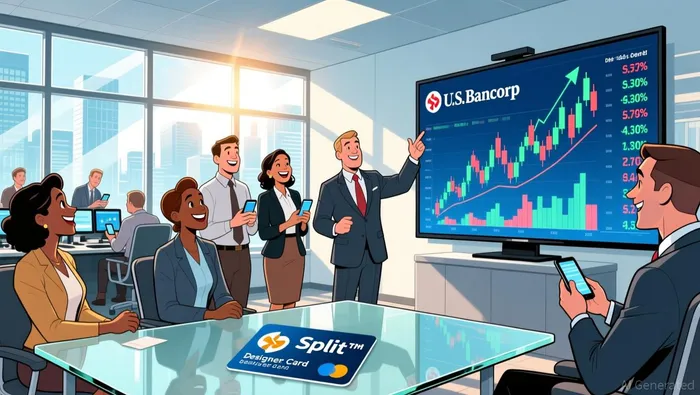
The launch of U.S. , , represents a pivotal catalyst for the stock’s recent performance. This credit card introduces a novel approach to installment payments, offering no-fee, no-interest options for all purchases and flexible extension plans for larger transactions. By integrating digital-first features with Mastercard’s global acceptance, the product positions U.S. Bancorp to capture a growing segment of consumers seeking transparent, credit-building solutions. The announcement aligns with the company’s broader strategy to expand fee-based revenue streams through digital innovation, a theme that has historically attracted investor attention in the financial sector.
A complementary factor is the co-branded checking and credit card partnership with Edward Jones, , . . Bancorp’s customer base and deepen client engagement. The partnership not only enhances the bank’s distribution channels but also reinforces its competitive positioning in a market where customer loyalty and cross-selling opportunities are critical. Analysts have highlighted that such alliances could drive incremental payments volumes and digital adoption, both of which are key metrics for evaluating the bank’s long-term growth potential.
However, the investment narrative faces headwinds from evolving fintech competition. The news article explicitly notes the risk of rapidly advancing fintech entrants disrupting traditional payment models, which could compress U.S. Bancorp’s margins if the company fails to maintain its technological edge. While the Split™ card’s features address some consumer pain points, its success will depend on adoption rates and the ability to differentiate from offerings by digital-first competitors like Affirm or Klarna. , though investors remain cautious about execution risks.
Looking ahead, . The Split™ card and Edward Jones partnership are positioned to contribute to this trajectory, but their impact will hinge on macroeconomic conditions and consumer behavior shifts. For instance, , indirectly affecting the card’s utility. Additionally, regulatory scrutiny of installment payment products remains a potential overhang, as policymakers increasingly focus on consumer protection in the fintech space.
The broader context of U.S. Bancorp’s strategic repositioning also includes its emphasis on margin resilience. The bank’s foray into flexible payments complements its existing strengths in digital banking and wealth management, creating a diversified revenue base. This diversification is critical in an environment where net interest margins for traditional banking services have been under pressure. , even as it navigates structural challenges in the sector.
In summary, the recent stock performance appears to be driven by a combination of product innovation, strategic partnerships, and investor optimism about U.S. Bancorp’s ability to navigate competitive and macroeconomic headwinds. While the Split™ card and Edward Jones collaboration offer tangible growth levers, the bank’s long-term success will depend on its capacity to execute these initiatives effectively and maintain its edge in an increasingly fragmented payments landscape. The market’s reaction on November 21 suggests that investors are weighing these opportunities against risks, .

Stay ahead of the market.
Get curated U.S. market news, insights and key dates delivered to your inbox.




Comments
No comments yet