
Bancor Sues Uniswap Over Patent Infringement In DeFi Battle
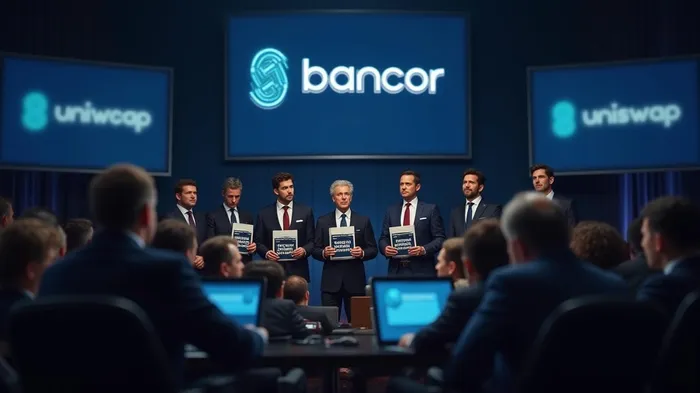
Bancor has initiated a significant legal battle against Uniswap, challenging the open-source ethos that has long defined decentralized finance (DeFi). The lawsuit, filed in the U.S. District Court for the Southern District of New York, alleges that Uniswap has been using Bancor's patented automated market maker (AMM) technology without authorization for the past eight years. This legal action raises critical questions about innovation, ownership, and the future of intellectual property in permissionless finance.
At the heart of the dispute is Bancor's claim that it invented and patented the constant product automated market maker (CPAMM) model, which powers permissionless on-chain trades through smart contracts. BancorTBBK-- filed the original patent application for its invention on January 8, 2017, and released a white paper the following month. The Bancor Protocol, launched in June 2017, was the first decentralized exchange (DEX) powered by an AMMAM-- model and was granted two patents that year.
Uniswap, which launched its v1 protocol in 2018, has since grown into the dominant DEX in the crypto space with over $40 billion in total value locked. Bancor alleges that Uniswap has been infringing on its patents from the beginning and has done so without licensing, authorization, or collaboration. Bancor's project lead, Mark Richardson, stated, "For the last eight years, Uniswap has been using our patented technology in its projects without our permission. As a result, we have taken legal action to defend our technology for the good of the entire DeFi community."
The plaintiffs claim that Uniswap’s most recent protocol release, v4, continues the use of the infringing CPAMM model. Bancor and LocalCoin are seeking damages and claim that allowing such unlicensed use threatens the incentive structure for innovation across the decentralized finance industry. Richardson added, "If companies like Uniswap can act unchecked without consequence, we fear it will hinder innovation across the industry to the detriment of all DeFi players."
This legal challenge brings new attention to intellectual property disputes in a sector that has historically thrived on open-source principles. Uniswap, often seen as the largest decentralized exchange, has yet to respond publicly. If the case proceeds, it could force the DeFi industry to confront questions about the role of patents and ownership over foundational blockchain technologies.
As Bancor steps into this historic intellectual property battle against Uniswap, both protocols are emerging from very different regulatory backdrops. In September 2024, a Texas federal judge dismissed a securities class action lawsuit filed against Bancor’s operators, citing a lack of U.S. jurisdiction. The plaintiffs had accused Bancor of misleading investors with its now-suspended impermanent loss protection program, claiming over $2.3 billion was drawn into the protocol under false promises. However, the court found Bancor’s ties to the U.S. too weak, pointing instead to Israel as a more appropriate venue for legal action. The ruling effectively shields Bancor from U.S. securities laws, at least for now.
Meanwhile, Uniswap Labs secured a major win of its own. In February 2025, the U.S. Securities and Exchange Commission dropped its investigation into the firm, nearly a year after issuing a Wells notice. Bancor now has a total value locked (TVL) at $58 million, 98% below its peak in May 2021. However, Uniswap is now commanding 23% of daily DEX volume and celebrating a $3 trillion all-time milestone. The coming patent war is shaping up not just as a legal fight but as a defining moment for DeFi’s future.

Stay ahead of the market.
Get curated U.S. market news, insights and key dates delivered to your inbox.


AInvest
PRO
AInvest
PRO



Comments
No comments yet