
H&M's Balancing Act: Can Sustainable Strategies Counter Supply Chain Headwinds?
H&M Group, the Swedish fast-fashion giant, faces a pivotal moment in its evolution. As supply chain disruptions, rising costs, and shifting consumer preferences reshape the retail landscape, the company's ability to adapt will determine its long-term viability. Recent financial results and strategic shifts reveal both progress and persistent challenges. Here's how investors should assess H&M's resilience and potential upside in a volatile market.
The Double-Edged Sword of Supply Chain Pressures
H&M's Q2 2025 sales fell 4.9% year-on-year to SEK 56.7 billion, though local-currency sales stabilized with a 1% increase—a sign of underlying demand resilience. Yet, margin pressures remain acute. Operating profit dropped to SEK 5.91 billion, driven by currency headwinds, higher freight costs, and a 55.4% gross margin, down from 57.3% in 2024.
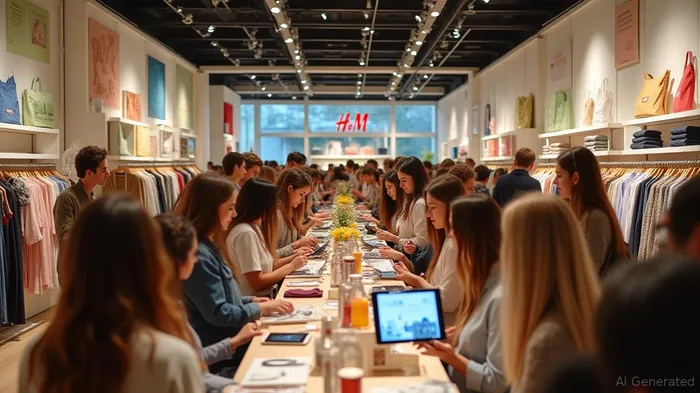
The root cause of these pressures is clear: supply chain inefficiencies. The Red Sea logistics bottleneck, rising purchasing costs, and dependency on external suppliers have pushed inventory up 9% year-on-year. H&M's strategy to mitigate these risks includes deepening supplier collaboration, optimizing logistics routes, and investing in sustainability initiatives. While these moves aim to reduce markdowns and improve margins, execution is critical.
Consumer Demand: Sustainability and Value
Shoppers are increasingly prioritizing affordability and ethical practices. H&M's focus on sustainability—89% of materials now sustainably sourced or recycled—and its resale platform Sellpy have resonated, contributing to a 3% June sales uptick in local currencies. However, brand reputation remains fragile. Competitors like Shein and Temu undercut prices, while premium players like Zara (Inditex) and Uniqlo (Fast Retailing) offer higher quality and design.
Strategic Shifts: Simplification and Digital Integration
CEO Daniel Ervér's three-pillar strategy—brand simplification, digital omnichannel integration, and pricing adjustments—aims to restore profitability. Simplifying collections to focus on core, full-price items reduces markdown risk, while omnichannel upgrades (e.g., same-day delivery) enhance convenience. Pricing adjustments to offset inflation have shown promise, though further hikes risk alienating price-sensitive customers.
Valuation and Risks
H&M's valuation appears stretched. With a P/E of 20x and EV/EBITDA of 17x, it trades at a premium to peers like Inditex (P/E 19x, EV/EBITDA 9.6x) and Fast Retailing (P/E 36.75x). This premium hinges on margin recovery, which remains elusive. Key risks include:
- Margin Volatility: Currency fluctuations (e.g., a stronger krona) and U.S. tariff uncertainties could further squeeze margins.
- Inventory Overhang: A 1% inventory rise risks overstocking if demand weakens.
- Competitive Pressures: Fast-fashion disruptors are eroding market share, while premium players dominate high-margin segments.
Investment Outlook: Proceed with Caution
H&M's Q2 results offer a mixed picture. While June sales and margin resilience hint at stabilization, the company must prove it can sustain progress.
Bull Case: If H&M executes its simplification strategy, improves margins, and capitalizes on sustainable trends, its valuation could justify its premium. Historically, this strategy has shown promise: when H&M reported positive quarterly earnings from 2020 to 2025, a buy-and-hold approach until the next quarter yielded an average return of 25.34%. A successful Q3—expected to see reduced tariff impacts and inventory turnover—would be a key catalyst.
Bear Case: Persistent margin erosion, inventory mismanagement, or a sharp economic downturn could push H&M's stock lower. Analysts' “Reduce” ratings reflect skepticism about its ability to outperform peers in the near term.
Final Take
H&M's journey toward resilience is far from over. Its sustainability push and operational tweaks are steps in the right direction, but the fast-fashion model's inherent challenges—high volume, low margins, and reliance on external suppliers—remain daunting. Investors should wait for clearer signs of margin stabilization and inventory discipline before taking a bullish stance. Until then, peers like Inditex, with stronger margins and cash positions, offer safer bets.
Investment recommendation: Hold H&M until Q3 results confirm a margin turnaround. Prioritize competitors with better execution profiles and valuation multiples in the interim.*

Stay ahead of the market.
Get curated U.S. market news, insights and key dates delivered to your inbox.


AInvest
PRO
AInvest
PRO



Comments
No comments yet