
The Balancer Hack of 2025: A Watershed Moment for DeFi Security
 Aime Summary
The Anatomy of the Exploit
The Balancer hack hinged on a precision rounding error in the protocol's vault swap calculations. Attackers exploited the discrepancy between unidirectional rounding (downscaling) and bidirectional rounding (upscaling) to manipulate invariants-mathematical rules governing token exchange rates. By executing thousands of micro-transactions, the attacker compounded small gains into a massive $128 million theft. Additionally, malicious smart contracts were deployed to mint fake tokens, falsify invariants, and bypass authorization checks in the manageUserBalance function, enabling unauthorized withdrawals according to a comprehensive analysis.
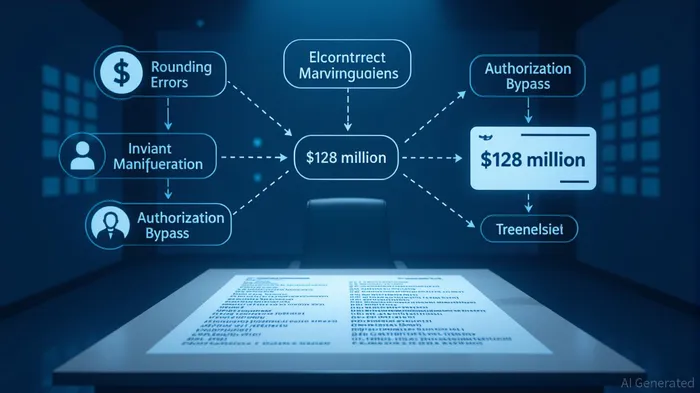
The attack spanned multiple chains, including EthereumETH--, Base, and ArbitrumARB--, and impacted forks of the Balancer protocol. Despite undergoing multiple security audits, the vulnerabilities remained undetected, highlighting the limitations of current audit practices in identifying composable smart contract flaws.
The Aftermath and Recovery Efforts
Following the breach, stolen assets were consolidated into external wallets. A swift recovery effort reclaimed $19 million, reducing the total loss to $98 million. However, the incident triggered secondary phishing campaigns, with fraudsters impersonating Balancer representatives to lure victims into fake "white-hat bounty" programs. The hack also reignited debates about the adequacy of DeFi's security infrastructure, particularly as attackers increasingly target arithmetic edge cases and operational weaknesses.
Institutional-Grade Security: Lessons and Frameworks
The Balancer hack underscores the necessity of institutional-grade security frameworks, which have gained traction in the DeFi space since 2023. These frameworks emphasize proactive risk management, including invariant documentation, fuzz testing, and formal verification. For instance, tools like roundme now help protocols identify optimal rounding directions for arithmetic operations, mitigating precision-related exploits.
Case studies from 2023–2025 demonstrate the effectiveness of such measures. DeFi lending protocols, for example, achieved a 98.4% improvement in security from 2020 baseline levels by 2024, maintaining daily loss rates as low as 0.00128%. This success was driven by systematic improvements such as professional auditing, bug bounty programs, and real-time monitoring tools like Chainalysis and Dune Analytics according to industry analysis.
However, the nature of attacks has evolved. While smart contract vulnerabilities have declined, private key compromises now account for 20% of DeFi incidents, reflecting a shift in attacker focus toward operational security. This trend highlights the need for holistic frameworks that address both code-level flaws and human factors.
The Path Forward
The Balancer hack serves as a wake-up call for the DeFi ecosystem. Protocols must adopt rigorous invariant documentation, economic simulation testing, and real-time monitoring to detect anomalies before they escalate according to security experts. Institutions and investors should prioritize projects that integrate these frameworks, as they are better positioned to withstand sophisticated attacks.
Moreover, collaborative efforts like the DeFi Security Summit are critical in fostering industry-wide standards. Workshops such as "Teaching Smart Contract Security Through Damn Vulnerable DeFi v4" provide practical insights into identifying and mitigating risks, further strengthening the ecosystem's resilience.
Conclusion
The Balancer hack of 2025 is a watershed moment for DeFi security. While the incident exposed vulnerabilities in even the most audited protocols, it also catalyzed advancements in institutional-grade frameworks. As the sector matures, the adoption of these frameworks will be pivotal in attracting institutional capital and ensuring DeFi's long-term viability. For investors, the lesson is clear: security is no longer optional-it is a non-negotiable prerequisite for sustainable growth.

Blending traditional trading wisdom with cutting-edge cryptocurrency insights.
Latest Articles
Stay ahead of the market.
Get curated U.S. market news, insights and key dates delivered to your inbox.






Comments
No comments yet