
Balancer Hack 2025 Reveals Systemic Risks in Crypto Exposure and Market Interconnectivity
 Aime Summary
The 2025 BalancerBAL-- Hack exposed vulnerabilities in DeFi protocols, highlighting systemic risks in the interconnectedness of crypto and traditional markets according to analysis. - Curve Finance accused PancakeSwapCAKE-- of using its StableSwap code without proper licensing, raising concerns about code reuse and legal risks in DeFi as reported. - The interconnected nature of crypto markets means that vulnerabilities in one protocol can ripple across the entire ecosystem, impacting stablecoins, trading platforms, and leveraged positions according to research.
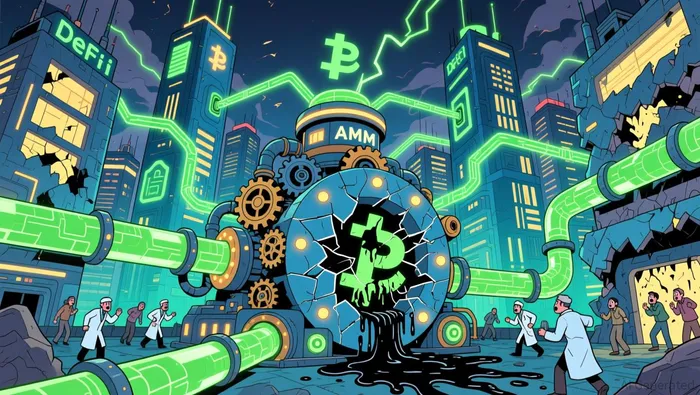
The 2025 Balancer Hack revealed significant vulnerabilities in DeFi protocols, particularly in the implementation of automated market makers (AMMs). These exploits demonstrated how weaknesses in a single platform can create cascading effects across the broader DeFi ecosystem according to reports. The hack involved a $116 million exploit tied to swap-based code, emphasizing the need for more rigorous security and licensing practices as detailed.
In a related development, Curve Finance accused PancakeSwap of copying its StableSwap code into the new PancakeSwap Infinity release without proper licensing. This raised legal and cybersecurity concerns, particularly as projects expand cross-chain features and liquidity mechanisms according to findings.
These incidents collectively point to a growing trend of code reuse and insufficient safeguards in DeFi. As platforms build on existing protocols, the risks of exploitation rise, especially when proper licensing and security measures are not followed. This underscores the importance of robust code audits and licensing frameworks to protect users and reduce systemic risk according to analysis.
What Is the Impact on Market Stability?
The interconnectedness of DeFi platforms means that vulnerabilities in one protocol can trigger broader market instability. For example, the 2025 Balancer Hack led to significant financial losses and highlighted how traditional financial instruments like leveraged yen positions could also be affected according to reports.
Such events have prompted regulatory bodies to propose frameworks like the U.S. GENIUS Act and Trinidad's VAASPA 2025, which aim to address DeFi risks and enforce stronger oversight for stablecoins and anti-money laundering measures according to analysis. These regulatory actions are part of a broader effort to ensure the long-term viability of DeFi while mitigating potential spillovers into traditional markets.
How Are Developers and Regulators Responding?
In response to these incidents, developers and regulators are emphasizing the need for stronger security frameworks and clearer oversight mechanisms. Curve Finance has called for formal licensing and collaboration to reduce legal risk and ensure safer deployment of stable-swap capabilities according to their statement.
Regulatory efforts are also gaining momentum. The U.S. and Trinidad have introduced legislative proposals aimed at addressing DeFi vulnerabilities, focusing on stablecoin oversight and anti-money laundering measures according to reports. These initiatives reflect a growing recognition of the need for coordinated action to enhance security and transparency in the DeFi space.
What Are the Risks of Poor Code Licensing and Reuse?
The Curve Finance-PancakeSwap dispute highlights the risks associated with inadequate code licensing and reuse. Deploying stable-swap capabilities without proper safeguards can create attack surfaces, especially in permissionless platforms according to analysis.
Past incidents, such as the 2022 Saddle Finance DEX hack and the 2025 Balancer incident, have demonstrated that these vulnerabilities are not isolated but represent systemic risks in the DeFi ecosystem according to reports. Developers are now urged to adopt best practices in code deployment to minimize the likelihood of exploitation and ensure user trust.
In summary, the events of 2025 underscore the need for greater vigilance, robust licensing, and regulatory oversight in the DeFi space. As the ecosystem continues to expand, addressing these challenges will be critical to maintaining stability and fostering trust among investors.

Blending traditional trading wisdom with cutting-edge cryptocurrency insights.
Latest Articles
Stay ahead of the market.
Get curated U.S. market news, insights and key dates delivered to your inbox.


AInvest
PRO
AInvest
PRO



Comments
No comments yet