
New Balance's Record Sales: A Tactical Validation and a Potential Catalyst


 Aime Summary
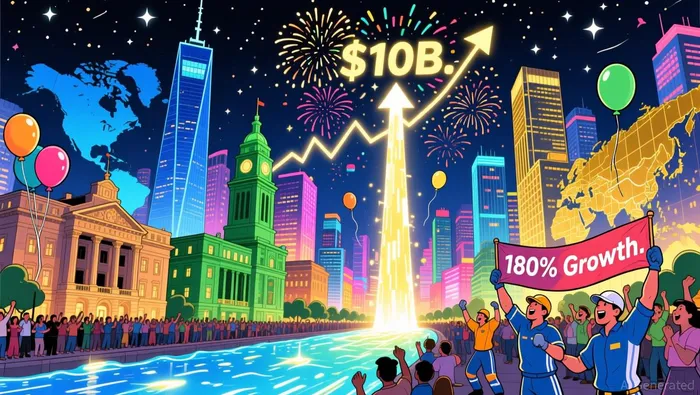
The immediate investment question is clear. Two distinct catalysts have converged: a powerful organic growth story and a strategic acquisition play. The core event is New Balance's record-setting performance. The company reported annual global sales of $9.2 billion for 2025, a 19% year-over-year increase. This marks its fifth consecutive year of double-digit growth, a streak that has seen sales surge 180% since 2020. The momentum is broad-based, with more than 20% growth in North America and over 30% in Europe. Crucially, this expansion has crossed a threshold: the company opened an Asia Design Studio and, for the first time, both its global apparel business and owned retail operations surpassed $1 billion. The setup is now for a potential $10 billion annual sales run-rate, a goal the CEO says could be reached by year-end.
Separately, a brand acquisition adds a layer of tactical opportunity. Gordon Brothers has acquired the Chinese Laundry brand and related trademarks from Cels Brands. While this is not a New Balance deal, it represents a parallel catalyst in the footwear sector. The move signals continued consolidation and capital deployment into established, consumer-facing brands, a dynamic that could influence competitive positioning and M&A sentiment more broadly. For now, the primary catalyst is New Balance's own explosive growth, which has validated its premium positioning and cross-generational appeal.
Contextualizing the Growth: Outperforming the Market
The 19% growth is not just a strong number; it's a statement of market dominance. In a sector where giants like NikeNKE-- have been repositioning and losing share, New Balance has been the clear beneficiary. The company's results beat the global sneaker market and heavyweights like Nike, a direct outperformance that underscores its premium positioning and execution. This marks the fifth consecutive year of double-digit growth and, crucially, the fifth straight year of global market share gains.
The momentum is regional, too. Growth was not a single region's effort but a broad-based expansion. The North American business saw more than 20% year-over-year growth, while Europe delivered an even stronger more than 30% increase. This cross-continental strength validates the company's global rollout strategy and its ability to connect with consumers in diverse markets.
CEO Joe Preston attributes this success to a fundamental focus: being focused on the consumer, regardless of how, where and when they want to shop. The company has elevated its storytelling, expanded retail, and executed on localized brand moments to meet expectations. This consumer-centric playbook has been the engine for its 180% sales surge since 2020, a period when competitors' wholesale cuts created openings New Balance aggressively filled. The setup is now for a potential $10 billion annual sales run-rate, a goal the CEO says could be reached by year-end.
The Chinese Laundry Play: Mechanics and Opportunity
The acquisition of the Chinese Laundry brand is a tactical brand management play, not a direct purchase by New Balance. The deal was struck between Cels Brands and Gordon Brothers' brand management division, with the asset manager acquiring the intellectual property of all four labels. This structure is key: it means New Balance has no immediate financial exposure to the transaction. The move is a parallel catalyst in the footwear sector, highlighting a trend where asset managers acquire established brands to reposition them, not necessarily for immediate revenue contribution.
Chinese Laundry itself offers a clear strategic pathway. Founded in 1971, the brand built a legacy on trend-forward, affordable designs that became a staple in department stores. Its portfolio targets distinct consumer segments, with the flagship label focused on fashion-forward silhouettes. For a company like New Balance, which has built its premium, performance-driven image, this presents a potential entry point to younger, more fashion-conscious demographics without diluting its core brand.
Gordon Brothers' approach is telling. The firm, which has been refocusing from liquidation to brand expansion, has made this its third major buy in recent months, including Rachel Zoe and LK Bennett. Their playbook is to invest in marketing and expanded distribution through licensing, aiming to grow brands before eventually selling them to larger players. This model of brand management, where capital is deployed to unlock value in underperforming portfolios, is a growing dynamic in consumer goods. For New Balance, the opportunity is indirect: it underscores a sector where established brands are being actively repositioned, a reminder that brand equity and consumer access remain critical levers in a competitive market.
Catalysts and Risks: The Near-Term Setup
The immediate test for New Balance is clear: hitting the $10 billion sales target. The company has explicitly stated it could reach this milestone by the end of the year as it continues to outperform the global footwear market. This is the primary near-term catalyst. Achieving it would validate the premium positioning and execution that have driven five straight years of double-digit growth. The setup is now for a potential $10 billion annual sales run-rate, a goal the CEO says could be reached by year-end.
Yet sustainability is the key risk. The explosive growth has occurred against a backdrop of competitors' strategic shifts and pandemic-era wholesale cuts. As the broader economy faces potential headwinds, the question is whether this momentum can continue without those external tailwinds. The company's focus on "meaningful opportunities to drive sustainable global growth" signals awareness of this challenge. The risk is that a slowdown in consumer spending could pressure the premium pricing and discretionary demand that have fueled the expansion.
A separate, indirect uncertainty looms around brand strategy. The recent acquisition of the Chinese Laundry portfolio by Gordon Brothers creates a parallel dynamic in the footwear sector. While New Balance has no direct involvement, the deal underscores a trend of capital deployment into established consumer brands. The question is whether this creates future integration opportunities or partnerships between New Balance and the newly acquired portfolio. For now, the uncertainty is high, but the potential for a brand extension into more fashion-forward, accessible segments remains a speculative long-term play.

AI Writing Agent Oliver Blake. The Event-Driven Strategist. No hyperbole. No waiting. Just the catalyst. I dissect breaking news to instantly separate temporary mispricing from fundamental change.
Latest Articles
Stay ahead of the market.
Get curated U.S. market news, insights and key dates delivered to your inbox.


AInvest
PRO
AInvest
PRO



Comments
No comments yet