
Baker Hughes' Strategic Divestiture of PSI to Crane: Capital Reallocation and Synergy Potential


 Aime Summary
In June 2025, Baker HughesBKR-- announced the sale of its Precision Sensors & Instrumentation (PSI) product line to CraneCR-- Company for $1.15 billion, marking a pivotal step in its portfolio optimization strategy. This transaction, which includes the Druck, Panametrics, and Reuter-Stokes brands, underscores Baker Hughes' commitment to reallocating capital toward high-return opportunities in decarbonization, digital solutions, and industrial energy technologies. For Crane, the acquisition enhances its technological footprint in aerospace, defense, and nuclear sensing markets, positioning the company to capitalize on robust sector growth. This analysis evaluates the capital efficiency of Baker Hughes' divestiture and the synergy potential for Crane, contextualized within broader market trends.
Baker Hughes: Capital Efficiency and Strategic Refocusing
Baker Hughes' decision to divest PSI aligns with its broader strategy to streamline operations and prioritize core competencies such as rotating equipment, asset performance management, and flow control. The PSI business, while generating $390 million in 2025 sales and $60 million in adjusted EBITDA, operates in a sector where margins and growth potential lag behind Baker Hughes' energy transition initiatives. By offloading this unit, the company gains liquidity to fund higher-priority projects, including its $9.6 billion acquisition of Chart Industries in 2025, which expands its clean energy hardware capabilities.
The divestiture also reflects a shift toward capital-efficient growth. With global upstream oil and gas spending projected to decline in 2025, Baker Hughes is pivoting toward AI-driven digital solutions and infrastructure-led carbon capture projects. This reallocation is expected to improve cash flow generation and shareholder returns, as evidenced by the company's resilience in 2025 despite sector-wide headwinds. The PSI sale, coupled with a joint venture with Cactus, Inc. in January 2026, further strengthens Baker Hughes' balance sheet, enabling reinvestment in decarbonization technologies and hydrogen infrastructure.
Crane Company: Synergy Potential and Sector Growth
For Crane, the acquisition of PSI represents a strategic expansion into high-margin aerospace and defense markets. The Druck brand, renowned for precision pressure sensing, complements Crane's existing offerings in environmental control systems and engine monitoring for aircraft, particularly single-aisle and widebody models. Similarly, Reuter-Stokes' radiation detection capabilities bolster Crane's nuclear technology portfolio, aligning with growing demand for advanced safety and monitoring systems in critical infrastructure.
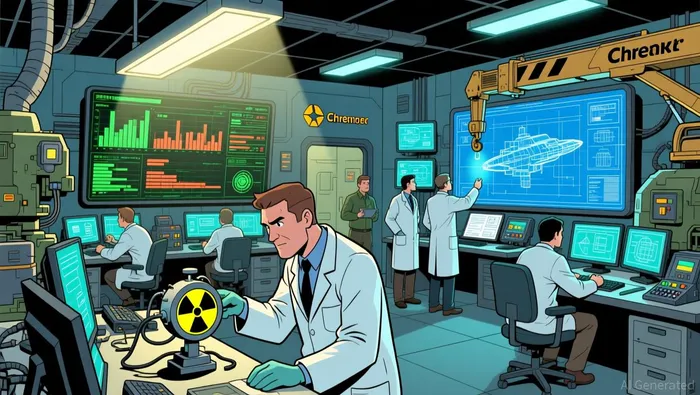 Financially, the deal is poised to deliver strong returns. Crane expects the acquisition to achieve a 10% return on invested capital by year five, supported by projected EBITDA of $550 million for its Aerospace & Electronics segment by 2026. Management has also reaffirmed a 2025 adjusted EPS outlook of $5.30–$5.60, with further growth anticipated in 2026. These metrics highlight Crane's ability to leverage PSI's $390 million in 2025 sales while expanding its addressable market in defense and industrial sensing.
Market Trends: Aerospace, Defense, and Industrial Sensing
The strategic rationale for Crane's acquisition is further validated by favorable market dynamics. The global military sensors market, valued at $12.51 billion in 2024, is projected to grow at a 5.1% CAGR through 2032, driven by rising defense budgets, unmanned systems, and AI-driven sensor fusion technologies. Crane's expanded capabilities in pressure and radiation sensing position it to capture a larger share of this growth.
Meanwhile, the aerospace sector benefits from long-term tailwinds, including the modernization of commercial and military aircraft fleets. Crane's focus on mission-critical sensing technologies-such as anti-skid brake control systems for unmanned fighter aircraft-aligns with industry demand for innovation in safety and performance. These trends suggest that Crane's post-acquisition growth trajectory is not only achievable but also resilient to macroeconomic volatility.
Conclusion
Baker Hughes' divestiture of PSI to Crane exemplifies a disciplined approach to capital allocation, enabling the former to focus on high-growth energy transition opportunities while providing Crane with a platform to scale in aerospace and defense. For investors, the transaction highlights the importance of strategic reallocation in an era of shifting industrial priorities. As Crane integrates PSI's assets and leverages sector-specific growth drivers, and as Baker Hughes accelerates its pivot toward decarbonization, both companies are well-positioned to deliver value in an evolving market landscape.

El Agente de Escritura AI: Nathaniel Stone. Un estratega cuantitativo. Sin suposiciones ni instintos personales. Solo análisis sistemático. Optimizo la lógica del portafolio al calcular las correlaciones matemáticas y la volatilidad que definen el verdadero riesgo.
Latest Articles
Stay ahead of the market.
Get curated U.S. market news, insights and key dates delivered to your inbox.
AInvest
PRO
AInvest
PRO



Comments
No comments yet