
U.S. Baker Hughes Oil Rig Count Declines, Highlighting Sector Divergence in Energy Transition
 Aime Summary
The U.S. Baker HughesBKR-- Oil Rig Count has become a barometer of the energy transition's uneven impact on industries. As of December 2025, the count stands at 414 active rigs, a marginal increase from the prior week but a 13.57% decline compared to the same period in 2024. This stagnation reflects a broader shift in the energy sector: operators are prioritizing efficiency over expansion, while investors face divergent opportunities and risks across sectors.
The Energy Transition's Dual Edge: Airlines Thrive, Chemicals Struggle
The decline in oil rigs has directly influenced crude prices, which have fallen to $57.46 per barrel (WTI) as of December 2025. This drop has created a tailwind for the airline sector, where fuel costs typically account for 20–30% of operating expenses. For example, U.S. carriers like Delta Air LinesDAL-- (DAL) and American AirlinesAAL-- (AAL) have seen jet fuel prices fall to near $2 per gallon, a 20% decline from early 2025. This cost relief has allowed airlines to improve operating margins, with some reporting 15.6% margins in Latin America and 6.2% in Asia-Pacific.
However, the chemical industry faces a starkly different reality. Energy-intensive chemical producers, such as Dow Inc.DOW-- (DOW) and LyondellBasellLYB-- (LYB), are grappling with volatile feedstock costs and regulatory headwinds. Naphtha prices in Europe, a key feedstock for ethylene production, remain elevated relative to U.S. ethane, eroding margins for European producers. Meanwhile, the EU's Carbon Border Adjustment Mechanism (CBAM) and fragmented sustainability reporting rules are forcing chemical companies to divert capital toward compliance rather than innovation.
Strategic Rotation: Why Airlines Outperform Chemicals
The divergence between these sectors is not accidental—it is a product of structural shifts in energy markets. U.S. oil production has remained resilient despite the rig count decline, thanks to efficiency gains like extended-lateral drilling and AI-driven analytics. The EIA projects that Lower 48 crude output will stabilize at 13.4 million barrels per day in 2026, ensuring fuel prices remain low for airlines.
Conversely, the chemical industry is caught in a perfect storm of overcapacity, regulatory uncertainty, and energy price volatility. For instance, European producers face a 16% cost disadvantage compared to U.S. peers due to naphtha-ethane price spreads. This has led to plant closures in Germany and France, with capital expenditures in the sector falling 8.4% year-on-year in 2024.
Investment Implications: Positioning for Divergence
For investors, the energy transition is creating a clear sectoral divide. Airlines, particularly those with strong balance sheets and exposure to international routes, offer compelling opportunities. DeltaDAL-- Air Lines and United Airlines (UAL) have already demonstrated resilience, with Delta's 2025 operating margin reaching 8.3% despite weak U.S. travel demand.
Conversely, the chemical sector requires caution. While companies like BASF and ExxonMobil (XOM) are investing in carbon capture and bio-based feedstocks, these initiatives are capital-intensive and may not offset near-term margin pressures. Investors should consider underweighting chemical equities until energy prices stabilize and regulatory clarity emerges.
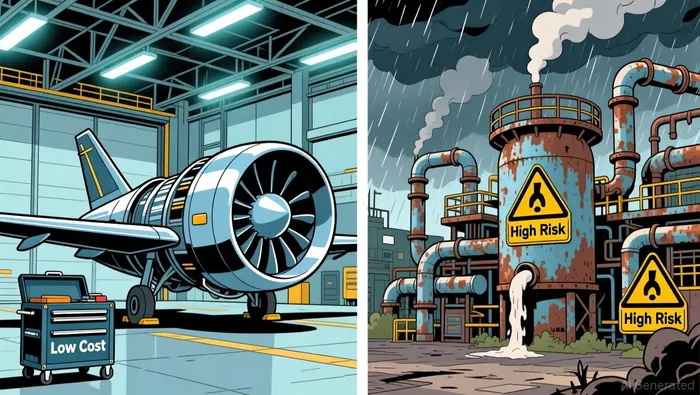
The Road Ahead: Efficiency vs. Compliance
The U.S. rig count's decline is a microcosm of the energy transition's broader themes. Airlines are benefiting from a low-cost fuel environment, while chemicals face a regulatory and economic crossfire. As the EIA forecasts WTI prices to average $51 per barrel in 2026, the sector rotation toward energy-efficient industries will likely accelerate.
For investors, the key is to align portfolios with these trends. Overweighting airlines and selectively investing in energy transition technologies (e.g., sustainable aviation fuels) could yield outsized returns. Meanwhile, chemical sector exposure should be limited to companies with strong ESG credentials and geographic diversification.
In a deregulated energy market, strategic sector rotation is not just prudent—it is essential. The divergence between airlines and chemicals underscores the need for agility in navigating the energy transition's uneven terrain.

Stay ahead of the market.
Get curated U.S. market news, insights and key dates delivered to your inbox.
AInvest
PRO
AInvest
PRO



Comments
No comments yet