
Baidu and Lyft Team Up to Launch Robotaxis in Europe, Exploring Opportunities and Risks.
ByAinvest
Monday, Aug 4, 2025 1:30 pm ET1min read
BIDU--
Lyft's European expansion comes after a series of strategic moves. The company acquired FREENOW, a German multi-mobility app, earlier this year, which opened up the European market to Lyft. This partnership with Baidu is another step in Lyft's hybrid network approach, where autonomous vehicles (AVs) and human drivers work together to provide customer-obsessed options for riders [1].
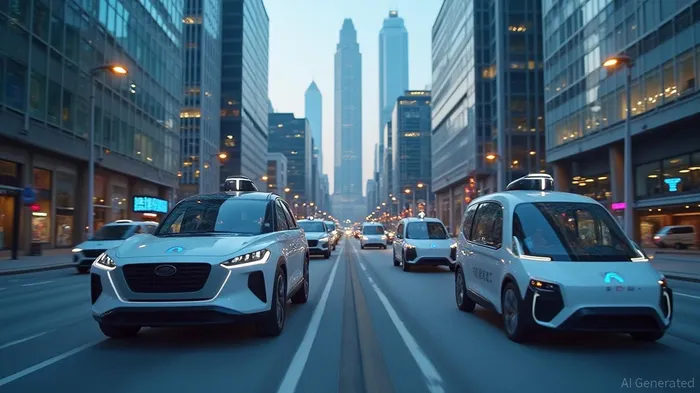
Baidu's RT6 vehicles, equipped with its Apollo Go self-driving system, will be integrated into Lyft's ride-hailing app. This move follows a trend of ride-hailing companies partnering with tech firms to leverage advanced autonomous vehicle technology. Uber, for instance, has partnered with more than 18 companies, including Baidu, to explore various applications of self-driving systems [1].
The autonomous vehicle market is expected to grow significantly, with global robotaxi revenue projected to reach $1.7 trillion by 2040 [2]. Tesla, a major player in this market, has been focusing on autonomous driving and robotics, aiming to capture a substantial share of this trillion-dollar opportunity. The company's vision-only approach, which relies on cameras, gives it a theoretical edge over competitors like Waymo [2].
However, the launch of robotaxis in Europe also presents risks. Regulatory challenges, competition, and the need for robust infrastructure are among the hurdles that companies must overcome. Moreover, the autonomous vehicle market has been overshadowed by AI hype in recent years, and the success of these initiatives will depend on practical implementation and consumer acceptance [1].
In conclusion, Lyft and Baidu's European robotaxi expansion is a significant move in the autonomous vehicle market. While it presents opportunities for growth and innovation, it also comes with challenges that companies must navigate. The success of this initiative will depend on regulatory approval, consumer acceptance, and the ability to overcome technical and infrastructure hurdles.
References:
[1] https://techcrunch.com/2025/08/04/lyft-and-chinas-baidu-look-to-bring-robotaxis-to-europe-next-year/
[2] https://finance.yahoo.com/news/1-ai-robotics-stock-buy-080100798.html
LYFT--
TSLA--
Lyft and Baidu are launching robotaxis in Europe, marking a significant opportunity in the autonomous vehicle market. The launch presents both opportunities and risks, including potential competition and regulatory challenges. The move is significant in an industry that has been overshadowed by AI hype in recent years.
Lyft and Baidu are set to bring robotaxis to Europe, marking a significant milestone in the autonomous vehicle market. The U.S. ride-hailing company has partnered with the Chinese tech giant to deploy Baidu's Apollo Go autonomous vehicles across several European markets, including Germany and the United Kingdom, in 2026, pending regulatory approval [1].Lyft's European expansion comes after a series of strategic moves. The company acquired FREENOW, a German multi-mobility app, earlier this year, which opened up the European market to Lyft. This partnership with Baidu is another step in Lyft's hybrid network approach, where autonomous vehicles (AVs) and human drivers work together to provide customer-obsessed options for riders [1].
Baidu's RT6 vehicles, equipped with its Apollo Go self-driving system, will be integrated into Lyft's ride-hailing app. This move follows a trend of ride-hailing companies partnering with tech firms to leverage advanced autonomous vehicle technology. Uber, for instance, has partnered with more than 18 companies, including Baidu, to explore various applications of self-driving systems [1].
The autonomous vehicle market is expected to grow significantly, with global robotaxi revenue projected to reach $1.7 trillion by 2040 [2]. Tesla, a major player in this market, has been focusing on autonomous driving and robotics, aiming to capture a substantial share of this trillion-dollar opportunity. The company's vision-only approach, which relies on cameras, gives it a theoretical edge over competitors like Waymo [2].
However, the launch of robotaxis in Europe also presents risks. Regulatory challenges, competition, and the need for robust infrastructure are among the hurdles that companies must overcome. Moreover, the autonomous vehicle market has been overshadowed by AI hype in recent years, and the success of these initiatives will depend on practical implementation and consumer acceptance [1].
In conclusion, Lyft and Baidu's European robotaxi expansion is a significant move in the autonomous vehicle market. While it presents opportunities for growth and innovation, it also comes with challenges that companies must navigate. The success of this initiative will depend on regulatory approval, consumer acceptance, and the ability to overcome technical and infrastructure hurdles.
References:
[1] https://techcrunch.com/2025/08/04/lyft-and-chinas-baidu-look-to-bring-robotaxis-to-europe-next-year/
[2] https://finance.yahoo.com/news/1-ai-robotics-stock-buy-080100798.html
Stay ahead of the market.
Get curated U.S. market news, insights and key dates delivered to your inbox.
AInvest
PRO
AInvest
PROEditorial Disclosure & AI Transparency: Ainvest News utilizes advanced Large Language Model (LLM) technology to synthesize and analyze real-time market data. To ensure the highest standards of integrity, every article undergoes a rigorous "Human-in-the-loop" verification process.
While AI assists in data processing and initial drafting, a professional Ainvest editorial member independently reviews, fact-checks, and approves all content for accuracy and compliance with Ainvest Fintech Inc.’s editorial standards. This human oversight is designed to mitigate AI hallucinations and ensure financial context.
Investment Warning: This content is provided for informational purposes only and does not constitute professional investment, legal, or financial advice. Markets involve inherent risks. Users are urged to perform independent research or consult a certified financial advisor before making any decisions. Ainvest Fintech Inc. disclaims all liability for actions taken based on this information. Found an error?Report an Issue




Comments
No comments yet