
Baidu to Deploy Fully Driverless Apollo Go Cars on Uber
ByAinvest
Tuesday, Jul 15, 2025 8:02 pm ET2min read
APO--
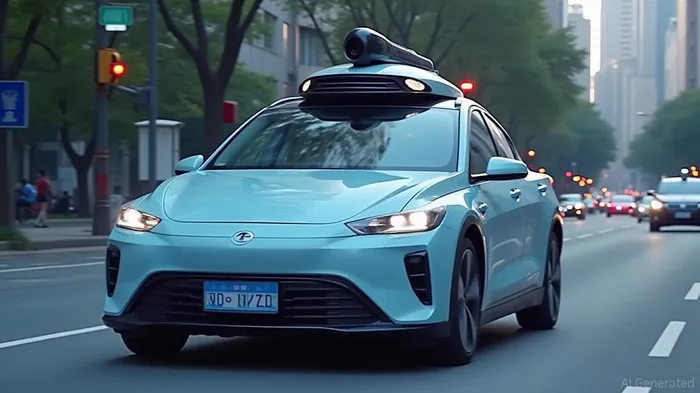
Baidu Inc. has announced a strategic partnership with Uber to deploy its fully driverless Apollo Go cars on Uber's global platform, excluding the U.S. and mainland China. This move represents a significant milestone in Baidu's expansion of autonomous driving capabilities and underscores the growing potential of driverless technology in the transportation sector.
The partnership, which is set to begin deployments in Asia and the Middle East later this year, will see thousands of Baidu's Apollo Go autonomous vehicles integrated into Uber's platform. Baidu's Apollo Go service has already achieved considerable scale, operating over 1,000 fully driverless vehicles in 15 cities globally, including Dubai and Abu Dhabi [1][2].
For Baidu, this partnership creates a clear commercialization pathway for its autonomous driving technology investments. By leveraging Uber's massive global ridesharing network, Baidu gains immediate access to millions of potential customers across international markets without building its own consumer-facing platform from scratch. The partnership also allows Baidu to focus on its technological competitive advantage while Uber handles rider acquisition and marketplace dynamics [2].
Uber, on the other hand, gains a proven partner to take on autonomous driving rivals around the world. The company has been looking to partner with driverless technology companies after selling its own autonomous vehicle unit in 2020. By integrating Apollo Go into its platform, Uber can offer riders cost-effective, on-demand autonomous rides without the need to build its own AV tech [1][3].
The partnership's cost efficiencies are a game-changer. Baidu's RT6's sub-$30k price tag and Uber's existing infrastructure mean lower capital expenditures compared to rivals like Waymo, which relies on higher-cost lidar systems. Meanwhile, the data network effect will amplify over time, with each ride generating data to refine Baidu's AI systems and potentially increasing Uber's operational efficiency [3].
Investors reacted positively to the news, with Baidu shares jumping 4.5% in premarket trade and Uber stock rising more than 1% [1]. The partnership is expected to accelerate the adoption of autonomous vehicles and create new revenue streams for both companies.
In conclusion, the Baidu-Uber partnership is a strategic move that could redefine mobility in high-growth markets like the Middle East and Asia. By combining Baidu's technological prowess with Uber's unmatched global platform, the collaboration could outpace competitors such as Tesla and Waymo. Investors should closely monitor the progress of this partnership as it has the potential to significantly impact the autonomous mobility market.
References
[1] https://www.cnbc.com/2025/07/15/baidu-strikes-deal-to-bring-its-driverless-cars-to-uber-globally.html
[2] https://www.stocktitan.net/news/UBER/baidu-and-uber-join-forces-to-accelerate-autonomous-vehicle-zkzy1k34qxa8.html
[3] https://www.ainvest.com/news/autonomous-revolution-takes-baidu-uber-partnership-spells-long-term-gains-2507/
BIDU--
TSLA--
UBER--
Baidu Inc. is deploying fully driverless Apollo Go cars on Uber, marking a significant milestone in the development of autonomous vehicles in China. The move is part of Baidu's efforts to expand its autonomous driving capabilities, following its acquisition of Uber's self-driving unit last year. The deployment of fully driverless cars on Uber's platform is expected to enhance the user experience and accelerate the adoption of autonomous vehicles.
Title: Baidu and Uber Partner to Deploy Driverless Cars GloballyBaidu Inc. has announced a strategic partnership with Uber to deploy its fully driverless Apollo Go cars on Uber's global platform, excluding the U.S. and mainland China. This move represents a significant milestone in Baidu's expansion of autonomous driving capabilities and underscores the growing potential of driverless technology in the transportation sector.
The partnership, which is set to begin deployments in Asia and the Middle East later this year, will see thousands of Baidu's Apollo Go autonomous vehicles integrated into Uber's platform. Baidu's Apollo Go service has already achieved considerable scale, operating over 1,000 fully driverless vehicles in 15 cities globally, including Dubai and Abu Dhabi [1][2].
For Baidu, this partnership creates a clear commercialization pathway for its autonomous driving technology investments. By leveraging Uber's massive global ridesharing network, Baidu gains immediate access to millions of potential customers across international markets without building its own consumer-facing platform from scratch. The partnership also allows Baidu to focus on its technological competitive advantage while Uber handles rider acquisition and marketplace dynamics [2].
Uber, on the other hand, gains a proven partner to take on autonomous driving rivals around the world. The company has been looking to partner with driverless technology companies after selling its own autonomous vehicle unit in 2020. By integrating Apollo Go into its platform, Uber can offer riders cost-effective, on-demand autonomous rides without the need to build its own AV tech [1][3].
The partnership's cost efficiencies are a game-changer. Baidu's RT6's sub-$30k price tag and Uber's existing infrastructure mean lower capital expenditures compared to rivals like Waymo, which relies on higher-cost lidar systems. Meanwhile, the data network effect will amplify over time, with each ride generating data to refine Baidu's AI systems and potentially increasing Uber's operational efficiency [3].
Investors reacted positively to the news, with Baidu shares jumping 4.5% in premarket trade and Uber stock rising more than 1% [1]. The partnership is expected to accelerate the adoption of autonomous vehicles and create new revenue streams for both companies.
In conclusion, the Baidu-Uber partnership is a strategic move that could redefine mobility in high-growth markets like the Middle East and Asia. By combining Baidu's technological prowess with Uber's unmatched global platform, the collaboration could outpace competitors such as Tesla and Waymo. Investors should closely monitor the progress of this partnership as it has the potential to significantly impact the autonomous mobility market.
References
[1] https://www.cnbc.com/2025/07/15/baidu-strikes-deal-to-bring-its-driverless-cars-to-uber-globally.html
[2] https://www.stocktitan.net/news/UBER/baidu-and-uber-join-forces-to-accelerate-autonomous-vehicle-zkzy1k34qxa8.html
[3] https://www.ainvest.com/news/autonomous-revolution-takes-baidu-uber-partnership-spells-long-term-gains-2507/
Stay ahead of the market.
Get curated U.S. market news, insights and key dates delivered to your inbox.
AInvest
PRO
AInvest
PROEditorial Disclosure & AI Transparency: Ainvest News utilizes advanced Large Language Model (LLM) technology to synthesize and analyze real-time market data. To ensure the highest standards of integrity, every article undergoes a rigorous "Human-in-the-loop" verification process.
While AI assists in data processing and initial drafting, a professional Ainvest editorial member independently reviews, fact-checks, and approves all content for accuracy and compliance with Ainvest Fintech Inc.’s editorial standards. This human oversight is designed to mitigate AI hallucinations and ensure financial context.
Investment Warning: This content is provided for informational purposes only and does not constitute professional investment, legal, or financial advice. Markets involve inherent risks. Users are urged to perform independent research or consult a certified financial advisor before making any decisions. Ainvest Fintech Inc. disclaims all liability for actions taken based on this information. Found an error?Report an Issue




Comments
No comments yet