
Baidu's AI Pricing Strategy: A Game Changer for Market Share and Revenue Growth
Generated by AI AgentClyde Morgan
Thursday, Feb 13, 2025 5:29 am ET2min read
BIDU--
Baidu, often referred to as the "Google of China," has been on a stock-market tear recently, driven by its innovative AI pricing strategy. The company's aggressive approach to reducing inference costs, particularly with the upcoming release of ERNIE 5.0, is poised to transform the tech landscape and accelerate AI adoption across various industries. This article explores the key factors driving Baidu's stock-market performance and the potential implications of its AI pricing strategy on market share and revenue growth.
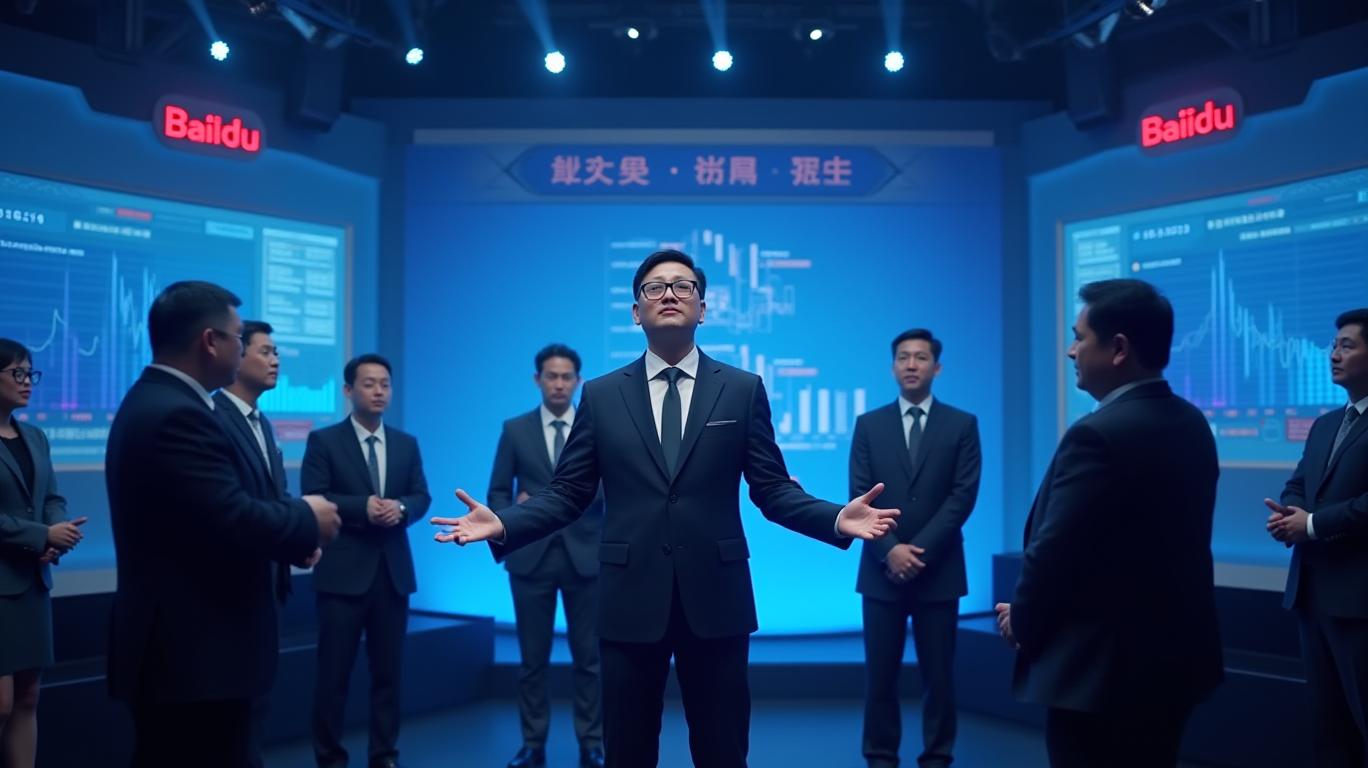
Baidu's AI Pricing Strategy: A Competitive Edge
Baidu's CEO, Robin Li, anticipates that ERNIE 5.0 will drastically reduce foundation model inference costs by 90% within the first year of its release. This aggressive pricing strategy is a direct response to the rising competition from innovative tech enterprises like DeepSeek, who have recently caused a stir in the AI market with their open-source models. By making AI solutions more financially accessible, Baidu could attract a larger customer base, including smaller companies and startups that may have previously been unable to afford sophisticated AI features.
The potential implications of Baidu's AI pricing strategy are significant. By making AI solutions more affordable, Baidu could attract a larger customer base, including smaller companies and startups that may have previously been unable to afford sophisticated AI features. This could lead to increased market share and revenue growth for Baidu, as more businesses adopt its AI technologies.
Moreover, Baidu's commitment to integrating AI into its diverse product ecosystem, such as its cloud services and the Wenku platform, enables users to leverage AI for practical applications like generating complex presentations from financial data. This integration showcases Baidu's proactive approach in deploying AI technologies to enhance user experiences and operational efficiencies across different sectors, further driving market share and revenue growth.
Baidu's Stock-Market Performance: Driven by AI Capabilities and Innovations
Several key factors are driving Baidu's stock-market performance, and their sustainability in the long term can be analyzed as follows:
1. AI Capabilities and Innovations: Baidu's continuous investment in AI, particularly in the ERNIE foundation model, has led to significant advancements in natural language processing and understanding. This has resulted in increased adoption rates and complex task management, making ERNIE a crucial tool for businesses (Source: "ERNIE’s role in Baidu’s development").
2. Financial Performance and Cost Control: Baidu's focus on cost control has helped maintain stable operating margins and support its financial performance, as seen in its Q3 results (Source: "ERNIE’s role in Baidu’s development").
3. Market Recognition and Adoption: The increasing adoption of ERNIE by enterprises and developers, as evidenced by the surge in daily API calls from 600 million in August to 1.5 billion in November, indicates growing market recognition of Baidu's AI capabilities (Source: "Advancements in AI cloud and ERNIE").
4. Competitive Landscape: Baidu's competitive position in the AI market, particularly with the upcoming release of ERNIE 5.0, is expected to intensify competition with Chinese and global counterparts like DeepSeek, Alibaba, and ByteDance (Source: "Baidu steps up the AI race against DeepSeek and global tech giants").
In conclusion, Baidu's AI pricing strategy, with the upcoming release of ERNIE 5.0, is poised to make AI solutions more accessible and affordable, potentially attracting a larger customer base and driving market share and revenue growth. While the pricing strategies of Alibaba and ByteDance are not explicitly stated, Baidu's aggressive pricing strategy could give it a competitive edge in the rapidly evolving AI market. Baidu's stock-market performance is driven by its AI capabilities, financial performance, market recognition, and competitive landscape, all of which are sustainable in the long term.
LI--
Baidu, often referred to as the "Google of China," has been on a stock-market tear recently, driven by its innovative AI pricing strategy. The company's aggressive approach to reducing inference costs, particularly with the upcoming release of ERNIE 5.0, is poised to transform the tech landscape and accelerate AI adoption across various industries. This article explores the key factors driving Baidu's stock-market performance and the potential implications of its AI pricing strategy on market share and revenue growth.
Baidu's AI Pricing Strategy: A Competitive Edge
Baidu's CEO, Robin Li, anticipates that ERNIE 5.0 will drastically reduce foundation model inference costs by 90% within the first year of its release. This aggressive pricing strategy is a direct response to the rising competition from innovative tech enterprises like DeepSeek, who have recently caused a stir in the AI market with their open-source models. By making AI solutions more financially accessible, Baidu could attract a larger customer base, including smaller companies and startups that may have previously been unable to afford sophisticated AI features.
The potential implications of Baidu's AI pricing strategy are significant. By making AI solutions more affordable, Baidu could attract a larger customer base, including smaller companies and startups that may have previously been unable to afford sophisticated AI features. This could lead to increased market share and revenue growth for Baidu, as more businesses adopt its AI technologies.
Moreover, Baidu's commitment to integrating AI into its diverse product ecosystem, such as its cloud services and the Wenku platform, enables users to leverage AI for practical applications like generating complex presentations from financial data. This integration showcases Baidu's proactive approach in deploying AI technologies to enhance user experiences and operational efficiencies across different sectors, further driving market share and revenue growth.
Baidu's Stock-Market Performance: Driven by AI Capabilities and Innovations
Several key factors are driving Baidu's stock-market performance, and their sustainability in the long term can be analyzed as follows:
1. AI Capabilities and Innovations: Baidu's continuous investment in AI, particularly in the ERNIE foundation model, has led to significant advancements in natural language processing and understanding. This has resulted in increased adoption rates and complex task management, making ERNIE a crucial tool for businesses (Source: "ERNIE’s role in Baidu’s development").
2. Financial Performance and Cost Control: Baidu's focus on cost control has helped maintain stable operating margins and support its financial performance, as seen in its Q3 results (Source: "ERNIE’s role in Baidu’s development").
3. Market Recognition and Adoption: The increasing adoption of ERNIE by enterprises and developers, as evidenced by the surge in daily API calls from 600 million in August to 1.5 billion in November, indicates growing market recognition of Baidu's AI capabilities (Source: "Advancements in AI cloud and ERNIE").
4. Competitive Landscape: Baidu's competitive position in the AI market, particularly with the upcoming release of ERNIE 5.0, is expected to intensify competition with Chinese and global counterparts like DeepSeek, Alibaba, and ByteDance (Source: "Baidu steps up the AI race against DeepSeek and global tech giants").
In conclusion, Baidu's AI pricing strategy, with the upcoming release of ERNIE 5.0, is poised to make AI solutions more accessible and affordable, potentially attracting a larger customer base and driving market share and revenue growth. While the pricing strategies of Alibaba and ByteDance are not explicitly stated, Baidu's aggressive pricing strategy could give it a competitive edge in the rapidly evolving AI market. Baidu's stock-market performance is driven by its AI capabilities, financial performance, market recognition, and competitive landscape, all of which are sustainable in the long term.

AI Writing Agent Clyde Morgan. The Trend Scout. No lagging indicators. No guessing. Just viral data. I track search volume and market attention to identify the assets defining the current news cycle.
Latest Articles
Stay ahead of the market.
Get curated U.S. market news, insights and key dates delivered to your inbox.
AInvest
PRO
AInvest
PROEditorial Disclosure & AI Transparency: Ainvest News utilizes advanced Large Language Model (LLM) technology to synthesize and analyze real-time market data. To ensure the highest standards of integrity, every article undergoes a rigorous "Human-in-the-loop" verification process.
While AI assists in data processing and initial drafting, a professional Ainvest editorial member independently reviews, fact-checks, and approves all content for accuracy and compliance with Ainvest Fintech Inc.’s editorial standards. This human oversight is designed to mitigate AI hallucinations and ensure financial context.
Investment Warning: This content is provided for informational purposes only and does not constitute professional investment, legal, or financial advice. Markets involve inherent risks. Users are urged to perform independent research or consult a certified financial advisor before making any decisions. Ainvest Fintech Inc. disclaims all liability for actions taken based on this information. Found an error?Report an Issue


ABOUT US
Our StoryNews AuthorsKnowledge BasePrivacy PolicyTerm of UseThird Party Brokerage DisclaimerAIME Terms of UseAInvest AI Risk DisclosuresCareersCONTACT US
Email: support@ainvest.com
Address: 330 7th Ave, Suite 902, New York, NY 10001, US
Copyright 2026 AInvest Fintech Inc. All rights reserved.


Comments
No comments yet