
Bahrain-U.S. Forge $17 Billion Economic Deals Amid Nuclear Cooperation Talks at White House
 Aime Summary
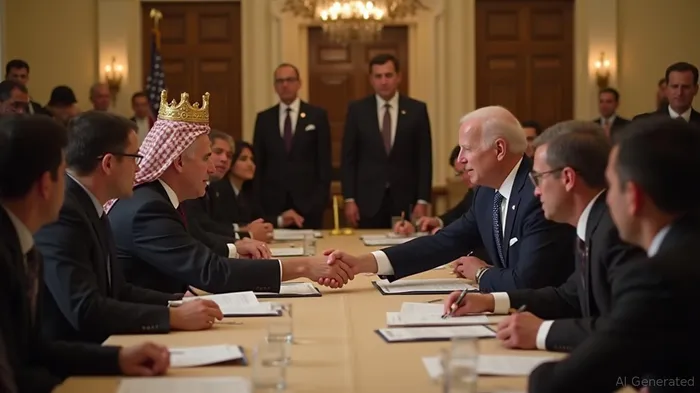
President Donald Trump hosted Bahrain Crown Prince Salman bin Hamad Al Khalifa at the White House, marking a significant step in strengthening relations with Gulf Arab leaders. Trump has made concerted efforts to engage with leaders of the Gulf, illustrated by this high-profile visit. The United States and Bahrain have inked an agreement to initiate discussions for a formal civilian-nuclear cooperation deal. This move is part of the Trump administration's broader strategy to bolster global energy security and American influence in the Middle East.
The discussions with Bahrain's crown prince extend beyond nuclear cooperation, encompassing a broader economic agenda. Salman bin Hamad Al Khalifa announced that private sectors in both Bahrain and the United States have entered into agreements worth approximately $17 billion. These deals include a notable investment involving Gulf Air and Boeing/GE valued at around $7 billion for the purchase of 12 aircraft, with options for more. This agreement notably supports American jobs and highlights the ongoing economic integration and trade relations between the two nations.
Secretary of State Marco Rubio and Bahraini Foreign Minister Abdullatif bin Rashid Al Zayani formalized the memorandum of understanding, which sets the groundwork for a "123 agreement." This will enable U.S. companies to engage in the development of nuclear energy projects in Bahrain. Secretary Rubio affirmed that the United States is willing to collaborate with any nation pursuing a civil nuclear program, provided it is not oriented towards weapons development or regional destabilization.
The bilateral talks also covered the strategic importance of the United States Trade Zone in Bahrain and its significant role in fostering a dynamic economic environment. Crown Prince Al Khalifa highlighted the potential for enhanced investment opportunities and the further strengthening of Bahrain-U.S. economic partnerships.
Later, President Trump had dinner with Qatar's Prime Minister Mohammad bin Abdulrahman Al Thani. This meeting took place against the backdrop of ongoing diplomatic efforts in Doha to negotiate a ceasefire between Israeli and Hamas representatives. Though Trump had previously mentioned Israel's agreement to a 60-day ceasefire, discussions are ongoing as Hamas has requested further negotiations.
The Trump administration continues to champion substantial economic and strategic initiatives in the region. Following Trump's previous visit to the Middle East, substantial deals were secured with nations such as Saudi Arabia and Qatar, indicating a continued commitment to fostering robust economic ties and strategic partnerships with Gulf countries.
These developments affirm the administration's focus on building strong alliances and promoting economic collaboration across the Gulf region — a strategy that underscores the intersection of energy, economic, and security interests in U.S. foreign policy. The visit by Bahrain's crown prince represents a crucial moment in ongoing diplomatic efforts and showcases the multifaceted approach towards enhancing bilateral and regional collaborations.

Stay ahead of the market.
Get curated U.S. market news, insights and key dates delivered to your inbox.
AInvest
PRO
AInvest
PRO



Comments
No comments yet