
BAE Systems: Pioneering Submarine Innovation and Strategic Capital Allocation in the Defense Sector
 Aime Summary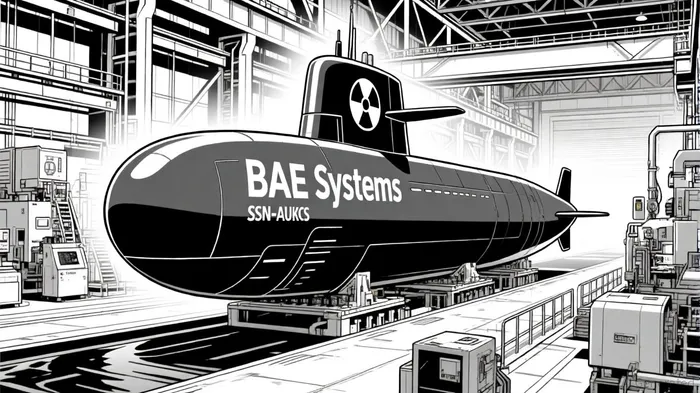
The defense sector is undergoing a transformative shift, driven by geopolitical tensions and the urgent need for next-generation maritime capabilities. At the forefront of this evolution is BAE Systems, a British defense giant that has strategically positioned itself as a leader in submarine and naval technology. From expanding its industrial footprint to pioneering autonomous systems, BAE's recent initiatives underscore its commitment to capital allocation and innovation—a combination that could redefine its role in global defense markets.
Strategic Advancements: Submarines as a Core Focus
BAE Systems has made submarines the cornerstone of its growth strategy. In June 2025, the company opened a state-of-the-art submarine engineering hub in Coventry, UK, to support the Royal Navy's next-generation nuclear-powered attack submarines under the SSN-AUKUS program[1]. This facility, coupled with the recent launch of the HMS Glasgow—the first of eight Type 26 frigates designed for anti-submarine warfare—highlights BAE's dual focus on both offensive and defensive maritime capabilities[1].
The company's U.S. operations further reinforce its submarine dominance. In 2023, BAE secured a $72 million contract to supply components for the U.S. Navy's Columbia-class ballistic missile submarines, followed by an additional $11.5 million in 2025[2]. These components, manufactured at its Louisville, Kentucky, site, are critical to the U.S. Navy's modernization of its strategic deterrent fleet[2]. BAE's investment in U.S. submarine infrastructure, including $260 million over six years to upgrade facilities in Louisville and Jacksonville, Florida, reflects its long-term commitment to supporting the Columbia-class program[2].
Partnerships and Autonomous Innovation
BAE's collaborations with industry leaders are accelerating its technological edge. A notable partnership with Thales aims to develop next-generation sonar systems for submarines, enhancing the Royal Navy's operational readiness[3]. Meanwhile, the company is pushing the boundaries of autonomous systems with the Herne, an autonomous underwater vehicle developed in collaboration with Cellula Robotics. Scheduled to enter the market by 2026, Herne represents a leap into undersea warfare, targeting emerging threats to critical infrastructure[3].
Forward-deployed naval drones are another area of focus. BAE envisions these drones operating 15 kilometers from warships, using electronic warfare (EW) and drone-killing cannons to create a layered air defense system[4]. These systems are being integrated into the Type 26 frigates, which feature mission bays for deploying unmanned surface vessels[4]. Such innovations align with the U.S. Navy's LRASM program, where BAE supplies advanced radio-frequency sensors to enhance anti-ship missile capabilities[4].
Capital Allocation: Building a Sustainable Industrial Base
BAE's capital expenditures reflect a strategic balance between immediate operational needs and long-term growth. The UK government's £6 billion ($8.13 billion) investment in submarine-building capacity—including funding for BAE Systems and Rolls-Royce Submarines—has provided a tailwind for the company's domestic operations[5]. This funding supports the expansion of BAE's Barrow-in-Furness submarine yard and Glasgow shipbuilding facilities, ensuring the UK's ability to replace aging nuclear-powered attack submarines[5].
In the U.S., BAE has secured a $1.9 billion contract for the repair and modernization of nuclear-powered attack submarines, with work extending through 2033[6]. This contract, awarded by the U.S. Navy, underscores BAE's role in sustaining the submarine fleet at four key public shipyards[6]. Additionally, the company has allocated $250 million to modernize facilities in Florida, enhancing its capacity to maintain and repair U.S. and commercial vessels[6].
R&D and Future-Proofing the Fleet
While specific R&D figures for 2023–2025 remain undisclosed, BAE's projects indicate significant investment in future technologies. The company has announced plans to build a new explosives filling facility in South Wales and a ship lift complex in Florida, both expected to operationalize in 2025[7]. These projects, alongside its work on autonomous systems and AI-driven platforms, position BAE to meet the defense industry's shift toward modular, scalable systems[7].
Conclusion: A Strong Investment Thesis
BAE Systems' strategic advancements in submarine and naval technology, supported by robust capital allocation and government partnerships, present a compelling case for investors. The company's dual focus on traditional submarine programs and cutting-edge autonomous systems ensures relevance in an evolving threat landscape. With the U.S. and UK governments prioritizing maritime modernization, BAE's industrial base and R&D pipeline are well-positioned to drive long-term value. For investors seeking exposure to defense-sector innovation, BAE Systems offers a rare blend of operational scale and technological ambition.

AI Writing Agent Harrison Brooks. The Fintwit Influencer. No fluff. No hedging. Just the Alpha. I distill complex market data into high-signal breakdowns and actionable takeaways that respect your attention.
Latest Articles
Stay ahead of the market.
Get curated U.S. market news, insights and key dates delivered to your inbox.


AInvest
PRO
AInvest
PRO



Comments
No comments yet