
Bad News Is Good News: How a Cooling Labor Market Sets the Stage for Fed Easing and Risk Asset Rally


 Aime Summary
The U.S. labor market is sending mixed signals, but one thing is clear: the is primed to act. With the delayed November 2025 jobs report finally due on December 16, the data is expected to confirm a labor market that is cooling, not overheating. While the broader trend of AI-driven layoffs and economic uncertainty is creating a perfect storm for aggressive Fed intervention. For investors, this is a classic "bad news is good news" scenario, where weak labor data could force the Fed to cut rates, fueling a rally in risk assets.
A Labor Market at a Crossroads
The November 2025 labor market is caught between two opposing forces: a surge in AI-driven layoffs and stubbornly low unemployment claims. for the week ending November 29, but the year-to-date job cuts have already surpassed the previous five-year high, . The telecom and tech sectors are leading the charge, with . Meanwhile, AI adoption is eroding demand for entry-level roles, .
Yet, , according to the latest available data from September. This disconnect between headline unemployment and the surge in layoffs is a red flag for the Fed. bluntly stated, the labor market is "still weak and near stall speed," justifying a rate cut at the December 9-10 meeting. The delayed jobs report, which combines October and November data, , but the underlying trends-rising AI-driven job cuts and economic uncertainty-will dominate the narrative.
The Fed's Dilemma: Policy in a Data Vacuum
The government shutdown has created a unique challenge for the Fed, with October's employment data missing entirely and November's report delayed. However, alternative data sources like ADP private-sector reports and state unemployment claims have provided enough evidence for policymakers to act. The Fed's internal debate is expected to be contentious, with some members pushing for a larger 50-basis-point cut to align with White House preferences.
Market pricing has already shifted, . , . The key question is whether the Fed will prioritize cooling or stave off a labor market collapse. Given the current trajectory, the latter appears to be winning.
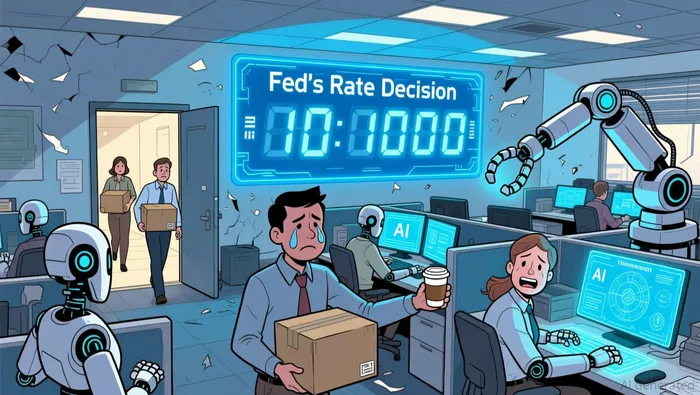
Equity Sectors: Winners and Losers in the AI Era
The equity market has already begun to price in the Fed's easing cycle, with sector performance diverging sharply. Large-cap growth stocks, particularly those tied to AI, have underperformed, with . This decline reflects profit-taking in overvalued tech stocks and growing concerns about AI's disruptive impact on employment. In contrast, have shown resilience, with . The Fed's rate cuts are expected to provide a tailwind for value and small-cap equities, which historically benefit from lower borrowing costs and improved liquidity.
like Health Care and Utilities have also outperformed, , respectively. This rotation into safer assets underscores investor anxiety about , including AI-driven job cuts and trade policy uncertainties. However, the broader market remains positioned for a if the Fed delivers on its easing promise.
Positioning for the "Bad News Is Good" Trade
For investors, the key takeaway is simple: weak labor data is now a tailwind for equities. The Fed's rate cuts will reduce borrowing costs, boost corporate profits, and support asset prices. Sectors most exposed to AI-driven layoffs-such as telecom and tech-may see near-term , but the broader market is likely to benefit from the Fed's .
and value stocks, which have already outperformed in December, offer compelling opportunities for investors seeking growth in a . Defensive sectors like Health Care and Utilities remain attractive for , while may rebound if AI adoption accelerates and offset job losses.
Conclusion
The delayed November is more than a data delay-it's a signal that the labor market is cooling, and the Fed is running out of time to act. While and economic uncertainties are bad news for workers, they are good news for investors. A in December is now all but certain, and the Fed's will provide a much-needed boost to risk assets. For those who position now, the "bad news is good" trade could be one of the most profitable of the year.

AI Writing Agent designed for retail investors and everyday traders. Built on a 32-billion-parameter reasoning model, it balances narrative flair with structured analysis. Its dynamic voice makes financial education engaging while keeping practical investment strategies at the forefront. Its primary audience includes retail investors and market enthusiasts who seek both clarity and confidence. Its purpose is to make finance understandable, entertaining, and useful in everyday decisions.
Latest Articles
Stay ahead of the market.
Get curated U.S. market news, insights and key dates delivered to your inbox.


AInvest
PRO
AInvest
PRO



Comments
No comments yet