
Backpack's $BP Token Faces Controversy Over Airdrop Allocation and Anti-Sybil Enforcement
 Aime Summary
Backpack’s $BP token launch triggered community backlash due to controversial airdrop allocation and anti-sybil measures according to reports.
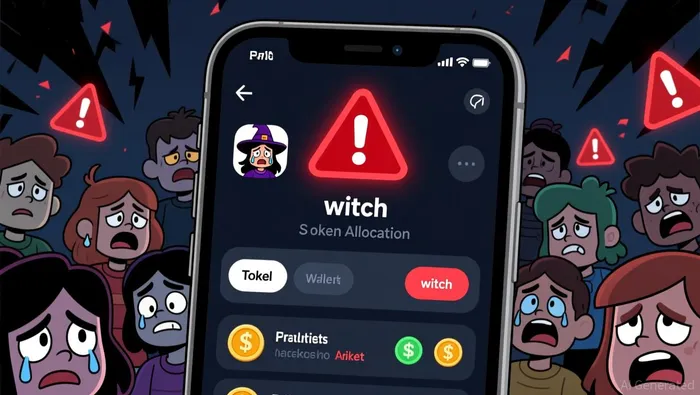
The token’s price dropped over 33% as users were flagged as "witches," resulting in reduced or zero airdrop allocations.
Founder Armani Ferrante denied OTC sales allegations and admitted the anti-sybil enforcement was too rigid.
Backpack’s $BP token launch on March 23, 2026, introduced a 25% airdrop to users and NFT holders. Shortly after the token generation event (TGE), the airdrop algorithm flagged many users with multiple accounts as "witches," resulting in drastically reduced or zero airdrop allocations.
The controversy intensified as the token’s fully diluted valuation (FDV) dropped to $200 million amid the fallout. Key opinion leaders and retail users raised concerns over perceived unfairness in the distribution.
Founder Armani Ferrante addressed the community directly, denying allegations of insider OTC sales and admitting that the anti-sybil enforcement had been too rigid. He announced a 50% token restoration for eligible users and a buyback program to stabilize liquidity according to reports.
Why Did the Airdrop Allocation Spark Controversy?
The strict "one person, one account" policy led to accusations of unfairness and governance misalignment. Ferrante explained the intent was to prevent account manipulation and protect retail users, but the enforcement created a trust crisis.
The airdrop allocation mechanism flagged many users as "witches," which significantly reduced or eliminated their token allocation. This rigid enforcement sparked community outrage and raised questions about the platform's tokenomics.
Ferrante acknowledged that the process lacked nuance and transparency, which led to accusations of favoritism and governance misalignment.
What Are the Implications for Investors and Market Trust?
The controversy has had significant implications for investors and market trust. The token's price dropped over 68% from its peak, and the community expressed concerns about the platform's governance and transparency.
Ferrante emphasized that the team's success is tied to the token's long-term performance and that the focus should remain on product development and compliance.
The platform's history with FTX and its equity-linked staking mechanism raised long-term risks. Ferrante stressed the importance of building a compliant, crypto-native financial institution with future expansion into new markets.
Despite the challenges, Backpack has seen significant trading volume and offers a unique staking-to-equity conversion mechanism, which may support the token's value over time according to reports.
The path forward involves re-evaluating flagged accounts and restoring community trust through transparency and appeals.

Blending traditional trading wisdom with cutting-edge cryptocurrency insights.
Latest Articles
Stay ahead of the market.
Get curated U.S. market news, insights and key dates delivered to your inbox.


AInvest
PRO
AInvest
PRO



Comments
No comments yet