
Babcock & Wilcox Surges 12.6%: What’s Behind the Unusual Intraday Move?
 Aime Summary
Technical Signal Analysis
Babcock & WilcoxBW-- (BW.N) made a sharp 12.6% move intraday, despite no major fundamental news being reported. When we look at the technical indicators for the day, none of the classic reversal or continuation patterns—such as the head and shoulders, double bottom, or RSI oversold—were triggered. 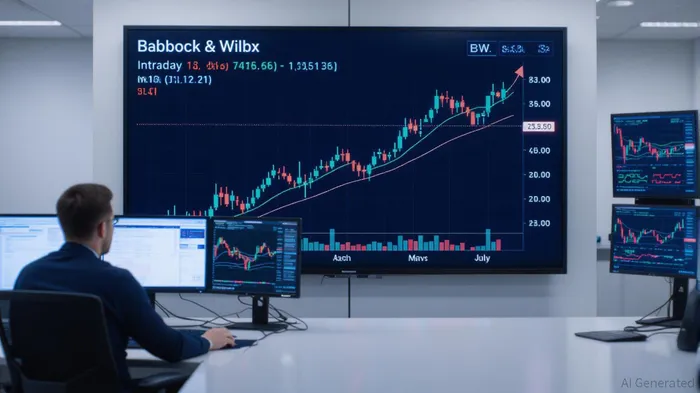 The MACD and KDJ signals also remained neutral, with no golden or death crosses detected.
This absence of strong technical signals suggests that the price action is likely driven by factors outside of traditional chart patterns. While traders might have been watching for a breakout or reversal, the move appears to have occurred independently of these signals.
Order-Flow Breakdown
Unfortunately, there were no block trading data or detailed order-flow metrics available to analyze the buying or selling pressure behind this move. Without knowing where the bids and offers were concentrated, it's challenging to determine whether this was a coordinated institutional move or a sudden burst of retail interest. However, the volume of 2,289,147 shares does represent a relatively high level of activity for the stock, which is currently valued at $693 million in market cap.
Peer Comparison
Looking at related stocks, the performance was mixed. For instance, AXL (Allstate) gained 0.07%, while ADNT (Adient) surged 1.11%. On the other hand, BH (Bausch Health) and BH.A fell sharply by 1.35% and 1.73%, respectively. These divergent moves suggest that the market for industrial and capital goods stocks may be more volatile than usual, but the strong move in BW.N appears to be more isolated.
The mixed performance among peers indicates that while there may be sector-wide themes in play, this move is more likely driven by BW.N-specific factors—whether speculative, algorithmic, or even short-term arbitrage opportunities.
Hypothesis Formation
Given the lack of fundamental news and the mixed behavior of peer stocks, two hypotheses stand out:
Short Squeeze or Algorithmic Trigger: BW.N has a relatively small market cap and low liquidity, making it vulnerable to short-term squeezes or algorithmic trading strategies that can create sharp price swings with relatively low volume. The absence of any technical triggers suggests the move may have been initiated by a non-technical event, like a short-covering rally or a trade automation trigger.
Arbitrage or Options Expiry Influence: The timing could be tied to options expiration or the unwinding of an arbitrage trade. The intraday nature of the move, without a lasting technical pattern, makes it plausible that the move was temporary and executed by a small group of traders capitalizing on a pricing inefficiency.

Stay ahead of the market.
Get curated U.S. market news, insights and key dates delivered to your inbox.
AInvest
PRO
AInvest
PRO



Comments
No comments yet