
BA presents "best and final" offer to striking machinists; Will it be enough?
Boeing recently presented its "best and final" offer to the machinists' union, a move that underscores the company's eagerness to resolve the ongoing strike that began on September 13. The offer includes a 30% pay increase over four years, an improvement from the 25% proposed in the earlier offer, which was overwhelmingly rejected by the union. Additionally, Boeing has doubled the ratification bonus to $6,000, reinstated the annual performance bonus, and increased the 401(k) match to 100% of the first 8% of salary, plus an automatic 4% contribution. However, the offer does not restore the traditional pension plan, which remains a critical issue for many union members.
Despite these enhancements, the union leadership has expressed dissatisfaction with the proposal, stating that it does not sufficiently address the members' concerns, particularly around retirement benefits and overall compensation. The union has decided not to hold a ratification vote by Boeing's Friday deadline, indicating that the machinists are unlikely to accept the deal in its current form. Instead, the union plans to survey its members to gather feedback on the offer, with hopes of re-engaging in negotiations with Boeing.
The ongoing strike is already impacting Boeing's operations, particularly in the production of key aircraft models such as the 737, 777, and 767. Boeing's Q3 deliveries have slowed down significantly, with only 20 737 MAX jets delivered since the strike began. The longer the strike continues, the more it will affect Boeing's ability to meet its delivery targets, potentially leading to financial strain and a credit rating downgrade. Analysts have suggested that Boeing may need to raise equity to support its operations if the strike is prolonged.
Boeing's latest offer reflects the company's financial pressures, as it has introduced rolling furloughs for non-union employees and implemented cost-cutting measures such as a hiring freeze, reduced business travel, and decreased spending on suppliers. The strike is expected to have a significant impact on Boeing's free cash flow, with estimates suggesting that the sweetened offer could trim about $0.5 billion annually from Boeing's free cash flow.
The outcome of the strike and the union's response to Boeing's offer will be critical in determining the company's ability to recover and maintain its production schedule. If the strike continues into the next month, as some analysts expect, Boeing could face even greater challenges in ramping up production and delivering on its commitments. The potential for an equity raise looms large, with analysts suggesting that Boeing may need to raise as much as $10 billion, which could further impact its share price.
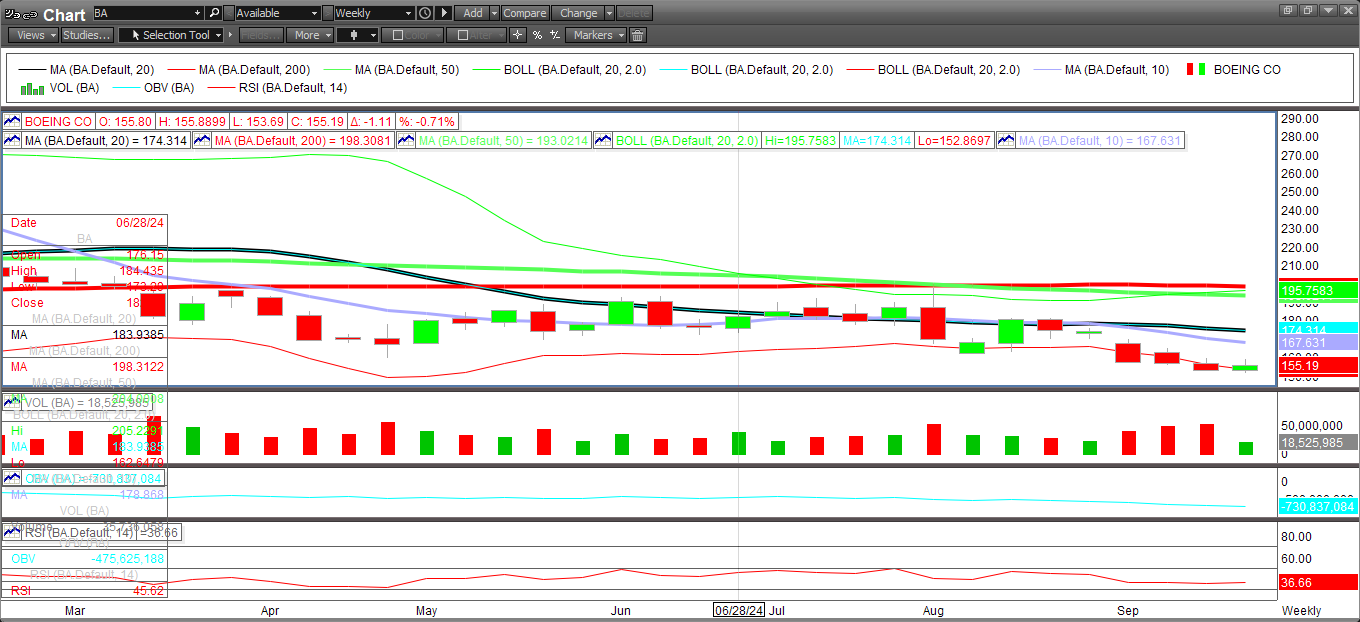
Shares of BA are hanging on to a thread at the $155 level. This represents the lower end of the Bollinger band. The RSI sits at 38 which suggests it has not hit oversold territory. If the strike lingers on and credit agencies downgrade the company's debt, then that could lead to a flush lower.
In summary, while Boeing has made significant concessions in its latest offer, the union's refusal to vote on the proposal suggests that the strike may continue, further complicating Boeing's financial and operational outlook. The company faces a tough road ahead as it navigates the impact of the strike, the potential need for an equity raise, and ongoing pressures in its defense business.

Senior Analyst and trader with 20+ years experience with in-depth market coverage, economic trends, industry research, stock analysis, and investment ideas.
Latest Articles
Stay ahead of the market.
Get curated U.S. market news, insights and key dates delivered to your inbox.
AInvest
PRO
AInvest
PRO



Comments
No comments yet