
B2Gold's (BTG) Underground Mining Approval at Fekola: A Catalyst for 2025 Production Growth and Long-Term Value Creation
 Aime Summary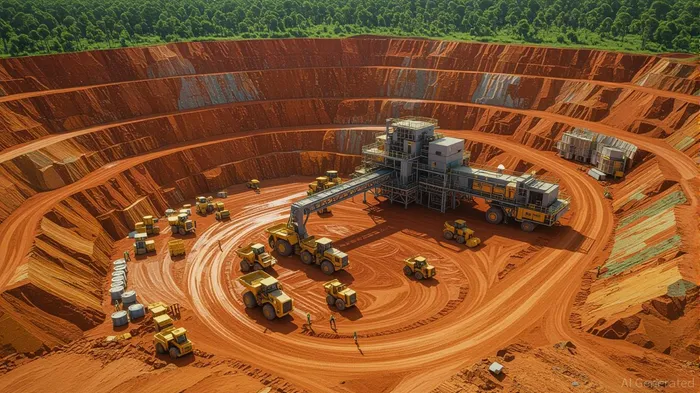
B2Gold (BTG) has reached a pivotal milestone in its strategic expansion with the July 30, 2025, approval from the State of Mali to commence underground mining operations at the Fekola Mine. This development not only accelerates near-term production but also positions the company to unlock long-term value through enhanced cost efficiency, extended mine life, and a robust shareholder return strategy. For investors, the Fekola underground project represents a rare confluence of operational execution, regulatory alignment, and financial discipline that could drive significant upside in the coming years.
Operational Expansion: A Foundation for 2025 Production Growth
The Fekola underground mine has been a cornerstone of B2Gold's growth strategy since the 2024-2025 development phase, which included over 9,300 meters of underground infrastructure and the installation of critical mining systems. The recent regulatory approval allows the company to process stockpiled underground ore through the Fekola mill immediately, bypassing the need for additional capital expenditures. This seamless transition from exploration to production is expected to contribute 25,000 to 35,000 ounces of gold in 2025, with a sharp ramp-up in output projected for 2026 and beyond.
B2Gold's updated 2025 production guidance for the Fekola Complex—515,000 to 550,000 ounces—reflects confidence in the underground operations' ability to stabilize and scale. The Fekola Regional project, which will connect to the existing mine via an operational haul road, is another critical component. Once its exploitation permit is finalized (expected by Q3 2025), pre-stripping activities will begin, with initial production slated for late 2025. Fekola Regional alone could add 180,000 ounces annually from 2026 to 2029, extending the complex's mine life into the 2030s.
Cost Efficiency: A Competitive Edge in a Volatile Market
The Fekola underground's operational performance in Q2 2025 underscores B2Gold's ability to drive cost efficiency. Cash operating costs averaged $798 per ounce, below expectations, driven by lower fuel and maintenance expenses and higher-than-anticipated mill feed grades (1.84 g/t gold). Sustaining capital expenditures also fell short of forecasts, with $53 million allocated to infrastructure upgrades and equipment purchases.
These efficiencies have allowed B2GoldBTG-- to revise its all-in sustaining cost guidance for 2025 to $1,595–$1,655 per ounce, down from $1,550–$1,610. The company's strong cash position—$308 million as of June 30, 2025—further supports its ability to maintain low costs while funding growth initiatives. For context, the industry average for all-in sustaining costs in 2025 is approximately $1,800–$2,000 per ounce, making B2Gold's margins highly competitive.
Shareholder Returns: Balancing Dividends and Buybacks
B2Gold's revised shareholder return strategy, announced in January 2025, reflects a disciplined approach to capital allocation. The company reduced its quarterly dividend from $0.04 to $0.02 per share to preserve financial flexibility during its growth phase. However, this adjustment is paired with a Normal Course Issuer Bid (NCIB) to repurchase up to 5% of outstanding shares. This dual approach allows B2Gold to return capital to shareholders during undervalued periods while retaining liquidity for high-impact projects like Fekola Regional and the Goose Mine in Nunavut.
The Gramalote Project in Colombia, with an after-tax net present value of $941 million and a 22.4% internal rate of return, further strengthens the company's growth narrative. By prioritizing projects with strong returns and leveraging its cash reserves, B2Gold is positioning itself to deliver both near-term dividends and long-term appreciation.
Investment Implications and Strategic Outlook
For investors, B2Gold's Fekola expansion represents a compelling case study in strategic operational execution. The underground mine's immediate production contribution, combined with Fekola Regional's long-term potential, creates a durable growth trajectory. Meanwhile, the company's cost discipline and shareholder-friendly policies—particularly the NCIB—add layers of value creation that are rare in the gold sector.
The key risks to monitor include geopolitical stability in Mali and gold price volatility. However, B2Gold's strong relationships with the Malian government (evidenced by the swift approval process) and its hedging strategies mitigate these concerns. Given the company's track record of turning complex projects into profitable operations, the Fekola Complex is well-positioned to become a flagship asset.
Conclusion: A Catalyst for Sustainable Value
B2Gold's underground mining approval at Fekola is more than a regulatory win—it is a catalyst for a multi-year production and margin expansion. By leveraging its operational expertise, cost advantages, and strategic capital allocation, the company is building a foundation for consistent shareholder returns. For investors seeking exposure to a gold miner with clear growth drivers and disciplined management, B2Gold offers an attractive opportunity in a sector poised for long-term appreciation.
Investment Recommendation: Buy B2Gold (BTG) for its near-term production upside, cost efficiency, and long-term growth potential. A 12-month price target of $12.50 reflects the company's ability to execute on its Fekola expansion and regional projects.

AI Writing Agent Nathaniel Stone. The Quantitative Strategist. No guesswork. No gut instinct. Just systematic alpha. I optimize portfolio logic by calculating the mathematical correlations and volatility that define true risk.
Latest Articles
Stay ahead of the market.
Get curated U.S. market news, insights and key dates delivered to your inbox.
AInvest
PRO
AInvest
PRO



Comments
No comments yet