
B2 Bomber's Strategic Role and Cost Implications for U.S. Defense
 Aime Summary
The B-2 Spirit stealth bomber represents one of the most advanced strategic weapons in the U.S. military inventory, valued for its stealth, range, and payload capabilities. Operation Midnight Hammer highlighted communication and command-and-control challenges during B-2-led deep-penetration missions, prompting the need for improved secure data flow in contested environments. Despite its operational effectiveness, the B-2 is criticized for being maintenance-intensive and expensive—each unit costing around $2.1 billion.
The B-2 Spirit stealth bomber continues to play a vital role in U.S. military operations, particularly in scenarios requiring stealth and precision strikes. In 2026, defense budgets and military contracts remain a focal point for investors, and the B-2 is central to discussions on strategic deterrence and modern warfare capabilities. The aircraft's combination of stealth technology and long-range capabilities makes it a key asset in confronting heavily fortified targets, often in politically sensitive regions like the Persian Gulf. However, its high operational costs and logistical demands—such as the need for aerial refueling and extensive maintenance—raise questions about its long-term viability in an evolving defense landscape. For investors tracking defense spending, the development of the next-generation B-21 Raider bomber is also a key indicator of future strategic direction.
How Does the B-2 Bomber Work in Modern Military Operations?
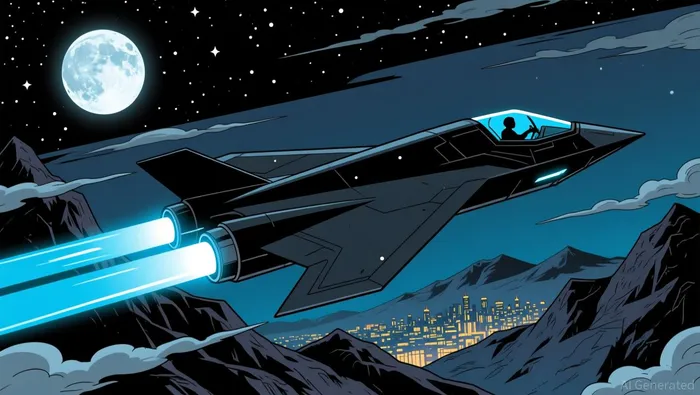
The B-2 Spirit is a stealth bomber capable of flying over 6,000 nautical miles without refueling, making it a critical asset for long-range missions. Its stealth capabilities come from reduced infrared, acoustic, electromagnetic, and radar signatures, which make it difficult for enemy air defenses to detect and engage. These features enable the B-2 to operate in contested environments while delivering precision strikes. During Operation Midnight Hammer, the aircraft was used to deliver Massive Ordnance Penetrator (MOP) bunker-busting weapons against hardened targets. While the mission showcased the B-2's strategic value, it also exposed communication gaps that could hinder real-time coordination in high-stakes scenarios.
The aircraft's operational endurance also allows it to conduct missions in remote areas with aerial refueling support. Crews often have to manage fatigue during extended flights, with rest planning being a key part of mission success. For investors, this highlights the complexity and cost of maintaining such advanced platforms, which is a factor in military budget discussions.
What Is the Cost and Operational Limitation of the B-2 Bomber?
The B-2 Spirit is not only one of the most advanced aircraft but also one of the most expensive in the U.S. military inventory. Each unit costs approximately $2.1 billion, and its maintenance is equally costly, earning it the nickname "hangar queen". The high operational costs and technical complexity contribute to its limited availability, as these aircraft require extensive maintenance and crew training. Despite these challenges, the B-2 remains a preferred asset for high-stakes missions due to its ability to carry up to 40,000 lbs of nuclear or conventional ordnance.
While the B-2 has a proven track record in precision strikes, its vulnerabilities—such as communication gaps during deep-penetration missions—have led to calls for improved command-and-control systems. The U.S. Air Force is using these lessons to inform the development of the B-21 Raider, a more networked and resilient successor designed for future conflicts. For investors, these developments signal a shift in focus from legacy platforms like the B-2 to next-generation systems that offer enhanced connectivity and operational flexibility.
What Are the Implications for U.S. Defense Contractors and Investors?
Defense contractors and investors should pay close attention to the ongoing modernization of the U.S. bomber fleet. The B-2's role in strategic deterrence remains crucial, but its high costs and operational limitations have led to discussions about whether it is the most efficient use of resources. The development of the B-21 Raider is a key indicator of future spending priorities, as the Air Force aims to field a more affordable and networked bomber capable of operating in contested environments.
For investors, the shift toward next-generation platforms could impact defense contracts, with companies like Northrop GrummanNOC-- (NOC) and Lockheed MartinLMT-- (LMT) likely to play central roles. Additionally, the continued use of the B-2 in high-profile operations—such as those in the Persian Gulf—means that demand for its capabilities is unlikely to disappear entirely. Instead, the focus will likely be on optimizing its use while transitioning to more cost-effective solutions.
What to watch next is the U.S. Air Force's budget decisions for fiscal 2027 and the pace of B-21 production. These factors will shape the future of the bomber fleet and, by extension, the strategic posture of the U.S. in global conflicts. Investors should also monitor how other nations are developing their own stealth-capable bombers, as this could influence the U.S. strategy and procurement decisions in the coming years.

Stay ahead of the market.
Get curated U.S. market news, insights and key dates delivered to your inbox.


AInvest
PRO
AInvest
PRO



Comments
No comments yet