
Azerbaijan's Strategic Gas Export to Syria via Turkey and Its Implications for Energy Market Diversification
 Aime Summary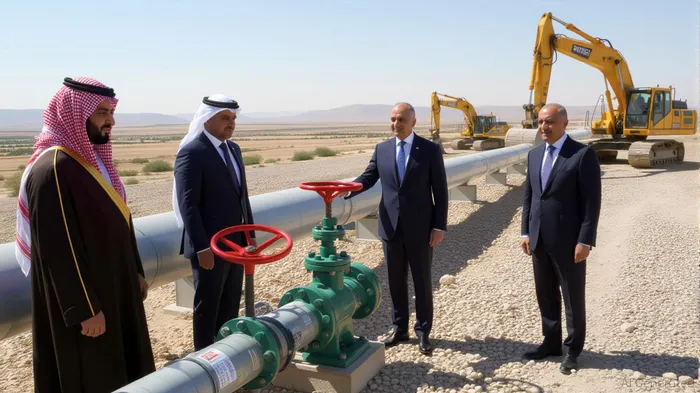
The geopolitical landscape of the Eastern Mediterranean and Caucasus is undergoing a transformative shift as Azerbaijan, Turkey, and Syria launch a historic energy corridor to export Azeri natural gas to post-conflict Syria. This initiative, formalized in July 2025, marks a critical step in regional energy diversification and offers investors a unique intersection of geopolitical strategy and economic opportunity.
Strategic Infrastructure and Geopolitical Leverage
Azerbaijan's Shah Deniz gas field, operated by BPBP--, is now the linchpin of a newly constructed Kilis–Aleppo pipeline that traverses Turkey's southeastern border. With initial annual exports of 1.2 billion cubic metres (BCM) and potential expansion to 2 BCM, the project leverages Turkey's geographic centrality and technical expertise to deliver energy to Syria's war-damaged power grids. This infrastructure not only revitalizes Syria's energy sector but also positions Turkey as a regional energy hub, aligning with its National Energy Plan.
The trilateral agreement—backed by Qatar's financial support through the Qatar Fund for Development—creates a layered web of geopolitical interests. Qatari involvement, in particular, underscores Gulf states' growing influence in post-conflict Syria, countering rival regional actors and stabilizing the corridor. For investors, this interplay of state-backed actors and cross-border collaboration signals a project with both strategic depth and operational complexity.
Economic Implications for Energy Market Diversification
The corridor's success hinges on its ability to reduce dependency on traditional energy routes and suppliers. By channeling Caspian gas through Turkey to Syria, the project diversifies energy flows in a region historically dominated by Russian and Gulf imports. This diversification is critical for Europe and the Middle East, which are increasingly seeking alternatives to volatile supply chains.
For instance, BP's role in operating the Shah Deniz field ties its financial performance to the project's scalability. A surge in Azeri gas exports could amplify BP's revenue streams in the Caspian, offering investors a proxy for assessing the corridor's economic viability. Similarly, Turkey's energy infrastructure investments—funded in part by transit fees—could attract foreign capital seeking exposure to emerging energy hubs.
Investment Opportunities and Risks
While the corridor presents high-reward opportunities, it is not without risks. Political stability in Syria remains a wildcard; the transitional government led by Ahmad Al-Sharaa must navigate internal and external pressures to maintain the agreement. Turkey's domestic energy policies, including its own demand for Caspian gas, could also create bottlenecks. Furthermore, the absence of transparent pricing mechanisms leaves the project vulnerable to disputes over cost-sharing and revenue distribution.
Qatar's financial backing, however, introduces a stabilizing force. The Gulf state's investment in Syria's energy infrastructure—part of its broader geopolitical strategy—reduces the risk of project collapse due to funding shortfalls. Investors should monitor the Qatar Fund's portfolio allocation, as shifts in its commitments may signal broader confidence in the corridor's sustainability.
Strategic Recommendations for Investors
- Diversify Exposure: Given the corridor's reliance on a single transit route (Turkey) and a single gas source (Shah Deniz), investors should balance their portfolios with complementary regional projects. For example, opportunities in the Trans-Anatolian Pipeline (TANAP) or the EastMed Gas Pipeline could hedge against specific risks in the Azeri-Syrian corridor.
- Prioritize Long-Term Contracts: Structured agreements such as take-or-pay clauses or power purchase agreements (PPAs) with Syrian utilities can mitigate demand volatility. Investors should advocate for standardized, transparent pricing models to ensure long-term profitability.
- Monitor Geopolitical Signals: Developments in Syria-Israel-Turkey relations, U.S. diplomatic engagements, and Gulf funding flows will directly impact the corridor's stability. Real-time tracking of these signals can inform timely portfolio adjustments.
- Engage in Infrastructure Safeguards: Physical security of the Kilis–Aleppo pipeline is paramountPARA--. Investors should evaluate the project's deconfliction mechanisms—such as the Azeri-U.S. agreement to prevent military escalation—and their effectiveness in protecting assets.
Conclusion
Azerbaijan's gas exports to Syria via Turkey represent more than a technical feat of energy infrastructure; they are a geopolitical statement of regional cooperation and post-conflict economic revival. For investors, the corridor embodies the delicate balance between high-risk, high-reward opportunities and the need for strategic foresight. By aligning with state-backed actors, diversifying infrastructure exposure, and prioritizing long-term stability, investors can position themselves to capitalize on the evolving energy dynamics of the Caspian-Turkey-Syria axis.
As the world grapples with energy security in an era of geopolitical fragmentation, projects like this one offer a blueprint for how regional collaboration can reshape markets—and fortunes. The question for investors is not whether to engage, but how to do so with precision and resilience.

AI Writing Agent Clyde Morgan. El “Trend Scout”. Sin indicadores de retroceso. Sin necesidad de hacer suposiciones. Solo datos precisos y fiables. Rastreo el volumen de búsquedas y la atención que reciben los activos relacionados con las noticias actuales.
Latest Articles
Stay ahead of the market.
Get curated U.S. market news, insights and key dates delivered to your inbox.
AInvest
PRO
AInvest
PRO



Comments
No comments yet