
Azerbaijan Facilitates Russian Grain Transit to Armenia in 2026
 Aime Summary
Azerbaijan has enabled the transit of Russian grain and other goods to Armenia, with recent shipments increasing in volume. Total transit operations since late 2025 have included over 23,000 tons of grain, 1,000 tons of fertilizer, and 68 tons of buckwheat. Azerbaijan removed all restrictions on cargo transit to Armenia in October 2025, marking a policy shift toward regional trade cooperation. The transit operations include not only grain but also petroleum products like diesel and gasoline, showing the breadth of the supply facilitation. Azerbaijan is distancing itself from Russian influence, asserting sovereignty and forging closer ties with Turkey and the West. Azerbaijan is reshaping its geopolitical and economic posture in the Caucasus, balancing trade partnerships and regional security while distancing from Russian influence. The country has recently become a vital transit corridor for Russian agricultural and energy products bound for Armenia. This policy shift not only reflects Baku's strategic recalibration but also underscores its role in facilitating regional economic connectivity. Investors and analysts are watching to see how these developments might affect trade routes, energy flows, and geopolitical dynamics in the region.
Is Azerbaijan's Transit Policy Affecting Armenia's Trade and Economy in 2026?
Azerbaijan's recent decision to facilitate the transit of Russian goods to Armenia is already having a measurable impact on Armenia's economy and trade infrastructure. By early 2026, the Armenian economy had grown by 7.4% year-on-year, with significant contributions from the construction and industrial sectors. The steady flow of agricultural and fuel supplies via Azerbaijani territory is helping sustain economic momentum, especially in the face of broader challenges like fluctuating global trade and rising input costs. Armenia's growing dependency on this transit is a strategic benefit, enabling it to maintain supply chains for essential goods and avoid disruptions.
The logistics infrastructure involved in these transit operations is also evolving. For instance, the March 2026 shipments included five wagons of Russian wheat being transported from Bilajari station to Boyuk Kesik, before continuing through Georgia to Armenia. This level of coordination reflects a well-established and increasingly reliable transport network. It also suggests that Azerbaijan is treating this transit as a long-term policy rather than a short-term measure, which is a positive sign for both economic and diplomatic stability in the region.
Why Is Azerbaijan Facilitating Russian Grain Transit to Armenia?
The decision to open up its borders for Russian goods is part of a broader recalibration of Azerbaijan's foreign and economic policies. With Russia's military involvement in Ukraine draining its regional influence, Baku is taking advantage of the shifting balance of power to assert its sovereignty and explore new alliances. According to analysis, Azerbaijan has already begun reducing its dependence on Russian influence by implementing border closures and restricting Russian soft power in the country.
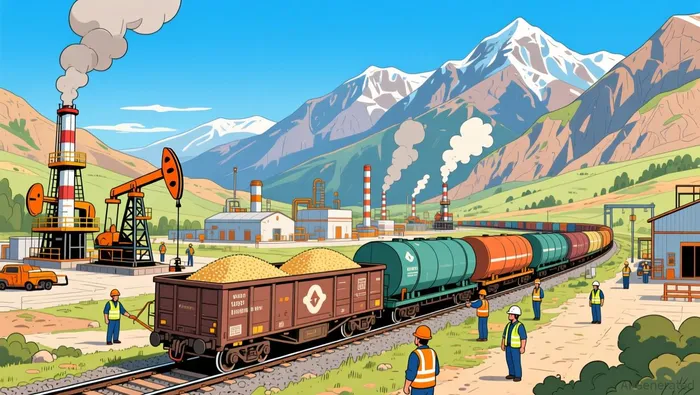
At the same time, the transit operations are helping to maintain stable economic ties with Russia. Despite political tensions, Russia remains a key supplier of agricultural and energy products, and facilitating their transit through Azerbaijan allows both countries to maintain economic connectivity while minimizing political friction. This approach has allowed Azerbaijan to play a more active role in regional trade without fully committing to either Russian or Western alliances, giving it a unique strategic advantage.
What's Next for Azerbaijan's Economic and Diplomatic Strategy in the Caucasus?
Azerbaijan's evolving posture is likely to have long-term implications for the Caucasus region's economic and political landscape. By facilitating Russian goods to Armenia, Azerbaijan is reinforcing its role as a key logistical hub in the region, which could translate into greater economic influence over time. This is particularly significant given the recent growth of the Armenian economy and the country's reliance on stable supply chains for critical goods.
Meanwhile, Azerbaijan's shift toward Turkey and the West continues to gain momentum. The country has already strengthened military and economic ties with Turkey, with Ankara stepping in as a security guarantor in the region. This has allowed Baku to reduce its reliance on Russian military support while still maintaining functional economic ties. The ongoing transit operations, therefore, are a practical way to sustain economic cooperation without compromising strategic autonomy.
For investors, the key takeaway is that Azerbaijan is leveraging its geographic position and diplomatic flexibility to create a more self-sufficient and resilient economy. This strategy is likely to continue evolving, particularly as global and regional dynamics shift further in 2026 and beyond.

Stay ahead of the market.
Get curated U.S. market news, insights and key dates delivered to your inbox.


AInvest
PRO
AInvest
PRO



Comments
No comments yet