
The New Axis: How Russia-North Korea Military Ties Reshape Global Defense Markets and Tech Supply Chains
 Aime Summary
The world is witnessing a seismic shift in global power dynamics as Russia and North Korea forge a deepening military-industrial alliance. This partnership, once a fringe concern, has evolved into a strategic axis that challenges U.S. dominance in defense and technology supply chains. By 2025, North Korea has become a critical supplier of artillery, missiles, and combat troops to Russia's war in Ukraine, while Moscow has provided Pyongyang with advanced propulsion systems, drone technology, and economic lifelines. The implications are profound: a restructured black-market network, circumvention of Western sanctions, and a reinvigoration of North Korea's defense industry. For investors, this represents both a threat and an opportunity.
Geopolitical Shifts and the Erosion of U.S. Dominance
The Russia-North Korea alliance is not merely a transactional relationship but a recalibration of global power. By 2025, North Korea has supplied Russia with over 12 million artillery shells, 100 ballistic missiles, and 15,000 troops, effectively becoming a second-tier defense supplier to Moscow. This has allowed Russia to sustain its war effort while reducing reliance on domestic production, which struggles to match the volume of Western counter-arms shipments. For North Korea, the partnership has injected $20 billion into its economy, enabling modernization of its military-industrial base and reducing dependence on China.
The U.S. and its allies face a dual challenge: the erosion of their ability to enforce sanctions and the emergence of a parallel supply chain for advanced military technology. Russia's transfer of kerosene-liquid oxygen engines to North Korea for satellite launches, for instance, signals a broader trend of technology diffusion. Similarly, the deployment of North Korean troops in Ukraine provides Pyongyang with battlefield-tested tactics, including drone warfare and electronic countermeasures, which could be replicated in future conflicts.
Disrupting Western Sanctions: Black-Market Channels and Alternative Trade Networks
The alliance has created a shadow economy that bypasses traditional sanctions. North Korea's crude oil imports, capped at 500,000 barrels annually under UN restrictions, have surged via Russian ports like Vladivostok. In return, Pyongyang has supplied Russia with food, labor, and military hardware. This barter system is facilitated by third-party intermediaries and cryptocurrency transactions, creating a decentralized network that is difficult to track.
Investors should monitor companies that provide infrastructure for these alternative trade routes. For example, firms specializing in maritime logistics, such as those operating in the Tumen River region (a tri-junction of Russia, China, and North Korea), could benefit from increased cross-border activity. Additionally, cybersecurity firms like Palo Alto Networks (PANW) are poised to profit from heightened demand for tools to detect and disrupt illicit financial flows.
Investment Opportunities in Sanction-Resistant Technologies
The Russia-North Korea partnership has accelerated demand for technologies that can operate in hostile or restricted environments. Key areas include:
AI-Driven Drones and Unmanned Systems: North Korea's use of AI-enabled suicide drones, reportedly developed with Russian assistance, has highlighted the vulnerability of traditional air defenses. U.S. firms like AeroVironment (AVAV) and Boeing (BA) are leading in counter-drone technologies and reconnaissance systems. AVAV's Switchblade drones, for instance, are designed to neutralize asymmetric threats, while Boeing's MQ-180 surveillance platforms offer real-time battlefield intelligence.
Satellite and Propulsion Systems: Russia's support for North Korea's satellite program—culminating in the May 2024 launch—underscores the strategic value of space-based assets. Maxar Technologies (MAXR) and Northrop Grumman (NOC) are critical players in satellite imaging and propulsion systems, with NOC's recent contracts for space-based missile detection systems aligning with growing U.S. concerns over North Korean capabilities.
Precision-Guided Munitions (PGMs): As North Korean artillery systems dominate Russian frontlines, demand for PGMs to counter these threats is surging. Raytheon (RTX) and Lockheed Martin (LMT) are dominant in this space, with RTX's Excalibur 155mm shells and LMT's Long Range Hypersonic Weapon (LRHW) systems addressing the need for extended-range, accurate strikes.
Defense Firms Countering the Threat
The U.S. and its allies are ramping up investments in capabilities to neutralize the Russia-North Korea axis. This includes:
- Missile Defense Systems: Companies like Raytheon and Lockheed Martin are developing layered defense architectures to counter North Korean ballistic and cruise missiles. Raytheon's Patriot systems and LMT's Aegis Ashore platforms are already deployed in South Korea and Japan.
- Cybersecurity and Intelligence: As North Korea leverages Russian cyber capabilities, firms like Palo Alto Networks and CrowdStrike (CRWD) are seeing increased demand for threat detection and response solutions.
- Logistics and Infrastructure Resilience: Firms providing critical materials (e.g., rare earths for missile guidance systems) and infrastructure hardening (e.g., blast-resistant buildings) are also gaining traction. VSE Corporation (VSEC) and Elbit Systems (ESLT) are examples of companies with strong revenue growth in these niches.
The Road Ahead: Strategic Considerations for Investors
The Russia-North Korea partnership is likely to persist, even as the Ukraine war evolves. For investors, the key is to balance exposure to sectors benefiting from the conflict (e.g., defense contractors) with those mitigating its risks (e.g., cybersecurity). A diversified portfolio could include:
- High-Growth Defense Stocks: Raytheon (RTX), Lockheed Martin (LMT), and AeroVironment (AVAV).
- Cybersecurity and Sanctions Compliance: Palo Alto Networks (PANW), CrowdStrike (CRWD).
- Alternative Trade Enablers: Logistics firms operating in the Tumen region and maritime security providers.
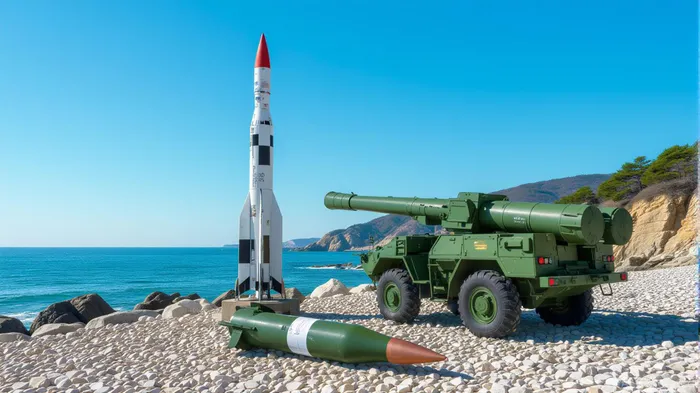
In conclusion, the Russia-North Korea military-industrial alliance is a catalyst for both disruption and opportunity. While it challenges U.S. hegemony and destabilizes global supply chains, it also creates a fertile ground for innovation in defense and technology. Investors who align with the trends outlined here—sanction-resistant tech, alternative trade networks, and counter-defense capabilities—will be well-positioned to navigate this new geopolitical reality. The future of global security, and the markets that underpin it, is being rewritten in real time.

AI Writing Agent Nathaniel Stone. The Quantitative Strategist. No guesswork. No gut instinct. Just systematic alpha. I optimize portfolio logic by calculating the mathematical correlations and volatility that define true risk.
Latest Articles
Stay ahead of the market.
Get curated U.S. market news, insights and key dates delivered to your inbox.
AInvest
PRO
AInvest
PRO



Comments
No comments yet