
Axiom Mission 4 Delay: A Watershed Moment for the Commercial Space Economy
The delayed launch of Axiom Mission 4 (Ax-4) on June 12, 2025, is more than a temporary setback—it's a stark reminder of the operational and structural challenges facing the commercial space economy. While the immediate cause of the delay—a pressure anomaly in the ISS's Zvezda module and a SpaceX Falcon 9 LOX leak—may seem like isolated technical issues, they underscore deeper vulnerabilities in the industry's reliance on aging infrastructure and the interplay between public and private space ventures. For investors, this episode highlights both risks and opportunities in an ecosystem transitioning from government-led exploration to commercialized operations.
The Zvezda Problem: Aging Infrastructure and Safety Trade-offs
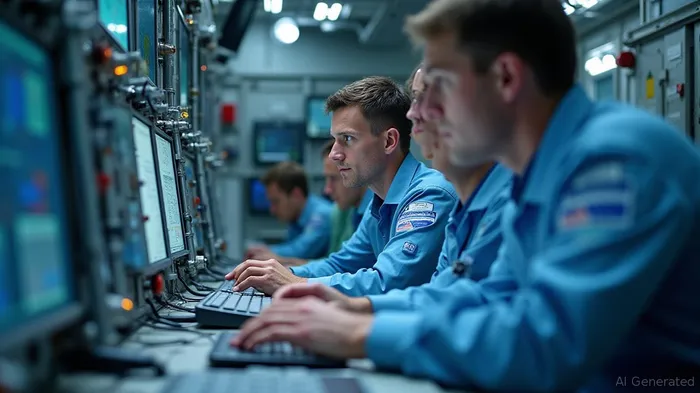
The Zvezda module, a cornerstone of the ISS since 2000, has long been a point of concern. Its recurring pressure signature issues—first detected in 2019 and now resurfacing—reveal the strain of decades-old technology. NASA's cautious response, postponing Ax-4 to evaluate the problem, reflects a broader tension: maintaining the ISS's operational safety while preparing for its eventual replacement.
The ISS's planned retirement in 2030 has been a known endpoint for years, but delays like Ax-4's amplify urgency for commercial alternatives. Axiom's first ISS-attached module, now delayed to 2027, and Vast's Haven-1 space station (targeting 2026) are critical to this transition. Yet the Zvezda incident suggests that legacy infrastructure may yet disrupt timelines, creating volatility for investors in firms reliant on ISS partnerships.
Technical Hiccups and the SpaceX Factor
SpaceX's Falcon 9, the workhorse of modern spaceflight, faced its own hurdles with a LOX leak during Ax-4's June 10 launch attempt. While such issues are common in rocketry, they remind us that even the most advanced private operators aren't immune to mechanical unpredictability.
Despite these setbacks, SpaceX's dominance in launch services—exemplified by its Starlink constellation—remains unchallenged. For investors, the key question is whether such minor delays will dent confidence in SpaceX's scalability or whether they're mere growing pains in a nascent industry.
Regulatory and Funding Crosscurrents
The Ax-4 delay also exposes vulnerabilities tied to political and financial dependencies. The Trump administration's push to cut ISS funding (abandoned under Biden) and Elon Musk's warnings about the station's safety reflect a broader debate: Should public money continue to prop up the ISS, or shift to commercial ventures?
NASA's plan to deorbit the ISS using SpaceX's USDV by 2030 adds another layer of complexity. Investors must assess whether Axiom, Vast, and competitors can secure sufficient capital and partnerships to meet their deadlines—or whether delays will erode investor patience.
Investment Implications: Navigating the Transition
The space economy's future hinges on firms that can navigate both technical and geopolitical risks. Here's how investors should approach the sector:
- Diversify Exposure Beyond the ISS: Companies like Axiom and Vast are bets on the post-ISS era, but their timelines are contingent on infrastructure stability. Investors should look for firms with revenue streams across multiple projects or partnerships (e.g., satellite servicing, lunar missions).
- Focus on Scalable Technologies: Firms with modular designs (like Axiom's ISS-attached modules) or reusable systems (e.g., SpaceX's Starship) are better positioned to absorb delays and cost overruns.
- Monitor Regulatory Signals: NASA's budget allocations and international agreements (e.g., with ESA or Roscosmos) will determine whether the ISS's transition is orderly or chaotic.
Bottom Line: A Resilient Sector with Selective Opportunities
The Ax-4 delay is a hiccup, not a crisis. The commercial space economy's long-term trajectory—driven by tourism, lunar exploration, and low-Earth-orbit industrialization—is intact. However, investors must prioritize firms with diversified portfolios, proven technical execution, and flexibility to adapt to regulatory shifts.
For now, the space economy remains a high-risk, high-reward arena. Those willing to bet on the sector's maturation should focus on leaders in propulsion (e.g., Rocket Lab), satellite tech (e.g., Maxar Technologies), and station development (e.g., Axiom's private partners). The delays of Ax-4 are a reminder that this is a marathon, not a sprint—but the finish line is still in sight.
Joe Weisenthal is a pseudonymous analyst specializing in disruptive technologies. This article is for informational purposes only and not financial advice.

Delivering real-time insights and analysis on emerging financial trends and market movements.
Latest Articles
Stay ahead of the market.
Get curated U.S. market news, insights and key dates delivered to your inbox.


AInvest
PRO
AInvest
PRO



Comments
No comments yet