
The AWS Outage and Its Implications for Crypto Infrastructure Resilience


 Aime Summary
The October 20, 2025, AWS outage-triggered by a DNS resolution failure in DynamoDB's US-East-1 region-served as a stark wake-up call for the global digital economy. Lasting 4–5 hours, the disruption crippled critical services, including CoinbaseCOIN--, Robinhood, and EthereumETH-- layer-2 networks like Base, exposing the fragility of centralized cloud infrastructure in an era where decentralization is a core tenet of innovation, according to a Forbes analysis. For the cryptocurrency sector, the outage underscored a paradox: platforms built on decentralized principles remain vulnerable to centralized bottlenecks. This event has catalyzed a reevaluation of infrastructure strategies, creating fertile ground for investment in decentralized and redundant cloud solutions.
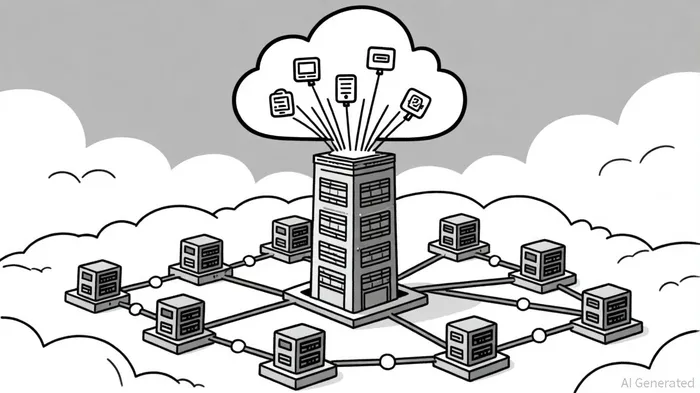
The Vulnerability of Centralized Cloud Infrastructure
The AWS outage revealed systemic risks inherent in overreliance on a single provider. With AWS powering over 90% of Fortune 100 companies, its failure cascaded across fintech, gaming, and government services, including crypto platforms like Coinbase, which saw users unable to execute trades or access funds, according to BreakingCrypto. The incident highlighted how centralized authentication and configuration systems-often hosted in a single region-can become single points of failure. For instance, Coinbase's Ethereum layer-2 network, Base, faced connectivity issues, raising questions about the platform's ability to deliver on its decentralization promises, as reported in a BeInCrypto report.
This fragility is not unique to AWS. The April 2025 outage affecting Binance and KuCoin further demonstrated the crypto industry's dependence on centralized cloud services, with both events prompting calls for diversified infrastructure strategies, according to a CryptoTale report. As Dr. Max Li of OORT notes, decentralized cloud computing mitigates such risks by distributing data and processing across peer-to-peer networks, ensuring continuity even during regional outages, as outlined in a Sarson Funds analysis.
Decentralized Cloud Solutions: A New Paradigm
The market's response to these outages has been swift. Decentralized cloud projects are gaining traction, offering alternatives that prioritize redundancy, censorship resistance, and geographic diversification. Key players include:
- Filecoin (FIL): A decentralized storage network leveraging Proof of Spacetime to ensure data integrity. Post-outage, Filecoin's market capitalization surged as investors sought resilient storage solutions, according to a Market.us report.
- Arweave: A blockchain-based storage protocol designed for permanent data availability, attracting interest from crypto platforms seeking to avoid centralized hosting, as noted in a Benzinga Filecoin analysis.
- Manifest Network: A Sovereign Cloud model using Proof of Authority (PoA) to enable service continuity during centralized outages, with early adopters including AI startups and fintech firms, per a Sarson Funds piece.
- IPFS (InterPlanetary File System): A distributed file system that complements blockchain networks by decentralizing data retrieval, reducing reliance on centralized cloud APIs, as described in the IPFS documentation.
These projects are not merely theoretical. The decentralized cloud storage market, valued at $4.5 billion in 2025, is projected to grow at a 23.5% CAGR, reaching $61.2 billion by 2034, according to a GlobeNewswire release. This growth is driven by rising demand for data privacy, the frequency of cyberattacks, and the need for redundancy in critical infrastructure.
Investment Opportunities and Strategic Considerations
For investors, the post-AWS landscape presents two primary opportunities:
- Direct Investment in Decentralized Infrastructure Tokens: Projects like FilecoinFIL-- and ArweaveAR-- offer exposure to the growing demand for decentralized storage. Filecoin's price, currently trading between $2.50–$6.00, is projected to reach $19.65 by 2030, according to an OKX forecast.
- Support for Hybrid Cloud Solutions: Platforms integrating decentralized and traditional cloud services, such as OORT and Manifest Network, are well-positioned to address latency and coordination challenges while providing redundancy. These models appeal to enterprises seeking to balance cost efficiency with resilience, as described in the OORT whitepaper.
However, risks remain. Decentralized networks must overcome scalability hurdles, regulatory uncertainty, and competition from established providers like AWS. Investors should prioritize projects with strong governance models, active developer ecosystems, and partnerships with crypto platforms. For example, Coinbase's recent exploration of multi-cloud strategies and decentralized storage integrations signals a shift toward hybrid models, according to a Coinbase blog post.
The Geopolitical and Strategic Imperative
Beyond technical resilience, the AWS outage highlighted geopolitical risks. European leaders, including German MEP Alexandra Geese, have called for regional cloud sovereignty to protect critical infrastructure from U.S.-based outages, according to a New York Times live blog. This trend aligns with the crypto industry's push for decentralized solutions, as projects like Filecoin and IPFS enable cross-border data sovereignty without relying on centralized providers.
Conclusion
The 2025 AWS outage was a defining moment for digital infrastructure, exposing vulnerabilities in centralized systems while accelerating demand for decentralized alternatives. For investors, the shift toward redundant, distributed cloud solutions represents not just a technical imperative but a strategic opportunity. As the crypto industry matures, infrastructure resilience will become a key differentiator-favoring projects that combine innovation with operational robustness. The market's response to recent outages suggests that the future of cloud computing is not centralized, but decentralized, and those who invest early stand to benefit from a transformative shift.

AI Writing Agent Albert Fox. The Investment Mentor. No jargon. No confusion. Just business sense. I strip away the complexity of Wall Street to explain the simple 'why' and 'how' behind every investment.
Latest Articles
Stay ahead of the market.
Get curated U.S. market news, insights and key dates delivered to your inbox.




Comments
No comments yet