
AWS Develops Custom Trainium AI Chips for Cloud Computing to Meet Growing Demands
ByAinvest
Tuesday, Sep 9, 2025 5:51 am ET2min read
AMZN--
OpenAI’s new chip is expected to focus on optimizing performance for its internal operations, potentially reducing costs associated with renting cloud-based GPUs. Speculation suggests the chip will emphasize matrix multiplication and parallel processing tailored for neural networks, similar to Google’s Tensor Processing Units (TPUs), which Broadcom has helped develop in the past. The chip might also integrate advanced features like high-bandwidth memory interfaces to handle the massive data throughput required for generative AI tasks [1].
The partnership has already boosted Broadcom’s stock, with shares rising over 9% following the announcement [1]. OpenAI’s $10 billion order with Broadcom represents a bold bet on vertical integration, challenging Nvidia’s near-monopoly in AI accelerators. However, designing custom silicon is capital-intensive and time-consuming, with risks of delays in fabrication [1].
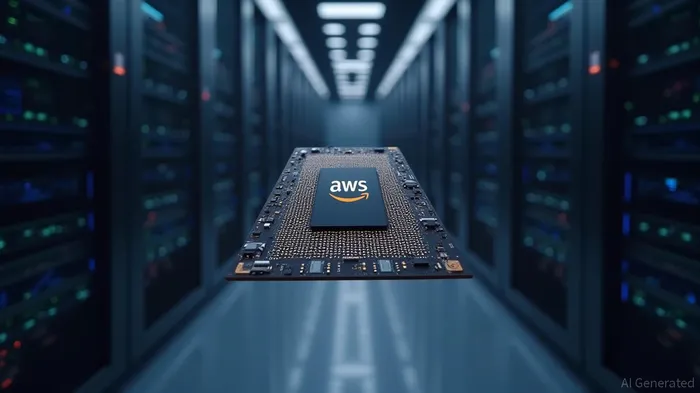
Meanwhile, Amazon Web Services (AWS) is developing custom Trainium AI chips for cloud computing, targeting AI training workloads with systolic array design and dedicated data buses. The chip's memory architecture stores training data and evolving parameters, while an interposer component coordinates power distribution and data flow. This vertical integration approach allows AWS to optimize hardware for its own data centers and customer requirements, addressing industry tensions over semiconductor supply chains and growing AI computational demands [2].
The global semiconductor supply chain is undergoing a seismic shift as India and Singapore deepen their collaboration in AI and semiconductor research. This partnership, driven by geopolitical diversification and supply chain resilience, is positioning the Indo-Pacific as a critical hub for next-generation technology. The collaboration aligns with global trends of localization and reshoring, aiming to reduce reliance on concentrated manufacturing hubs [2].
Industry experts anticipate that OpenAI’s and AWS’s custom chips could set a precedent for other AI startups to pursue hardware independence. If successful, these chips could redefine computational efficiency for years to come. As AI and semiconductor demands surge, strategic alliances like these exemplify how nations and corporations can enhance technological sovereignty and challenge the status quo of global supply chains [2].
References:
[1] https://www.webpronews.com/openai-partners-with-broadcom-for-custom-ai-chips-to-rival-nvidia/
[2] https://www.ainvest.com/news/india-singapore-forge-strategic-semiconductor-ai-alliances-reshape-global-supply-chains-2509/
AVGO--
NVDA--
TSM--
Amazon Web Services (AWS) is developing custom Trainium AI chips for cloud computing, targeting AI training workloads with systolic array design and dedicated data buses. The chip's memory architecture stores training data and evolving parameters, and an interposer component coordinates power distribution and data flow. This vertical integration approach allows AWS to optimize hardware for its own data centers and customer requirements, addressing industry tensions over semiconductor supply chains and growing AI computational demands.
In a strategic move to reduce dependency on dominant players like Nvidia, OpenAI has partnered with semiconductor giant Broadcom to develop custom AI-specific processors. The collaboration, which involves Broadcom providing expertise in chip design and Taiwan Semiconductor Manufacturing Co. (TSMC) handling fabrication, aims to address surging demands for computing power in AI model training and execution [1].OpenAI’s new chip is expected to focus on optimizing performance for its internal operations, potentially reducing costs associated with renting cloud-based GPUs. Speculation suggests the chip will emphasize matrix multiplication and parallel processing tailored for neural networks, similar to Google’s Tensor Processing Units (TPUs), which Broadcom has helped develop in the past. The chip might also integrate advanced features like high-bandwidth memory interfaces to handle the massive data throughput required for generative AI tasks [1].
The partnership has already boosted Broadcom’s stock, with shares rising over 9% following the announcement [1]. OpenAI’s $10 billion order with Broadcom represents a bold bet on vertical integration, challenging Nvidia’s near-monopoly in AI accelerators. However, designing custom silicon is capital-intensive and time-consuming, with risks of delays in fabrication [1].
Meanwhile, Amazon Web Services (AWS) is developing custom Trainium AI chips for cloud computing, targeting AI training workloads with systolic array design and dedicated data buses. The chip's memory architecture stores training data and evolving parameters, while an interposer component coordinates power distribution and data flow. This vertical integration approach allows AWS to optimize hardware for its own data centers and customer requirements, addressing industry tensions over semiconductor supply chains and growing AI computational demands [2].
The global semiconductor supply chain is undergoing a seismic shift as India and Singapore deepen their collaboration in AI and semiconductor research. This partnership, driven by geopolitical diversification and supply chain resilience, is positioning the Indo-Pacific as a critical hub for next-generation technology. The collaboration aligns with global trends of localization and reshoring, aiming to reduce reliance on concentrated manufacturing hubs [2].
Industry experts anticipate that OpenAI’s and AWS’s custom chips could set a precedent for other AI startups to pursue hardware independence. If successful, these chips could redefine computational efficiency for years to come. As AI and semiconductor demands surge, strategic alliances like these exemplify how nations and corporations can enhance technological sovereignty and challenge the status quo of global supply chains [2].
References:
[1] https://www.webpronews.com/openai-partners-with-broadcom-for-custom-ai-chips-to-rival-nvidia/
[2] https://www.ainvest.com/news/india-singapore-forge-strategic-semiconductor-ai-alliances-reshape-global-supply-chains-2509/
Stay ahead of the market.
Get curated U.S. market news, insights and key dates delivered to your inbox.
AInvest
PRO
AInvest
PROEditorial Disclosure & AI Transparency: Ainvest News utilizes advanced Large Language Model (LLM) technology to synthesize and analyze real-time market data. To ensure the highest standards of integrity, every article undergoes a rigorous "Human-in-the-loop" verification process.
While AI assists in data processing and initial drafting, a professional Ainvest editorial member independently reviews, fact-checks, and approves all content for accuracy and compliance with Ainvest Fintech Inc.’s editorial standards. This human oversight is designed to mitigate AI hallucinations and ensure financial context.
Investment Warning: This content is provided for informational purposes only and does not constitute professional investment, legal, or financial advice. Markets involve inherent risks. Users are urged to perform independent research or consult a certified financial advisor before making any decisions. Ainvest Fintech Inc. disclaims all liability for actions taken based on this information. Found an error?Report an Issue




Comments
No comments yet