
Aviation Safety Risks and Their Impact on Global Airline Stocks


 Aime Summary
The aviation industry's reliance on advanced technology exposes it to unique risks, particularly when safety-critical systems falter. The 2025 Airbus A320 recall, triggered by a software vulnerability linked to solar radiation-induced data corruption, underscores this reality. This event not only disrupted global air travel but also sent ripples through airline financials and stock valuations. For investors, the incident highlights the critical need to assess how operational and safety crises can reshape airline profitability, stock performance, and long-term strategic resilience.
The Airbus A320 Recall: A Solar-Induced Crisis
In November 2025, Airbus
issued a precautionary fleet action for its A320 family aircraft after an incident involving a JetBlueJBLU-- flight revealed that intense solar radiation could corrupt flight-control data, leading to uncommanded maneuvers. The European Union Aviation Safety Agency (EASA)
swiftly mandated emergency modifications for over 6,000 aircraft-nearly half the global A320 fleet. The recall disrupted holiday travel, with airlines like American AirlinesAAL--, DeltaDAL--, and ANA
scrambling to address the issue during one of the busiest travel periods of the year.
Operational and Financial Fallout by Carrier
American Airlines faced the most significant operational impact, . The airline reported flight delays and cancellations,
compounding existing challenges like labor shortages and maintenance backlogs. ,
American Airlines reported a GAAP net loss . The recall's timing exacerbated financial pressures, though the carrier
raised its full-year EPS forecast .
Delta Air Lines fared better, . The airline completed most updates by Saturday morning, minimizing disruptions. However,
Delta did not release specific financial disclosures . Its ability to swiftly address the issue likely mitigated investor concerns, though the broader industry volatility may have influenced its stock performance.
JetBlue Airways, the airline involved in the incident that triggered the recall,
, . ,
following revised financial expectations. The incident also prompted a Federal Aviation Administration (FAA)
investigation, adding regulatory uncertainty.
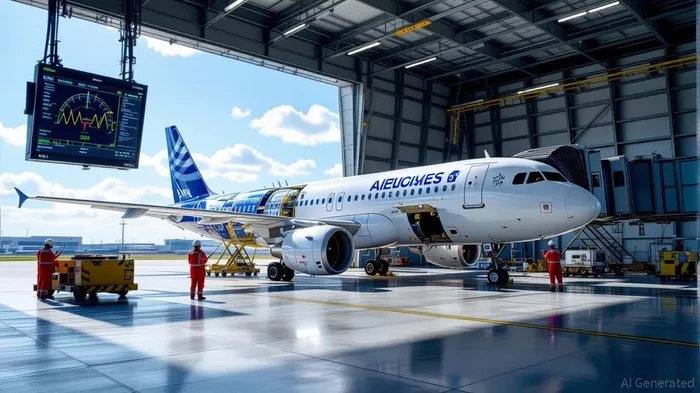
All Nippon Airways (ANA), heavily reliant on the A320 fleet,
. The recall compounded existing challenges in Asia's aviation sector,
including maintenance backlogs. While ANA did not release specific financial figures tied to the recall, the scale of cancellations suggests significant revenue losses during a critical travel period.
Broader Implications for Investors
The Airbus A320 recall illustrates how safety crises can amplify existing vulnerabilities in the aviation sector. For instance,
. Investors must also consider indirect impacts, such as reputational damage and regulatory scrutiny, which can erode passenger confidence and increase compliance costs.
Stock price reactions varied.
reflects heightened sensitivity to operational disruptions, while Delta's muted response suggests stronger contingency planning. American Airlines and ANA, however, faced more pronounced operational headwinds, with their financial disclosures underscoring the fragility of profit margins during peak travel seasons.
Strategic Considerations for the Future
For airlines, the recall underscores the importance of diversifying aircraft fleets and investing in redundant systems to mitigate software vulnerabilities. Investors should prioritize carriers with robust maintenance infrastructure and transparent communication strategies. Additionally, regulatory developments-such as EASA's emergency directive-will shape the industry's response to emerging risks, making compliance costs a key factor in long-term profitability.
In conclusion, the Airbus A320 recall serves as a cautionary tale for the aviation sector. While safety remains paramount, the financial and operational fallout demonstrates the need for airlines to balance innovation with resilience. For investors, the incident reinforces the value of scrutinizing carriers' risk management frameworks and their ability to navigate unforeseen disruptions in an increasingly interconnected global market.

Stay ahead of the market.
Get curated U.S. market news, insights and key dates delivered to your inbox.




Comments
No comments yet