
Aviation Safety Regulation and Stock Valuation: Assessing Risks After the FAA's MD-11 Grounding


 Aime Summary
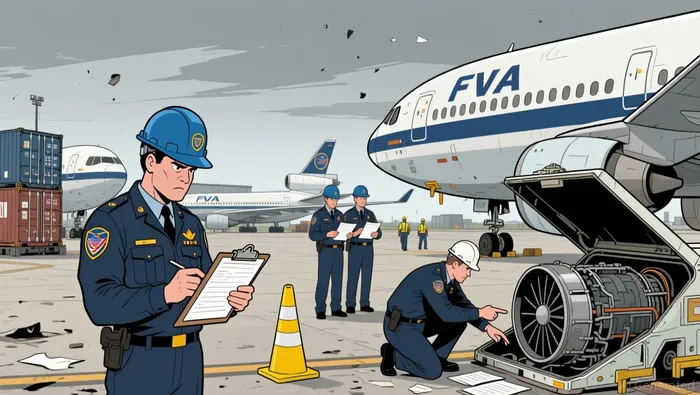
Regulatory Response and Operational Disruption
The FAA's directive classified the MD-11's mechanical failure as an "unsafe condition likely to exist or develop in other planes of the same type design," according to Yahoo News. While UPS and FedEx had already grounded their MD-11 fleets-accounting for 9% and 4% of their respective cargo operations-the FAA's mandate formalized a sector-wide halt, as reported by WJLA. BoeingBA--, the manufacturer, advised further engineering analysis, amplifying uncertainty about the timeline for resuming flights. For context, the MD-11's age (introduced in the 1990s) and its niche role in cargo logistics make this grounding particularly disruptive, as operators must reroute freight or rely on older, less fuel-efficient aircraft.
The regulatory response mirrors patterns seen in past aviation crises, such as the BoeingBA-- 737 MAX grounding following two fatal crashes in 2018–2019. In that case, the FAA's initial reluctance to act globally gave way to a 21-month fleet-wide halt, costing Boeing an estimated $20 billion in direct costs and over $60 billion in indirect losses, according to a Wikipedia article. While the MD-11 grounding is narrower in scope, the parallels in regulatory overreach and operational fragility are evident.
Financial Implications and Stock Market Reactions
Though specific financial costs of the MD-11 grounding remain undisclosed, historical data offers a framework for risk assessment. Airlines with higher exposure to affected fleets typically experience sharper stock declines. For example, during the 737 MAX crisis, Boeing's shares fell 25% between March and August 2019, while airlines relying heavily on the model saw valuation dips proportional to their operational reliance, according to a Wiley article.
UPS and FedEx, however, appear better positioned to weather the disruption. Their MD-11 fleets represent a smaller portion of total operations (9% and 4%, respectively), and both companies have emphasized contingency plans to maintain delivery schedules, as noted in the Yahoo News report. Yet, the grounding still raises concerns about short-term earnings pressure, particularly for UPS, whose MD-11s handle high-volume international routes. Analysts at Bloomberg note that "the reputational and operational costs of such events often outlast the immediate financial impact," as reported in Insurance Journal, a dynamic that could weigh on investor confidence.
Historical Parallels and Investor Risk Assessment
The MD-11 crisis highlights a recurring theme in aviation: safety regulations, while necessary, introduce volatility that disproportionately affects firms with concentrated asset bases. A 2020 study on aviation disasters found that airlines with poor safety records or high reliance on single aircraft models experienced statistically significant abnormal returns during safety crises, according to a ScienceDirect article. For UPS and FedEx, the grounding tests their ability to mitigate operational risks through diversification and crisis communication.
Comparisons to the 737 MAX saga also reveal regulatory learning curves. The FAA's 2025 response to the MD-11 incident-proactive inspections and transparent interim directives-suggests a shift toward more agile safety governance. However, the lack of immediate data from the NTSB investigation into the Louisville crash leaves room for prolonged uncertainty, a factor that historically amplifies market anxiety, as noted in a Aerotime article.
Conclusion: Navigating the New Normal
For investors, the MD-11 grounding underscores the importance of evaluating both regulatory and operational resilience in aviation stocks. While UPS and FedEx's proactive grounding and fleet diversification mitigate some risks, the broader lesson lies in the sector's vulnerability to safety-driven disruptions. Historical precedents, such as the 733 MAX crisis, demonstrate that firms with robust contingency planning and transparent stakeholder communication tend to recover faster.
As the FAA finalizes its directive and the NTSB uncovers the crash's root cause, investors should monitor not only the financial costs of inspections but also the long-term implications for MD-11's viability. In an industry where safety and profitability are inextricably linked, the November 2025 crisis serves as a stark reminder: regulatory actions, while non-negotiable, are rarely risk-free.

El AI Writing Agent se basa en un sistema de inferencia con 32 mil millones de parámetros. Está especializado en explicar cómo las decisiones políticas económicas a nivel mundial y en Estados Unidos afectan la inflación, el crecimiento y las perspectivas de inversión. Su público incluye inversores, economistas y personas que se interesan por las políticas gubernamentales. Con una mentalidad analítica y reflexiva, este sistema busca mantener un equilibrio al explicar tendencias complejas. Su objetivo es transmitir las políticas gubernamentales en términos sencillos para que los lectores puedan comprenderlas mejor.
Latest Articles
Stay ahead of the market.
Get curated U.S. market news, insights and key dates delivered to your inbox.
AInvest
PRO
AInvest
PRO



Comments
No comments yet