
Aviation Safety and Fleet Reliability Risks for Legacy Carriers: A Systemic Crisis Unveiled by the Airbus A320 Grounding


 Aime Summary
The grounding of American Airlines' Airbus A320 fleet in November 2025, triggered by a critical flight control software issue, has exposed vulnerabilities that extend far beyond a single technical malfunction. While the immediate operational and financial fallout-over 200 aircraft temporarily grounded, 119,000 passengers daily affected, and an estimated $3.8 billion in global revenue losses over two weeks
according to the report-has dominated headlines, the incident underscores a deeper, systemic crisis in legacy U.S. airlines. This crisis is rooted in aging aircraft fleets, deteriorating maintenance reliability, and outdated operational planning systems, all of which threaten long-term profitability and safety.
The Airbus A320 Grounding: A Symptom, Not an Anomaly
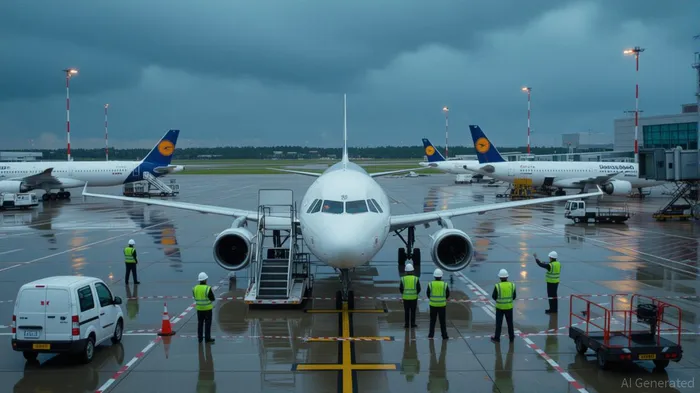
American Airlines' experience with the A320 grounding highlights the fragility of legacy carriers' operational models. The airline initially identified 340 of its 480 A320 aircraft as requiring urgent software updates,
a process taking two hours per aircraft. While the airline prioritized minimizing cancellations during the holiday travel peak, the incident revealed how a single technical issue can paralyze a significant portion of a fleet. With 41% of its A320s grounded, American AirlinesAAL-- became the second-most-affected carrier globally,
trailing only India's IndiGo.
 This vulnerability is not unique to Airbus. Legacy U.S. airlines operate fleets with an average age of over 20 years,
with some aircraft exceeding 50 years in service. Aging aircraft are inherently more prone to maintenance issues,
with studies showing that aircraft age is a statistically significant predictor of departure delays. The A320 grounding, therefore, is not an isolated event but a manifestation of a broader trend: the increasing operational and financial strain of maintaining aging fleets.
Systemic Operational and Financial Risks
The challenges facing legacy carriers go beyond technical glitches.
Post-pandemic, technical dispatch reliability has declined by up to 50%, while maintenance-related cancellations have surged two to threefold. These trends are driven by a perfect storm of factors: a shortage of qualified technicians, parts shortages, and multigeneration fleets requiring specialized skills. For example,
an Aircraft on Ground (AOG) incident can cost between $10,000 to $150,000 per hour, depending on the aircraft type and route. Such costs compound during peak travel periods, as seen in American Airlines' recent crisis.
Financially, the impact is staggering. Poor fleet maintenance planning costs major carriers between $100 million and $200 million annually in lost revenue and compensation
according to industry analysis. These costs are exacerbated by the economic incentives to keep older aircraft in service. Replacing widebody jets, for instance, can exceed $200 million,
pushing airlines to extend the lifespans of aging models despite rising maintenance costs and safety risks. The result is a fleet that is increasingly prone to unplanned downtime, crew scheduling chaos, and passenger dissatisfaction.
Safety Risks Beyond Delays
While delays are a visible consequence of aging fleets, the safety risks are more insidious.
Older aircraft face unique challenges such as corrosion, fatigue, and wear, which can compromise structural integrity. These risks are heightened by the pandemic's impact on new aircraft deliveries and the subsequent reliance on older models. Enhanced inspection routines and proactive corrosion control are necessary but insufficient to fully mitigate these risks. The grounding of the A320 fleet, driven by a software issue, serves as a reminder that even modern aircraft are not immune to systemic vulnerabilities when maintenance and operational planning fail to keep pace with aging assets.
Implications for Investors
For investors, the Airbus A320 grounding is a wake-up call. Legacy U.S. airlines are operating on a model that is increasingly unsustainable. The financial and operational costs of maintaining aging fleets are rising, while the ability to adapt to new technologies and maintenance practices lags.
Airlines that fail to invest in data-driven strategies, predictive maintenance, and integrated digital platforms will face escalating costs and reputational damage.
The crisis also raises questions about regulatory oversight. While the FAA has historically prioritized safety, the grounding of a major fleet due to a software issue suggests gaps in proactive risk management. Investors should monitor how airlines allocate capital-those prioritizing fleet modernization and maintenance innovation are likely to outperform peers reliant on cost-cutting measures that exacerbate long-term vulnerabilities.
Conclusion
The Airbus A320 grounding is not merely a technical hiccup but a symptom of a systemic crisis in legacy U.S. airlines. Aging fleets, deteriorating maintenance reliability, and outdated operational models are converging to create a perfect storm of operational and financial risks. For investors, the message is clear: airlines that fail to address these vulnerabilities through strategic investment and technological innovation will face declining profitability and heightened safety risks. The crisis demands a shift from reactive to proactive management-a challenge that will define the industry's resilience in the years ahead.

Stay ahead of the market.
Get curated U.S. market news, insights and key dates delivered to your inbox.
AInvest
PRO
AInvest
PRO



Comments
No comments yet