
Aviation Resilience Amid Climate and Solar Threats: Infrastructure Risks and Investment Opportunities


 Aime Summary
The Operational and Financial Toll of Solar Disruptions
Solar radiation events pose multifaceted risks to aviation. High-frequency (HF) radio communications, critical for transoceanic and polar flights, are particularly susceptible to degradation during geomagnetic storms according to the American Meteorological Society. Rerouting flights to avoid high-latitude corridors-where ionospheric disturbances are most severe-can increase fuel consumption by up to 20%, according to a report by the American Meteorological Society. For a single long-haul flight, according to the same report.
Beyond operational inefficiencies, the health of aircrew and passengers is a growing concern. Prolonged exposure to elevated radiation levels during solar storms, while still under study, has prompted regulatory bodies to reconsider safety thresholds for high-altitude flights. For airlines, this could mean not only reputational damage but also potential liability claims, further compounding financial strain.
Infrastructure Vulnerabilities and the Need for Resilience
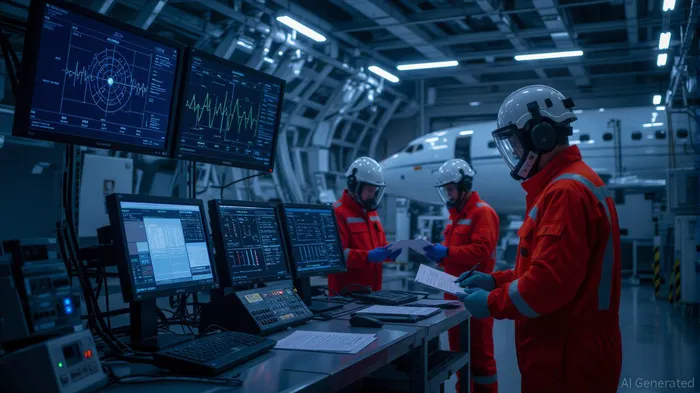 Aerospace maintenance companies are increasingly exposed to the cascading effects of solar-induced electromagnetic disturbances. Sensitive avionics systems, including navigation and communication equipment, require costly repairs or replacements after exposure to geomagnetically induced currents (GICs) according to industry analysis. This has spurred demand for advanced diagnostics and hardening technologies, creating a niche for firms specializing in climate-resilient infrastructure.
The insurance sector, too, is grappling with the implications of space weather. Insurers are now exploring parametric products that trigger payouts based on pre-defined solar event severity metrics, as highlighted by Lloyd's of London. Such innovations aim to address the unpredictability of solar storms while ensuring faster claims resolution. However, the sector remains underprepared for large-scale disruptions, with risk decision-makers estimating that current policies cover only half of potential losses.
Investment Opportunities in Aerospace Maintenance and Technology
The urgency to fortify aerospace infrastructure against climate and solar threats opens compelling investment avenues. Aerospace maintenance firms with expertise in avionics repair and electromagnetic shielding are well-positioned to benefit. For instance, companies integrating quantum sensors-still in early adoption-for real-time monitoring of radiation exposure could see accelerated growth. Similarly, firms developing AI-driven predictive maintenance tools, which analyze space weather forecasts to preempt equipment failures, are gaining traction according to industry reports.
Investors should also consider aerospace technology startups focused on satellite-based navigation redundancy systems. These systems mitigate the risks of GPS signal degradation during solar events, a critical need for high-latitude operations. The market for such technologies is projected to expand as regulatory bodies mandate enhanced resilience standards.
The Insurance Sector's Evolving Role
While insurers have historically lagged in addressing space weather risks, recent quarters reveal a shift. The absence of major natural disasters in 2025 has allowed companies like Travelers to report record profits, creating financial flexibility to innovate. Insurers are now piloting cyber risk coverage that includes solar storm scenarios, recognizing the interconnectedness of digital infrastructure and space weather events.
Parametric insurance, which bypasses traditional claims processes by linking payouts to objective data (e.g., solar flare intensity indices), is particularly promising. As the industry standardizes space weather risk metrics, early adopters of these products could capture significant market share.
Conclusion: A Call for Proactive Investment
The Airbus solar radiation incident, whether real or hypothetical, underscores a broader truth: the aviation sector's resilience hinges on its ability to adapt to non-traditional risks. For investors, this means prioritizing companies that not only mitigate immediate vulnerabilities but also drive long-term innovation. Aerospace maintenance firms, technology developers, and insurers with forward-looking risk models are poised to thrive in an era where climate and solar threats converge. The time to act is now-before the next geomagnetic storm tests the limits of our preparedness.

Delivering real-time insights and analysis on emerging financial trends and market movements.
Latest Articles
Stay ahead of the market.
Get curated U.S. market news, insights and key dates delivered to your inbox.


AInvest
PRO
AInvest
PRO



Comments
No comments yet