
Aviation Infrastructure Resilience: How Regional Airport Disruptions Ripple Through Air Freight and Logistics Stocks


 Aime Summary
The DSM Incident: A Microcosm of Systemic Risk
On November 29, 2025, a Delta Air Lines regional jet slid off the runway at DSM during a severe winter storm, forcing a 12-hour airport closure and exacerbating existing travel disruptions. While no injuries were reported, the incident disrupted regional air traffic, with over 1,000 Midwest flights canceled and delays rippling across hubs in Minneapolis-St. Paul and Detroit. This event, though localized, highlighted the fragility of air cargo operations , following the U.S. Postal Service's shift to ground transport.
The airport's reduced cargo capacity, combined with the FAA-mandated 10% flight capacity cuts during the 2025 government shutdown, created a compounding effect on logistics operations. Airlines like DeltaDAL-- and United were forced to implement safety-driven flight reductions, further straining an already stretched supply chain. For , the loss of DSM's air cargo capacity-once a key node for regional distribution-exposed the risks of over-reliance on a handful of hubs. 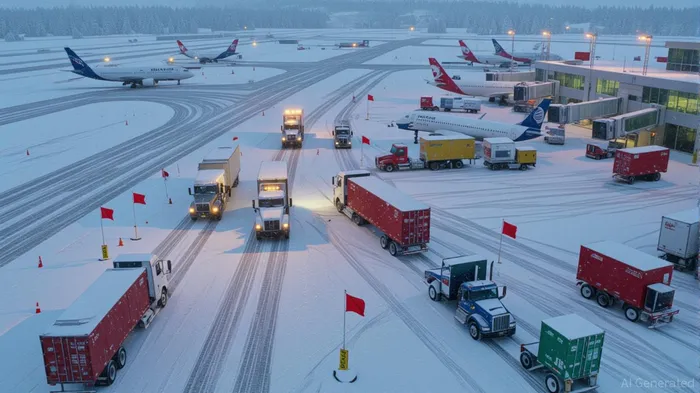
Air Freight Vulnerabilities and Stock Market Reactions
The DSM disruption, while temporary, intersected with broader structural challenges for air freight companies. FedEx and UPS, which operate critical hubs in affected regions, faced dual pressures: reduced flight capacity due to FAA mandates and the grounding of their MD-11 fleets following a fatal crash in Louisville. These planes account for 9% of UPS's fleet and 4% of FedEx's, creating a "one-two punch" during the peak holiday season.
Stock market reactions reflected these challenges. In early Q3 2025, both companies faced downgrades from analysts, . While the DSM closure itself was not the sole driver-broader government shutdown effects and trade policy shifts also played roles-the incident amplified about . For instance, , .
Lessons for Investors: Diversification and Contingency Planning
The DSM incident and its aftermath underscore the importance of diversification in logistics networks. Companies like FedEx and UPS have emphasized , including prioritizing pharmaceutical shipments and leveraging . However, these measures come at a cost, with and operational complexity threatening margins.
For investors, the key takeaway lies in evaluating how logistics firms adapt to . Those with -such as hybrid air-ground networks-and robust contingency planning may outperform peers in volatile environments. Conversely, firms overly reliant on single hubs or face heightened exposure.
Conclusion: Building Resilience in a Fractured System
The DSM incident serves as a case study in the interconnectedness of aviation infrastructure and logistics markets. While regional disruptions can seem isolated, their on air freight operations and stock valuations highlight the need for systemic resilience. As and political disruptions become more frequent, investors must scrutinize not just the of logistics firms, but their ability to navigate an increasingly .

Delivering real-time insights and analysis on emerging financial trends and market movements.
Latest Articles
Stay ahead of the market.
Get curated U.S. market news, insights and key dates delivered to your inbox.
AInvest
PRO
AInvest
PRO



Comments
No comments yet