
Aviation Industry Volatility: Assessing Risks and Opportunities Amid the Airbus A320 Recall Crisis


 Aime Summary
Technological Vulnerabilities: A New Frontier of Risk
The root cause of the A320 recall lies in the ELAC system, which processes pilot inputs for pitch and roll control. A flaw in its software allowed intense solar radiation to corrupt flight control data, potentially triggering uncommanded elevator movements that could exceed structural limits. While Airbus mandated a software rollback for most aircraft, older variants required hardware modifications, prolonging groundings due to component shortages. This incident highlights a broader trend: as aviation systems grow more reliant on software, they become increasingly susceptible to environmental and .
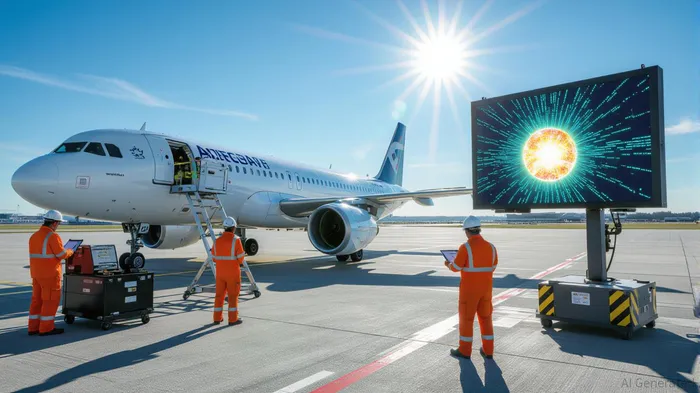
The vulnerability is not isolated. Experts warn that modern fly-by-wire systems, introduced in the 1980s, lack robust safeguards against , a risk amplified by climate change and solar activity. For instance, the JetBlue incident in October 2025-where a flight nosedived without pilot input-exposed gaps in redundancy protocols. Such events challenge the assumption that software-driven systems are inherently safer than mechanical ones. Investors must now weigh the costs of retrofitting legacy fleets with radiation-hardened components against the potential for future disruptions.
Geopolitical Implications: Regulatory Shifts and Supply Chain Strains
The recall has also intensified geopolitical tensions in aviation. The European Union Aviation Safety Agency issued an emergency directive, requiring repairs before flights could resume, a move mirrored by regulators in Asia, the U.S., and the Middle East. This global coordination, while necessary for safety, has exposed the industry's dependence on a handful of regulators and manufacturers. For example, airlines in China and India faced significant disruptions to short-haul routes, compounding existing bottlenecks in maintenance and parts distribution.
Supply chain dependencies further amplify risks. The recall's hardware fixes rely on components manufactured by a limited number of suppliers, many of whom operate in regions prone to geopolitical instability. Analysts note that sanctions, , and labor shortages-already straining post-pandemic recovery-could delay repairs, prolonging financial losses for airlines. Additionally, the incident has reignited debates over the localization of critical aerospace components, with some governments pushing for domestic production to mitigate foreign reliance.
Investment Risks and Opportunities: Navigating a Shifting Landscape
For investors, the A320 recall underscores the dual-edged nature of aviation infrastructure. On one hand, the crisis has exposed operational and reputational risks. during the recall, while maintenance backlogs threaten to erode profitability for years. Geopolitical factors, such as , and targeting aviation systems, further complicate recovery efforts.
On the other hand, the crisis presents opportunities for innovation. The demand for and hardware could spur investment in aerospace R&D, particularly in areas like artificial intelligence-driven diagnostics and -based supply chain tracking. Moreover, the recall may accelerate the adoption of alternative propulsion systems, such as hydrogen or , which are less vulnerable to software glitches.
However, investors must tread carefully. The recall's timing-during a peak travel period-has highlighted the fragility of airline business models. With maintenance costs rising and passenger trust shaken, carriers may struggle to absorb additional shocks. For example, , while others imposed strict capacity controls to manage demand. These measures, while prudent, signal a shift toward risk-averse strategies that could stifle growth.
Conclusion: A Call for Resilience
The Airbus A320 recall is a wake-up call for the aviation industry. It has laid bare the vulnerabilities of software-centric systems and the geopolitical fragility of global supply chains. For investors, the path forward lies in balancing short-term risk mitigation with long-term innovation. This means supporting airlines that prioritize redundancy in their technology stacks, advocating for regulatory frameworks that address environmental threats, and backing startups developing next-generation aerospace solutions.
As the industry grapples with the fallout of this crisis, one thing is clear: the days of treating aviation as a low-risk sector are over. The interplay of technological and geopolitical risks demands a new paradigm-one where resilience, not just efficiency, defines success.

Delivering real-time insights and analysis on emerging financial trends and market movements.
Latest Articles
Stay ahead of the market.
Get curated U.S. market news, insights and key dates delivered to your inbox.


AInvest
PRO
AInvest
PRO



Comments
No comments yet