
Aviation Industry Resilience Amid Solar Radiation Risks: Emerging Infrastructure Vulnerabilities and Regulatory Responses


 Aime Summary
The aviation industry is confronting an unexpected challenge in 2025: the growing threat of solar radiation to aircraft systems. A recent crisis involving Airbus' A320-family aircraft has exposed critical vulnerabilities in aerospace infrastructure, prompting urgent regulatory action and reshaping investment dynamics. This incident, coupled with broader trends in radiation-hardened technologies and regulatory oversight, underscores a pivotal moment for the sector's resilience and long-term growth.
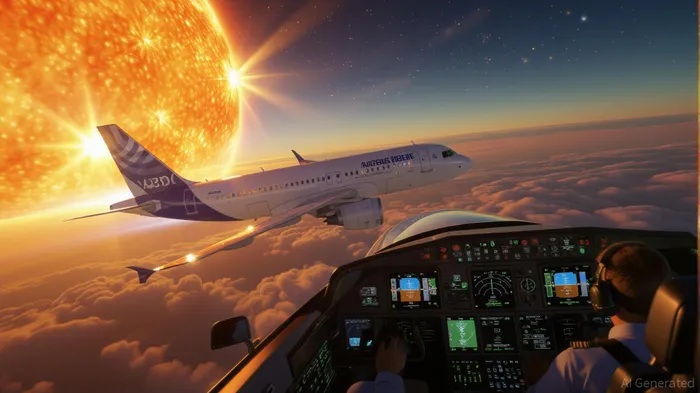
The Airbus A320 Crisis: A Wake-Up Call
In November 2025, Airbus issued an emergency directive to retrofit or update approximately 6,000 A320-family aircraft after a software flaw linked to solar radiation triggered an uncommanded pitch-down incident on a JetBlueJBLU-- flight on October 30 according to reports. The malfunction, traced to the elevator aileron computer, highlighted how intense solar radiation can corrupt flight control data, potentially exceeding structural limits and endangering passenger safety. The European Union Aviation Safety Agency (EASA) swiftly mandated an , requiring airlines to implement software rollbacks or hardware modifications within days. The U.S. (FAA) followed suit, preparing a parallel directive to address the vulnerability.
This crisis has disrupted global operations, with airlines like American, DeltaDAL--, and JetBlue scrambling to comply during the peak holiday travel season. For most aircraft, fixes can be completed in two hours, but older models require more extensive hardware changes, exacerbating capacity constraints according to Airbus. The incident underscores a previously underestimated risk: as solar activity peaks in 2025, the industry must confront the fragility of its electronic systems against space weather.
Regulatory Responses: A New Era of Radiation Resilience
The Airbus crisis has accelerated regulatory scrutiny of solar radiation risks. EASA's EAD and the FAA's anticipated directive reflect a shift toward proactive mitigation strategies, including mandatory software updates and hardware redundancies to prevent data corruption. These measures align with broader efforts to integrate radiation-hardened components into aircraft design, a trend gaining traction as space weather becomes a more frequent concern.
Regulators are also collaborating with manufacturers to establish standardized protocols for testing and certifying aircraft against solar radiation. For instance, Airbus has emphasized partnerships with operators to ensure compliance while minimizing operational disruptions. Such coordination signals a growing recognition that regulatory frameworks must evolve alongside technological vulnerabilities, particularly as the industry transitions to and autonomous operations.
Investment Opportunities: Radiation-Hardened Technologies and Market Shifts
The Airbus incident has spotlighted a burgeoning market: radiation-hardened electronics. In 2025, , . Demand is surging in aerospace and defense applications, where reliable components are critical for satellites, drones, and next-generation aircraft. Key players like Microchip Technology and BAE Systems are leading innovation, while advancements in silicon carbide and gallium nitride are reducing costs and improving efficiency.
Parallel opportunities exist in aerospace solar arrays, in 2025, driven by high-efficiency multi-junction solar cells and lightweight designs for satellites. As the industry prioritizes resilience, investments in smart array technologies - such as integrated sensors and real-time monitoring systems - are gaining momentum. These innovations not only address solar radiation risks but also align with sustainability goals, as seen in the development of (eVTOL) aircraft and carbon fiber composites.
The Road Ahead: Balancing Risk and Innovation
While solar radiation poses immediate operational risks, it also catalyzes long-term innovation. The radiation-hardened electronics market, for example, is being reshaped by the need for fault-tolerant architectures and commercial-off-the-shelf (COTS) solutions that balance cost and reliability. Similarly, the integration of AI in aerospace systems engineering is streamlining design processes, enabling faster adoption of resilient technologies.
For investors, the key lies in identifying companies at the intersection of aerospace and radiation mitigation. Startups specializing in advanced materials, alongside established firms like Airbus and Lockheed Martin, are well-positioned to capitalize on this shift. Meanwhile, regulatory developments - such as the FAA's alignment with EASA directives - will continue to shape market dynamics, creating both challenges and opportunities for operators and manufacturers.
Conclusion
The Airbus A320 crisis of 2025 has served as a stark reminder of the aviation industry's exposure to solar radiation risks. Yet, it has also illuminated a path forward: through regulatory vigilance, technological innovation, and strategic investment. As the sector grapples with the dual imperatives of safety and sustainability, the demand for radiation-hardened infrastructure and adaptive systems will only intensify. For investors, the message is clear-resilience is no longer optional; it is the foundation of future growth.

Delivering real-time insights and analysis on emerging financial trends and market movements.
Latest Articles
Stay ahead of the market.
Get curated U.S. market news, insights and key dates delivered to your inbox.




Comments
No comments yet