
Aviation Industry Resilience Amid Solar Radiation Glitches: Risks and Opportunities


 Aime Summary
Systemic Risks in Aerospace Technology
The Airbus A320 recall, prompted by an uncommanded pitch-down incident on a JetBlueJBLU-- flight, revealed how solar radiation can corrupt flight control data in the Elevator and Aileron Computer (ELAC) system, potentially leading to catastrophic failures according to Airbus. The European Union Aviation Safety Agency (EASA) responded with an emergency airworthiness directive, mandating updates for 6,000 A320-family aircraft-a fleet representing over half of the global Airbus lineup. This event is not an isolated anomaly but part of a broader pattern of systemic risks tied to space weather.
Space weather, including solar flares and geomagnetic storms, poses significant threats to aviation operations. High-altitude and polar flights are particularly vulnerable to radiation exposure, which can disrupt high-frequency communications, degrade satellite navigation accuracy, and damage avionics systems according to the American Meteorological Society. According to a report by NOAA, the aviation industry increasingly relies on space weather forecasts to adjust flight paths and altitudes, mitigating risks while minimizing operational disruptions. However, the Airbus incident demonstrates that even with such precautions, existing systems remain susceptible to unforeseen environmental factors.
Regulatory and Industry Responses
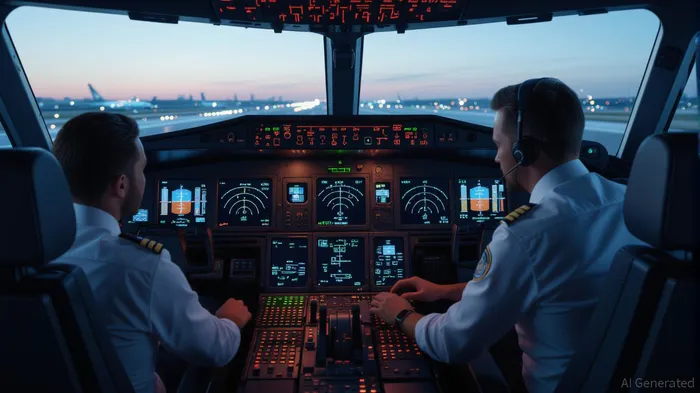 The EASA directive and Airbus' emergency software updates reflect a precautionary approach to managing these risks. Most repairs can be completed in two hours, but approximately 900 aircraft require more extensive hardware modifications, prolonging groundings. The incident has also spurred regulatory scrutiny of software resilience in aerospace systems. For instance, the Federal Aviation Administration (FAA) has accelerated its adoption of satellite internet technology, such as SpaceX's Starlink, to enhance communication redundancy in national airspace.
Yet, regulatory measures alone are insufficient. The aviation industry must invest in technologies that proactively address space weather threats. This includes real-time satellite-based monitoring systems, such as NOAA's SWFO-L1 and DSCOVR, which provide early warnings of solar activity. The European Space Agency (ESA) has also emphasized the importance of space-based resilience through initiatives like the European Resilience from Space program, aiming to reduce dependency on foreign satellite infrastructure.
Investment Opportunities in Satellite-Based Flight Safety
The Airbus recall has catalyzed a shift in investment priorities toward satellite-based flight safety solutions. Market data indicates robust growth in this sector. The global flight navigation system market, , , driven by AI-driven threat detection and quantum-resistant encryption. Similarly, the space cybersecurity market, , , reflecting heightened awareness of vulnerabilities in satellite systems.
Several aerospace startups are leading the charge in this space. , for example, leverages artificial intelligence to enhance flight safety by reducing human error, while Shield AI develops autonomous systems capable of operating without GPS. Air Space Intelligence's Flyways platform optimizes flight routes using AI, akin to Waze for air travel, and has secured contracts with major airlines and the U.S. Air Force. Meanwhile, LeoLabs and ClearSpace are advancing satellite-based radar and debris management solutions, addressing both operational and environmental risks.
Financial performance in this sector is equally promising. Aerospace startups like Apex and Tycho AI have raised significant funding in 2024–2025, . These investments are not speculative; they are driven by tangible demand from airlines, defense agencies, and private satellite operators seeking to mitigate risks in an increasingly complex aerospace ecosystem.
Conclusion: Balancing Risks and Opportunities
The Airbus A320 recall serves as a wake-up call for the aviation industry. It highlights the fragility of current aerospace systems in the face of space weather and the urgent need for resilient technologies. However, it also presents a unique opportunity for investors to capitalize on the growing demand for satellite-based flight safety solutions. As the industry transitions from reactive fixes to proactive risk management, companies that innovate in AI, satellite monitoring, and cybersecurity will be well-positioned to lead the next era of aviation resilience.
For investors, the message is clear: systemic risks in aerospace technology are no longer abstract concerns but immediate challenges requiring strategic investment. The future of flight safety-and the profitability of the aerospace sector-depends on embracing these innovations.

Delivering real-time insights and analysis on emerging financial trends and market movements.
Latest Articles
Stay ahead of the market.
Get curated U.S. market news, insights and key dates delivered to your inbox.
AInvest
PRO
AInvest
PRO



Comments
No comments yet