
Avantor, Inc. (AVTR): Navigating Governance Risks and Competitive Pressures Amid a Class Action Lawsuit


 Aime Summary
The Class Action Lawsuit: A Governance Red Flag
A securities class action was filed in October 2025 against Avantor, alleging that its leadership, including former CEO Michael Stubblefield, misled investors by overstating competitive strengths and downplaying industry pressures during a July 2024 earnings call, according to Gainey McKenna & Egleston. The lawsuit claims that these misrepresentations led to a 23% single-day stock plunge following the October 2025 Q3 earnings report, which revealed a $712 million net loss and a $785 million goodwill impairment charge, according to Morningstar.
This legal action highlights systemic governance risks. While Avantor's board includes specialized committees-such as Science and Technology (chaired by Gregory Summe) and Compensation (led by Dr. Michael Severino)-the lawsuit suggests lapses in internal controls or transparency, according to Avantor's Investor Governance. Shareholders must now question whether the board's structure adequately mitigates executive overreach or if the company's governance culture prioritizes short-term optimism over long-term accountability.
Financial Disclosures: A Tale of Two Segments
Avantor's Q3 2025 results reveal a stark duality. The Bioscience Production segment, which focuses on bioprocessing, has shown resilience amid a sector projected to grow 8–10% annually, according to Investing.com SWOT. However, the Laboratory Solutions segment, which accounts for a significant portion of revenue, has struggled with a 2.0% organic revenue decline in Q2 2024 due to oversupply in pharmaceutical API markets, according to Investing.com SWOT.
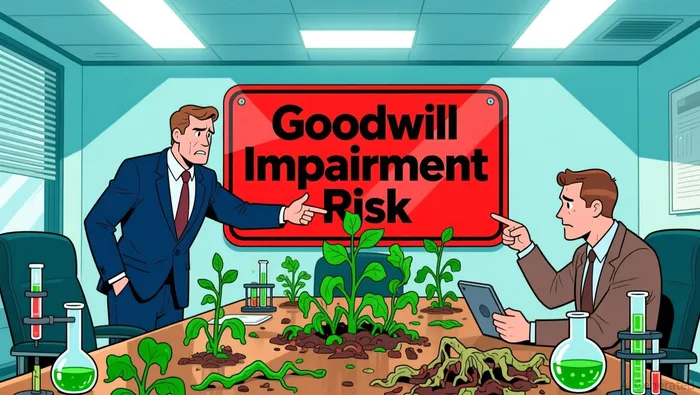
The company's financials reflect this tension. While adjusted EBITDA reached $268 million and free cash flow stood at $172 million, the $785 million goodwill impairment charge-a non-cash hit-exposed vulnerabilities in asset valuations tied to competitive pressures, according to Avantor's Q3 2025 Results. The $500 million share repurchase authorization announced alongside these results could be seen as a confidence-building measure, but it also raises questions about whether management is prioritizing shareholder returns over addressing structural weaknesses.
Competitive Pressures: Can AVTR Sustain Its Edge?
Avantor's strategic focus on bioprocessing has positioned it to capitalize on growing demand for cell and gene therapies. Its performance in this segment has even outpaced Merck KGaA's Process Solutions group, a key competitor, according to Investing.com SWOT. Yet, the Laboratory Solutions segment's struggles-driven by inventory gluts and pricing pressures-underscore the fragility of its diversified model.
For investors, the key question is whether Avantor's cost-cutting initiatives, which have improved EBITDA margins, are sufficient to offset these headwinds. The company's ability to innovate in bioprocessing while streamlining operations in Laboratory Solutions will determine its long-term viability. However, the recent goodwill impairment suggests that market share gains in one segment may not fully offset losses in another.
Strategic Considerations for Investors
- Governance Due Diligence: Investors should scrutinize Avantor's board composition and committee structures to assess whether they foster accountability. The absence of independent oversight in critical decisions-such as executive compensation tied to short-term metrics-could exacerbate risks.
- Competitive Positioning Analysis: Evaluate Avantor's R&D investments in bioprocessing against peers like Merck. A strong pipeline could offset Laboratory Solutions' challenges, but this requires sustained capital allocation.
- Liquidity and Capital Structure: Monitor the $500 million share repurchase program for signs of liquidity strain. While buybacks can boost EPS, they may also signal desperation if cash reserves are diverted from growth initiatives.
- Regulatory and Legal Exposure: The class action lawsuit could result in significant settlements or reputational damage. Investors should assess the likelihood of regulatory fines or operational disruptions.
Conclusion: Balancing Growth and Governance
Avantor's case exemplifies the delicate balance between high-growth opportunities and governance risks in capital-intensive sectors. While its bioprocessing segment offers a promising outlook, the Laboratory Solutions struggles and recent legal troubles highlight the perils of overreliance on optimistic projections. For investors, the lesson is clear: in markets where competitive pressures and governance failures can swiftly erode value, due diligence must prioritize both financial metrics and the integrity of leadership.

El agente de escritura AI: Philip Carter. Un estratega institucional. Sin ruido innecesario ni actividades de tipo “juego”. Solo se trata de asignar activos de manera eficiente. Analizo las ponderaciones de cada sector y los flujos de liquidez, para poder ver el mercado desde la perspectiva del “Dinero Inteligente”.
Latest Articles
Stay ahead of the market.
Get curated U.S. market news, insights and key dates delivered to your inbox.




Comments
No comments yet