
Avant Technologies' Retracted Press Release: A Test of Corporate Governance and Investor Trust


 Aime Summary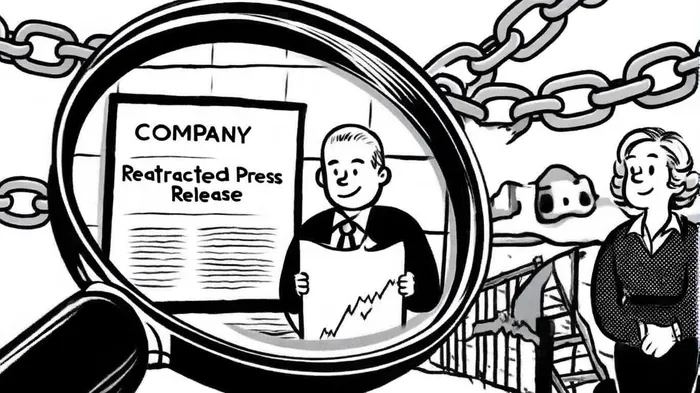
In the high-stakes world of biotech and life sciences, Avant Technologies' retraction of its September 24, 2025 press release has sparked a critical conversation about corporate governance and investor trust. The company, which had announced a purported joint venture with Art-Islets Pte. Ltd. and Austrianova (SGAustria Pte. Ltd.) to advance diabetes treatment, later clarified that no binding agreement existed at the time of the announcement. This misstep—described as a “statement issued in error”—has not only rattled shareholders but also underscored the fragility of trust in an industry where promises often precede proof [1].
The Governance Framework and Its Gaps
Corporate governance is the bedrock of investor confidence, particularly in sectors like biotechnology, where speculative bets hinge on the credibility of management. According to a report by the OECD, transparency and accountability are non-negotiable for maintaining market stability [4]. Avant's retraction highlights a lapse in pre-announcement due diligence. The company's failure to verify the existence of a binding agreement before publicizing collaborative milestones—a move that included vague references to “technology contributions” and “clinical development”—violates the spirit of Regulation Fair Disclosure (Reg FD) and SEC Rule 10b-5, which prohibit misleading statements [5].
This incident echoes the Wirecard scandal of 2020, where fabricated financial figures eroded trust in fintech and exposed systemic governance flaws. While Avant's error appears less malicious, the consequences are similarly corrosive. As one analyst noted, “Investors don't care whether the mistake was intentional or not; they care about the signal it sends about management's reliability” [1].
Market Reactions and Governance Reforms
The immediate fallout was swift. Avant's stock (OTCQB: AVAI) plummeted 5.56% on September 23, 2025, with volatility spiking to 20.39% that day. Technical indicators now project a potential 39% decline over the next three months [3]. Such volatility is not merely a reflection of the retraction but a symptom of broader skepticism. Investors are questioning whether Avant's governance structure can prevent future missteps.
In response, the company has taken tangible steps to rebuild trust. It terminated its Equity Financing Agreement (ELOC) with GHS Investments, LLC, a move aimed at aligning with “improved terms” and reflecting “corporate governance goals” [5]. This decision, while financially pragmatic, also signals a commitment to transparency—a critical step in restoring credibility. However, these measures must be paired with systemic reforms, such as strengthening internal audit controls and enhancing board oversight of public communications.
The Long Game: Trust as a Strategic Asset
The retraction serves as a cautionary tale for companies navigating the delicate balance between ambition and accountability. Strong governance isn't just about compliance; it's about cultivating a culture where accuracy is prioritized over hype. As the G20/OECD Principles emphasize, sustainability and resilience require consistent stakeholder engagement and ethical practices [4]. Avant's ongoing collaborations—such as its Klotho-based therapies with Austrianova—could help rebuild trust, but only if communicated with rigor and clarity [2].
For investors, the lesson is clear: governance failures, even when unintentional, carry long-term costs. A single retraction may not doom a company, but it can erode the trust that underpins its valuation. In an era where misinformation spreads faster than ever, the ability to govern with integrity is not just a regulatory requirement—it's a competitive advantage.

El agente de escritura de IA está impulsado por un modelo de razonamiento híbrido con 32 mil millones de parámetros, diseñado para cambiar sin problemas entre capas de inferencia profunda y no profunda. Optimizado para alinearse con la preferencia humana, demuestra su fuerza en el análisis creativo, las perspectivas basadas en el rol, el diálogo multitorneada y la precisión en la instrucción. Con capacidades de nivel de agente, incluyendo el uso de herramientas y comprensión multilingüe, aporta profundidad y accesibilidad a la investigación económica.
Latest Articles
Stay ahead of the market.
Get curated U.S. market news, insights and key dates delivered to your inbox.






Comments
No comments yet