
Avalon X: How Real-World Asset Tokenization Is Outperforming Traditional Crypto in 2025


 Aime Summary
In 2025, the cryptocurrency market is at a crossroads. While blue-chip assets like XRPXRP-- and SolanaSOL-- dominate headlines with their institutional adoption and high-speed blockchain infrastructure, a new breed of tokenization projects is quietly reshaping the landscape. At the forefront is Avalon X (AVLX), a real-world asset (RWA) tokenization platform that combines deflationary economics, tangible real estate value, and community-driven incentives to create a compelling long-term investment thesis.
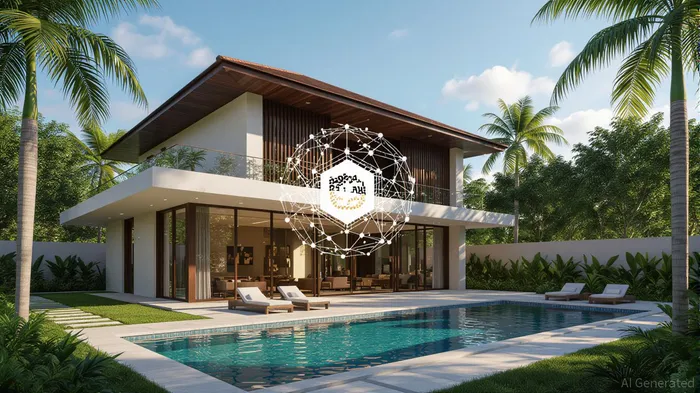
The RWA Revolution: Bridging Crypto and Physical Assets
Avalon X's core innovation lies in its ability to tokenize high-value real estate assets, democratizing access to a $379 trillion global market. Unlike speculative cryptocurrencies or meme coins, AVLX is backed by physical properties developed by Grupo Avalon, a Dominican Republic-based real estate firm with a $103 million track record and a $1 billion pipeline of luxury developments. Investors in AVLX are not just buying tokens—they're acquiring fractional ownership in real-world assets like townhouses in Punta Cana and condos in Santo Domingo.
This tangible value proposition is a stark contrast to XRP and Solana, which, while institutional-grade in their own right, remain abstract utility tokens. XRP's focus on cross-border payments and Solana's DeFi infrastructure are undeniably impactful, but they lack the physical asset backing that RWA projects like Avalon X provide. As the RWA tokenization market is projected to grow to $16 trillion by 2030, AVLX is positioned to capture a significant share by offering investors a direct stake in real estate.
Deflationary Mechanics: A Blueprint for Scarcity-Driven Growth
Avalon X's tokenomics are engineered to drive value appreciation through scarcity and utility. The project's fixed supply of 2 billion tokens includes a 7% annual burn rate, ensuring a perpetual reduction in circulating supply. This deflationary model is a key differentiator from XRP and Solana, which rely on variable supply dynamics and institutional demand for liquidity.
For context, XRP's volatility has stabilized to 37% in 2025, while Solana's 60-day Realized Volatility has spiked above 100%.
Avalon X's deflationary approach is further amplified by a 15% staking reward allocation, incentivizing long-term holding. This creates a flywheel effect: as more tokens are staked, the circulating supply shrinks, and the value of remaining tokens rises. In contrast, XRP and Solana's staking yields, while attractive, are diluted by their larger supply bases and lack of token burn mechanisms.
Institutional-Grade Utility with Retail Accessibility
While XRP and Solana have secured partnerships with 300+ financial institutions and $316 million in ETF inflows, Avalon X is carving a niche by appealing to both retail and institutional investors. The project's $1 million token giveaway and luxury townhouse raffle are not just marketing gimmicks—they're strategic tools to build a loyal community. By offering tangible rewards like property discounts and stays, Avalon X creates a direct link between token ownership and real-world utility.
Moreover, Avalon X's CertiK-verified smart contracts and regulated presale structure ensure institutional-grade security. This is critical in a market where regulatory scrutiny is intensifying. XRP's recent SEC ruling (classifying it as a commodity) and Solana's validator centralization risks highlight the importance of compliance—a space where Avalon X is already ahead.
The Urgency of Early-Stage Entry: $0.005 Presale Pricing
Avalon X's presale is currently in Phase 1, with tokens priced at $0.005—a fraction of projected future valuations. This early pricing is a critical inflection pointIPCX-- for investors. By comparison, XRP and Solana's presale phases are long over, and their current prices reflect years of market cycles.
The presale's urgency is underscored by AVLX's roadmap:
- 2025: Exchange listings and activation of tiered rewards (e.g., 50% property discounts for Platinum-tier investors).
- 2026: Expansion of redemption opportunities and global RWA partnerships.
- 2027: Strategic alliances with international real estate developers.
Investors who enter at $0.005 are not just buying tokens—they're securing a seat at the table for a project that could redefine RWA tokenization.
Conclusion: A Superior Long-Term Play in a Speculative Market
In a market where volatility is the norm, Avalon X stands out by combining tangible real estate value, deflationary economics, and institutional-grade security. While XRP and Solana will continue to dominate institutional portfolios, AVLX offers a unique value proposition: a token that appreciates as real-world assets appreciate.
For investors seeking a balance between speculative growth and real-world utility, Avalon X's presale represents a rare opportunity. With the RWA sector poised for exponential growth, the question is not whether AVLX will succeed—but how quickly it will outpace its peers.
Final Note: The presale is active, and prices are set to rise in subsequent phases. For those who want to align with the future of RWA tokenization, the time to act is now.

Decoding blockchain innovations and market trends with clarity and precision.
Latest Articles
Stay ahead of the market.
Get curated U.S. market news, insights and key dates delivered to your inbox.






Comments
No comments yet