
Autonomous Ambitions: Uber's Bold Bet on Pony.ai and the Road Ahead
The self-driving revolution is no longer a distant promise. By 2025, autonomous vehicles are poised to transform transportation, and Uber, once a reluctant spectator in this race, is now making a high-stakes move to reclaim its place at the table. Travis Kalanick, Uber's controversial former CEO, is spearheading a bid to acquire the U.S. operations of Chinese autonomous driving firm Pony.ai—a deal that could redefine Uber's future. But with regulatory hurdles, stiff competition, and Kalanick's checkered past, the stakes are enormous.
The Deal: A Strategic Reckoning for Uber
The proposed acquisition of Pony.ai's U.S. division represents a stark pivot for Uber. After selling its self-driving unit to Aurora InnovationAUR-- in 2020—a retreat framed as a cost-saving move—Uber now appears ready to double down. Kalanick's involvement is critical: he brings not just financial backing but also a vision to integrate Pony's technology into Uber's platform, potentially turning it into a “transportation operating system” that spans ride-hailing, trucking, and logistics.
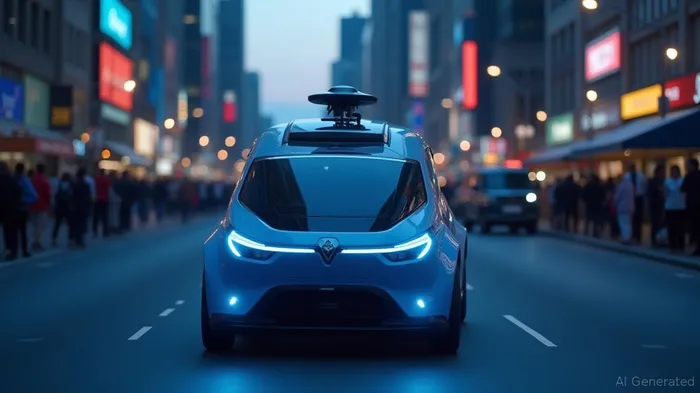
The financial terms remain opaque, but analysts estimate the U.S. arm could fetch under $500 million, a fraction of Pony.ai's $4.5 billion market cap at its 2023 IPO. For Uber, the bet is less about the price and more about the prize: access to Pony's seventh-generation autonomous driving system, which reduces hardware costs by 70% while achieving Level 4 autonomy (no human intervention required). This tech already powers Toyota's bZ4X robotaxis and Sany Heavy Truck's platooning solutions, suggesting scalability.
The Opportunity: A $1.5 Trillion Market at Stake
Autonomous mobility is projected to be a $1.5 trillion market by 2030. Uber's current valuation—trading at just 4.5x trailing sales—suggests the market has yet to price in this upside. If the Pony.ai deal succeeds, Uber could leapfrog competitors like Waymo (owned by Alphabet, trading at 6.2x sales) and TeslaTSLA-- (11.3x sales) by deploying autonomous fleets at scale.
Pony.ai's regulatory progress adds credibility. Its “forked” source code, developed to isolate its U.S. operations from its Chinese parent, has already secured approvals in China's Greater Bay Area and Luxembourg. In the U.S., Pony aims to bypass Commerce Department restrictions on Chinese-controlled autonomous software—a critical hurdle. If regulators greenlight the deal, Uber could fast-track deployments in California and Arizona by late 2025.
The Risks: Geopolitics, Governance, and Kalanick's Shadow
The path is fraught with obstacles. The U.S. Committee on Foreign Investment (CFIUS) must approve the transaction, given Pony's Chinese roots and the sensitive nature of autonomous vehicle data. CFIUS could demand data localization or governance changes, potentially diluting Uber's control.
Then there's Kalanick himself. His ouster from Uber in 2017 amid toxic workplace culture and regulatory defiance remains a liability. While his CloudKitchens venture has shown he can pivot, investors may question whether his disruptive style suits a post-merger integration.
Competition is another wild card. Waymo, with its $5.6 billion war chest, has already secured New York and Washington, D.C., as markets. Tesla's robotaxis, now operational in Austin, are a direct threat to Uber's ride-hailing dominance. A misstep could leave Pony.ai's tech underutilized, leaving Uber with a costly white elephant.
The Bottom Line: A High-Risk, High-Reward Gamble
For investors, the calculus hinges on two questions: Will the deal close, and can Uber execute?
- If Yes: Analysts project a 20% upside for Uber's stock, with a $55 target price—20% above 2024 levels—driven by autonomous revenue streams and market share gains. Pony's cost-efficient tech could also reduce Uber's reliance on human drivers, improving margins.
- If No: Uber's valuation may stagnate, with competitors widening their lead. Kalanick's failure could reinforce skepticism about his leadership, especially if regulatory scrutiny intensifies.
Investment Takeaways
- Buy Uber if: The deal wins CFIUS approval and Pony's U.S. deployments begin by 2025. Monitor for milestones like fleet launches or partnerships with automakers.
- Wait or Sell if: Regulatory delays persist, or Pony's tech underperforms in real-world testing.
- Consider Pony.ai stock: Its 12% June surge hints at investor optimism, but volatility remains high until the deal is finalized.
Conclusion: A New Chapter, But Will It Be a Bestseller?
Kalanick's return to autonomous driving is as audacious as it is risky. For Uber, the bet could be transformative—a second chance to lead in a market it once dominated—or a costly misstep that deepens its reliance on traditional ride-hailing. Investors should watch closely: the next chapter in the self-driving saga is about to begin.
Data as of June 2025. Past performance does not guarantee future results. This article is for informational purposes only and should not be construed as financial advice.

Delivering real-time insights and analysis on emerging financial trends and market movements.
Latest Articles
Stay ahead of the market.
Get curated U.S. market news, insights and key dates delivered to your inbox.




Comments
No comments yet