
The Autodesk-PTC Merger: A Play for Dominance in the $400B CAD/PLM Market?
PTC's stock soars 25% in a week on merger speculation—here's why the Autodesk-PTC tie-up could reshape industrial software.
The recent surge in PTC's stock price—up 25% in seven days—has investors buzzing about a potential takeover by AutodeskADSK--, its longtime rival in the engineering software space. If realized, this merger could create a powerhouse in the $400 billion CAD/PLM (Computer-Aided Design/Product Lifecycle Management) market, leveraging Autodesk's dominance in 3D design and PTC's IoT-driven manufacturing capabilities. But is this deal a strategic masterstroke or a risky gamble? Let's dissect the opportunities, risks, and what it means for investors.
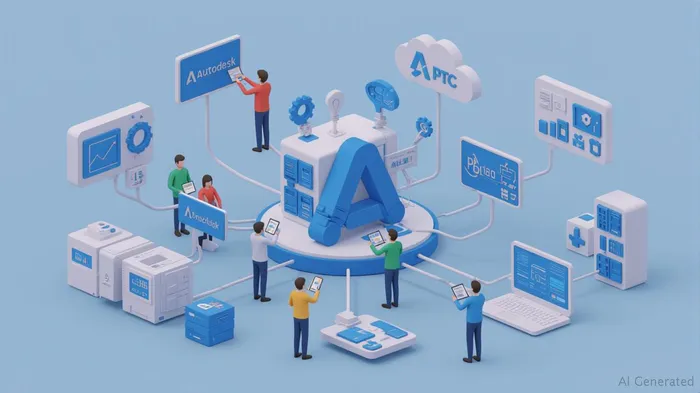
The Strategic Case for Synergy
The merger's most compelling angle lies in combining Autodesk's 3D design prowess with PTC's IoT and PLM leadership. Autodesk's platforms like Fusion 360 and AutoCAD set the standard for design, while PTC's ThingWorx IoT platform and Windchill PLM solutions are critical for manufacturing execution and digital thread integration. Together, they could offer a full lifecycle solution—from concept to production to maintenance—capitalizing on the growing demand for AI-driven, software-centric industrial workflows.
This synergy would directly address a $400 billion market undergoing rapid consolidation. Competitors like Siemens (post-Altair acquisition) and SynopsysSNPS-- (pursuing Ansys) are already moving fast to control software-driven value chains. A merged Autodesk-PTC could leapfrog rivals by offering:
- Unified CAD-PLM platforms: Streamlining design-to-manufacturing workflows.
- AI-driven IoT integration: Embedding predictive maintenance and supply chain analytics into PTC's Arena platform.
- Cloud scalability: Merging Autodesk's cloud-native Onshape with PTC's SaaS offerings to serve SMEs and enterprises alike.
Valuation: A Premium for Long-Term Growth?
PTC's recent valuation surge (market cap now $25.2 billion) reflects investor optimism about the merger's potential. But is the stock overbought? Let's break down the numbers:
- Revenue & Margins: PTC's trailing-12-month revenue is ~$2.3B, with a 32.3% EBITDA margin and $278.5M free cash flow.
- Growth Metrics: Q2 revenue grew 5.5% YoY, with non-GAAP EPS up 22.6% to $1.79. Analysts project a 39.4% EPS jump in Q3.
- Valuation Multiples: PTC's trailing P/E is 47.9x, far above Autodesk's 31.2x. This premium assumes synergies will boost margins and growth.
The deal's success hinges on whether Autodesk can pay a price that satisfies PTC's shareholders while avoiding overpayment. A cash-and-stock deal could value PTCPTC-- at ~$50–60 per share (up from its recent $45–50 range), reflecting a 20–30% premium to pre-rumor levels.
Risks: Regulatory Scrutiny & Cultural Fit
The merger isn't without hurdles.
Regulatory Risks: Antitrust authorities may scrutinize a deal that combines two of the top five CAD/PLM players. The EU's recent scrutiny of Siemens-Altair and FTC's probes into tech mergers signal caution.
Cultural Integration: Autodesk's creative design culture (serving architects, engineers) must mesh with PTC's industrial manufacturing focus. Past missteps, like Oracle's PeopleSoft acquisition, show that clashing corporate DNA can derail synergies.
Valuation Overhang: PTC's 47.9x P/E already embeds a “merger premium.” If talks falter, the stock could drop sharply.
Investment Implications: Play the Consolidation Trend
For investors, the Autodesk-PTC speculation highlights a broader theme: industrial software is the new battleground for tech giants. Here's how to position:
PTC Stock: Hold if you believe the deal will close and synergies materialize. But brace for volatility—regulatory delays or a lower-than-expected offer could unwind gains.
Autodesk's Longer Game: While its 2% dip reflects acquisition fears, the stock could rebound if the merger's strategic benefits outweigh costs.
Sector Plays: Beyond these two, consider broader consolidation beneficiaries like PTC's peers (Siemens, Dassault Systèmes) and AI-enablers like Ansys or NVIDIA (via Omniverse).
Final Take: A High-Reward, High-Risk Bet
The Autodesk-PTC merger could be a landmark deal reshaping the CAD/PLM landscape—or a costly misstep. For investors, the key is to differentiate between short-term speculation and long-term value creation. If the two companies can merge their strengths without overpaying or alienating customers, the upside is massive. But if regulatory hurdles or cultural clashes arise, this could be a cautionary tale in the era of software-driven industrial consolidation.
Stay tuned to Q3 earnings reports and regulatory updates—this story isn't over yet.
Actionable Insight: Consider a small position in PTC as a “merger call option,” but set a stop-loss at pre-rumor levels. For broader exposure, look to ETFs like XSW (Software Select Sector) or VGT (Technology ETF) to capture sector-wide consolidation trends.

Delivering real-time insights and analysis on emerging financial trends and market movements.
Latest Articles
Stay ahead of the market.
Get curated U.S. market news, insights and key dates delivered to your inbox.
AInvest
PRO
AInvest
PRO



Comments
No comments yet