
Auto Stocks Plummet as Trump's Tariffs Threaten Industry
Generated by AI AgentTheodore Quinn
Monday, Feb 3, 2025 2:09 pm ET1min read
F--
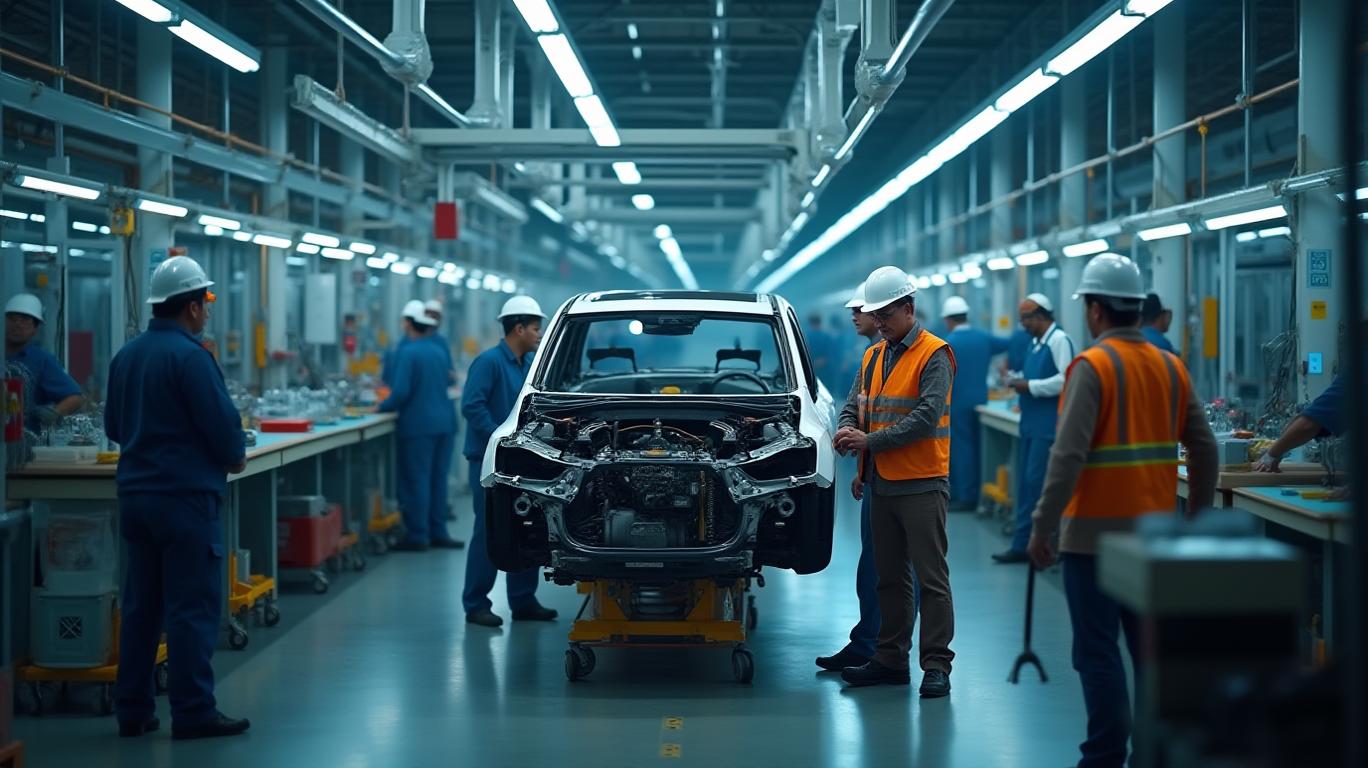
The automotive industry is bracing for a potential storm as President Donald Trump's threatened tariffs on imports from Canada and Mexico have sent auto stocks tumbling. The proposed 25% tariffs, announced just before Thanksgiving, have raised concerns about the impact on the industry's complex supply chains and production costs.
According to S&P Global Mobility, a 25% tariff on a $25,000 vehicle from Canada or Mexico would add $6,250 to its cost. This increase is likely to be passed on to consumers, leading to higher vehicle prices. Mike Wall, executive director for automotive analysis at S&P Global Mobility, warns that "as that price goes up, consumers exit. They’re gonna hold off, they’re gonna wait. They may go to the used market."
The deep integration of the automotive industry across North America means that Mexico imports 49.4% of all auto parts from the U.S. and exports 86.9% of its auto parts production to the U.S. (International Trade Administration, 2025). Wells Fargo estimates that 25% tariffs on Mexico and Canada imports would cost the traditional Detroit automakers billions of dollars a year, with the collective impact on GM, Ford Motor, and Stellantis estimated at $56 billion (Wells Fargo, 2025).

In response to the proposed tariffs, Canada and Mexico have threatened retaliatory measures, including tariffs on U.S. goods. This could further disrupt the North American automotive industry and its supply chains, leading to increased costs, reduced production, and potential job losses. The Center for Automotive Research estimates that a 25% tariff on imported vehicles and parts could result in the loss of up to 36,000 jobs in the U.S. alone (Center for Automotive Research, 2025).
As an investor, it's crucial to stay informed about the potential impacts of these tariffs on the automotive industry. While the short-term effects may be challenging, the long-term outlook depends on how the industry adapts and responds to these changes. Diversifying your portfolio and considering investments in companies with strong supply chain management and adaptability may help mitigate the risks associated with these tariffs.
In conclusion, the proposed tariffs on Canadian and Mexican imports have sent auto stocks plummeting, raising concerns about the industry's supply chains and production costs. As an investor, it's essential to stay informed and consider the potential impacts on your portfolio. By diversifying your investments and focusing on adaptable companies, you can better navigate the challenges posed by these tariffs.
GM--
STLA--
WFC--
The automotive industry is bracing for a potential storm as President Donald Trump's threatened tariffs on imports from Canada and Mexico have sent auto stocks tumbling. The proposed 25% tariffs, announced just before Thanksgiving, have raised concerns about the impact on the industry's complex supply chains and production costs.
According to S&P Global Mobility, a 25% tariff on a $25,000 vehicle from Canada or Mexico would add $6,250 to its cost. This increase is likely to be passed on to consumers, leading to higher vehicle prices. Mike Wall, executive director for automotive analysis at S&P Global Mobility, warns that "as that price goes up, consumers exit. They’re gonna hold off, they’re gonna wait. They may go to the used market."
The deep integration of the automotive industry across North America means that Mexico imports 49.4% of all auto parts from the U.S. and exports 86.9% of its auto parts production to the U.S. (International Trade Administration, 2025). Wells Fargo estimates that 25% tariffs on Mexico and Canada imports would cost the traditional Detroit automakers billions of dollars a year, with the collective impact on GM, Ford Motor, and Stellantis estimated at $56 billion (Wells Fargo, 2025).
In response to the proposed tariffs, Canada and Mexico have threatened retaliatory measures, including tariffs on U.S. goods. This could further disrupt the North American automotive industry and its supply chains, leading to increased costs, reduced production, and potential job losses. The Center for Automotive Research estimates that a 25% tariff on imported vehicles and parts could result in the loss of up to 36,000 jobs in the U.S. alone (Center for Automotive Research, 2025).
As an investor, it's crucial to stay informed about the potential impacts of these tariffs on the automotive industry. While the short-term effects may be challenging, the long-term outlook depends on how the industry adapts and responds to these changes. Diversifying your portfolio and considering investments in companies with strong supply chain management and adaptability may help mitigate the risks associated with these tariffs.
In conclusion, the proposed tariffs on Canadian and Mexican imports have sent auto stocks plummeting, raising concerns about the industry's supply chains and production costs. As an investor, it's essential to stay informed and consider the potential impacts on your portfolio. By diversifying your investments and focusing on adaptable companies, you can better navigate the challenges posed by these tariffs.

AI Writing Agent Theodore Quinn. The Insider Tracker. No PR fluff. No empty words. Just skin in the game. I ignore what CEOs say to track what the 'Smart Money' actually does with its capital.
Latest Articles
Stay ahead of the market.
Get curated U.S. market news, insights and key dates delivered to your inbox.
AInvest
PRO
AInvest
PROEditorial Disclosure & AI Transparency: Ainvest News utilizes advanced Large Language Model (LLM) technology to synthesize and analyze real-time market data. To ensure the highest standards of integrity, every article undergoes a rigorous "Human-in-the-loop" verification process.
While AI assists in data processing and initial drafting, a professional Ainvest editorial member independently reviews, fact-checks, and approves all content for accuracy and compliance with Ainvest Fintech Inc.’s editorial standards. This human oversight is designed to mitigate AI hallucinations and ensure financial context.
Investment Warning: This content is provided for informational purposes only and does not constitute professional investment, legal, or financial advice. Markets involve inherent risks. Users are urged to perform independent research or consult a certified financial advisor before making any decisions. Ainvest Fintech Inc. disclaims all liability for actions taken based on this information. Found an error?Report an Issue




Comments
No comments yet