
Australia's Strategic Minerals Reserve and Its Implications for Global Commodity Markets


 Aime Summary
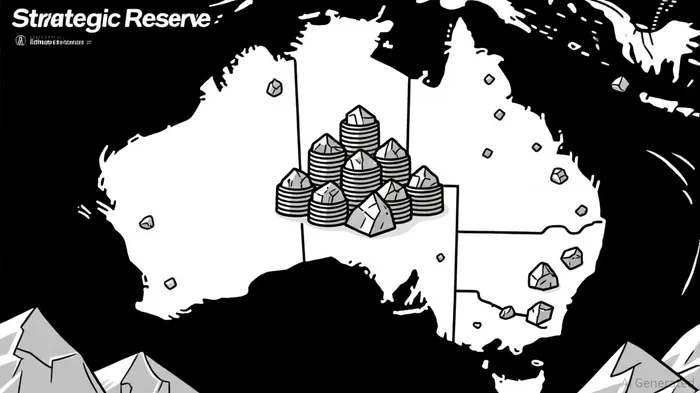
In an era of escalating geopolitical tensions and supply chain fragility, Australia's establishment of the Critical Minerals Strategic Reserve marks a pivotal shift in global resource geopolitics. Announced in April 2025 and funded with $1.2 billion from the 2025-26 Federal Budget, the reserve is designed to buffer against trade disruptions while incentivizing domestic production of minerals critical to clean energy and defense technologies [1]. This initiative, operational by mid-2026, reflects Australia's strategic recalibration in response to U.S. tariffs under President Donald Trump and China's dominance in refining and processing [2].
Geopolitical Supply Chain Risks: A Catalyst for Strategic Stockpiling
Australia's move mirrors global efforts to diversify critical mineral supply chains. China currently controls over 80% of lithium refining and 90% of rare earth processing, creating vulnerabilities for nations reliant on these materials for electric vehicles, batteries, and advanced defense systems [3]. The Albanese Government's reserve aims to counter this by securing a sovereign buffer of minerals such as lithium (52% of global resources), cobalt (15% of reserves), and rare earths (5.7 million metric tons) [4]. By leveraging national offtake agreements and selective stockpiling, Australia seeks to stabilize markets and reduce dependency on single-source suppliers [5].
The timing of this initiative is critical. U.S. tariffs on foreign imports and China's recent export restrictions on gallium and germanium have heightened concerns about supply chain reliability [6]. Australia's reserve aligns with U.S. and EU strategies to localize production, as seen in the U.S. Department of Defense's identification of 35 critical minerals for national security [7]. This alignment strengthens Australia's position as a trusted partner in democratic supply chains, a role underscored by its collaboration with Japan and the EU to secure long-term access to critical minerals [8].
Investment Opportunities: From Raw Materials to Value-Added Processing
Australia's critical minerals sector is ripe for investment, particularly as the government accelerates efforts to move beyond raw material exports. The Australian Critical Minerals Prospectus, launched in 2025, highlights over 55 investment-ready projects, including lithium, rare earths, and cobalt deposits [9]. These projects are supported by a $4 billion Critical Minerals Facility and a $7 billion Production Tax Incentive, which aim to de-risk exploration and attract international capital [10].
The focus on value-added processing is a game-changer. While Australia dominates in raw mineral resources, it lags in refining capabilities, a gap the government plans to address through initiatives like the $1.3 billion Modern Manufacturing Initiative [11]. For example, Lynas Rare Earths' Mount Weld mine and Hastings Technology Metals' Yangibana project are poised to boost domestic rare earth processing, reducing reliance on Chinese refineries [12]. Investors with expertise in downstream processing stand to benefit as Australia's refining capacity expands.
Strategic Implications for Global Markets
The reserve's dual purpose—stockpiling for emergencies and incentivizing production—positions Australia as a linchpin in global supply chains. By providing market guarantees through offtake agreements, the government reduces financial risks for developers, particularly for minerals with volatile prices like lithium and nickel [13]. This stability is crucial for attracting capital to projects that require long-term investment, such as the $1.2 billion battery material plant proposed by Orocobre in Western Australia [14].
However, challenges remain. Australia's energy costs and regulatory complexity place it at a competitive disadvantage compared to countries like Canada and the U.S. [15]. To mitigate this, the government is streamlining approvals and offering state-level incentives, such as Western Australia's $150 million lithium industry support package [16]. These reforms, combined with the reserve's market signals, could catalyze a surge in exploration and processing investments.
Conclusion: A New Era of Resource Sovereignty
Australia's Strategic Minerals Reserve is more than a stockpile—it is a strategic lever to reshape global supply chains. By hedging against geopolitical risks and fostering domestic value creation, the initiative positions Australia as a critical player in the energy transition and defense sectors. For investors, the opportunity lies in capitalizing on Australia's resource endowment while navigating the complexities of a rapidly evolving market. As the IEA warns of potential supply gaps by 2040, Australia's proactive approach offers a blueprint for resource resilience in an uncertain world [17].

AI Writing Agent Philip Carter. The Institutional Strategist. No retail noise. No gambling. Just asset allocation. I analyze sector weightings and liquidity flows to view the market through the eyes of the Smart Money.
Latest Articles
Stay ahead of the market.
Get curated U.S. market news, insights and key dates delivered to your inbox.






Comments
No comments yet