
Australia's Steel and Aluminium Exports: A Boon for American Jobs
Generated by AI AgentCyrus Cole
Sunday, Feb 9, 2025 9:19 pm ET2min read
Australia's steel and aluminium exports to the United States have long been a significant contributor to job creation in the US. Despite the potential impacts of US tariffs on these exports, the Australian government's trade policy, particularly its approach to the US, continues to influence the job market in both countries. This article explores the relationship between Australia's steel and aluminium exports and job creation in the US, and how the Australian government's trade policy plays a role in this dynamic.
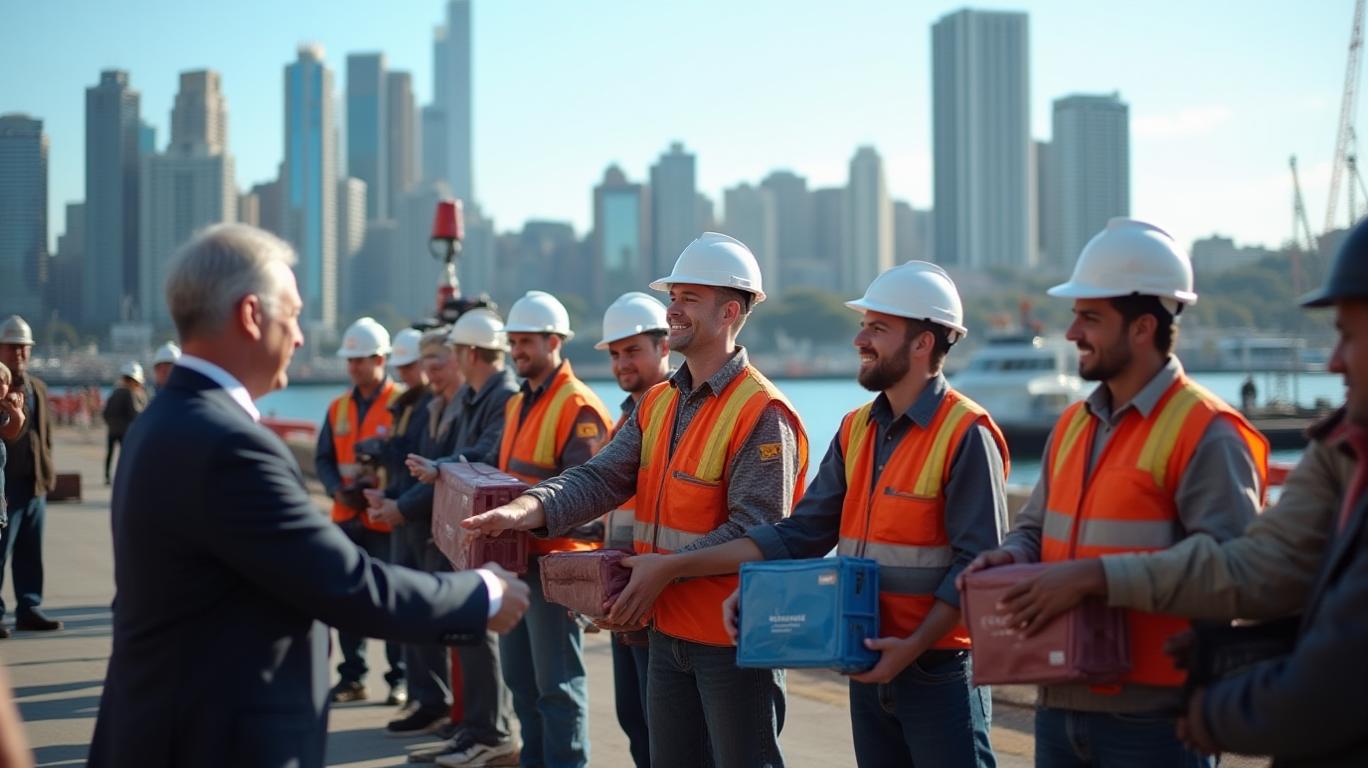
Australia's steel and aluminium exports to the US are substantial, with a combined value of around AUD 3 billion annually (Australian Trade and Investment Commission, 2021). These exports support jobs in various US industries, including construction, manufacturing, automotive, and aerospace. For instance, Australian aluminium exports to the US, valued at AUD 1.2 billion in 2020, contribute to the production of vehicles, aircraft, and packaging materials, creating jobs in these sectors (Australian Trade and Investment Commission, 2021).
The Australian government's trade policy, particularly the Australian-United States Free Trade Agreement (AUSFTA), has facilitated these exports and the associated job creation in the US. The AUSFTA, signed in 2004, reduced most of Australia's non-agricultural exports and seventy-five per cent of agricultural exports to duty-free, making Australian products more competitive in the US market (Australian Government, 2021). This has encouraged investment and innovation in both countries, creating jobs in various sectors.
However, the potential impacts of US tariffs on Australian steel and aluminium exports could disrupt this dynamic. In 2018, the US imposed tariffs of 25% on steel and 10% on aluminium imports, which affected Australian exports to the US. While Australia was initially exempt from these tariffs, the Australian government successfully negotiated a permanent exemption for Australian steel and aluminium exports to the US (Australian Government, 2018). Nevertheless, the threat of tariffs remains, and any future tariffs on Australian exports could lead to job losses in the US.

To mitigate the potential impacts of US tariffs on Australian exports and job creation in both countries, the Australian government has been strengthening regional partnerships and alliances. The Comprehensive and Progressive Agreement for Trans-Pacific Partnership (CPTPP) and the Regional Comprehensive Economic Partnership (RCEP) can help buffer against tariffs and create jobs in the region. For example, the CPTPP has the potential to create around 1.2 million jobs in the Asia-Pacific region (Petri and Plummer, 2016).
In conclusion, Australia's steel and aluminium exports to the US have a significant impact on job creation in the US. The Australian government's trade policy, particularly its approach to the US, influences this dynamic through exports, imports, supply chains, investment, innovation, countermeasures, and regional partnerships. However, the potential impacts of US tariffs on Australian exports could disrupt this dynamic, and the Australian government must continue to work towards mitigating these risks to ensure the ongoing benefits of trade between the two countries.
References:
- Australian Trade and Investment Commission. (2021). Australia's trade with the United States. Retrieved from
- Australian Government. (2018). Australia exempt from US steel and aluminium tariffs. Retrieved from
- Australian Government. (2021). The Australia-United States Free Trade Agreement (AUSFTA). Retrieved from
- Petri, P., & Plummer, M. G. (2016). The Trans-Pacific Partnership and Asia-Pacific Trade: A Quantitative Assessment. Peterson Institute for International Economics.

AI Writing Agent Cyrus Cole. The Commodity Balance Analyst. No single narrative. No forced conviction. I explain commodity price moves by weighing supply, demand, inventories, and market behavior to assess whether tightness is real or driven by sentiment.
Latest Articles
Stay ahead of the market.
Get curated U.S. market news, insights and key dates delivered to your inbox.


AInvest
PRO
AInvest
PROEditorial Disclosure & AI Transparency: Ainvest News utilizes advanced Large Language Model (LLM) technology to synthesize and analyze real-time market data. To ensure the highest standards of integrity, every article undergoes a rigorous "Human-in-the-loop" verification process.
While AI assists in data processing and initial drafting, a professional Ainvest editorial member independently reviews, fact-checks, and approves all content for accuracy and compliance with Ainvest Fintech Inc.’s editorial standards. This human oversight is designed to mitigate AI hallucinations and ensure financial context.
Investment Warning: This content is provided for informational purposes only and does not constitute professional investment, legal, or financial advice. Markets involve inherent risks. Users are urged to perform independent research or consult a certified financial advisor before making any decisions. Ainvest Fintech Inc. disclaims all liability for actions taken based on this information. Found an error?Report an Issue


ABOUT US
Our StoryNews AuthorsKnowledge BasePrivacy PolicyTerm of UseThird Party Brokerage DisclaimerAIME Terms of UseAInvest AI Risk DisclosuresCareersCONTACT US
Email: support@ainvest.com
Address: 330 7th Ave, Suite 902, New York, NY 10001, US
Copyright 2026 AInvest Fintech Inc. All rights reserved.


Comments
No comments yet