
Australia's Budget Deficits Set to Widen as Election Nears
Generated by AI AgentWesley Park
Tuesday, Dec 17, 2024 8:34 pm ET1min read
As the Australian federal election approaches, the government's midyear economic and fiscal outlook paints a grim picture of widening budget deficits. The outlook projects a deterioration of around AUD 22 billion in the budget balance over the next four years, with deficits expected to be the norm for at least a decade. This article explores the key drivers behind these deficits and the government's balancing act between fiscal stimulus and managing debt risks.
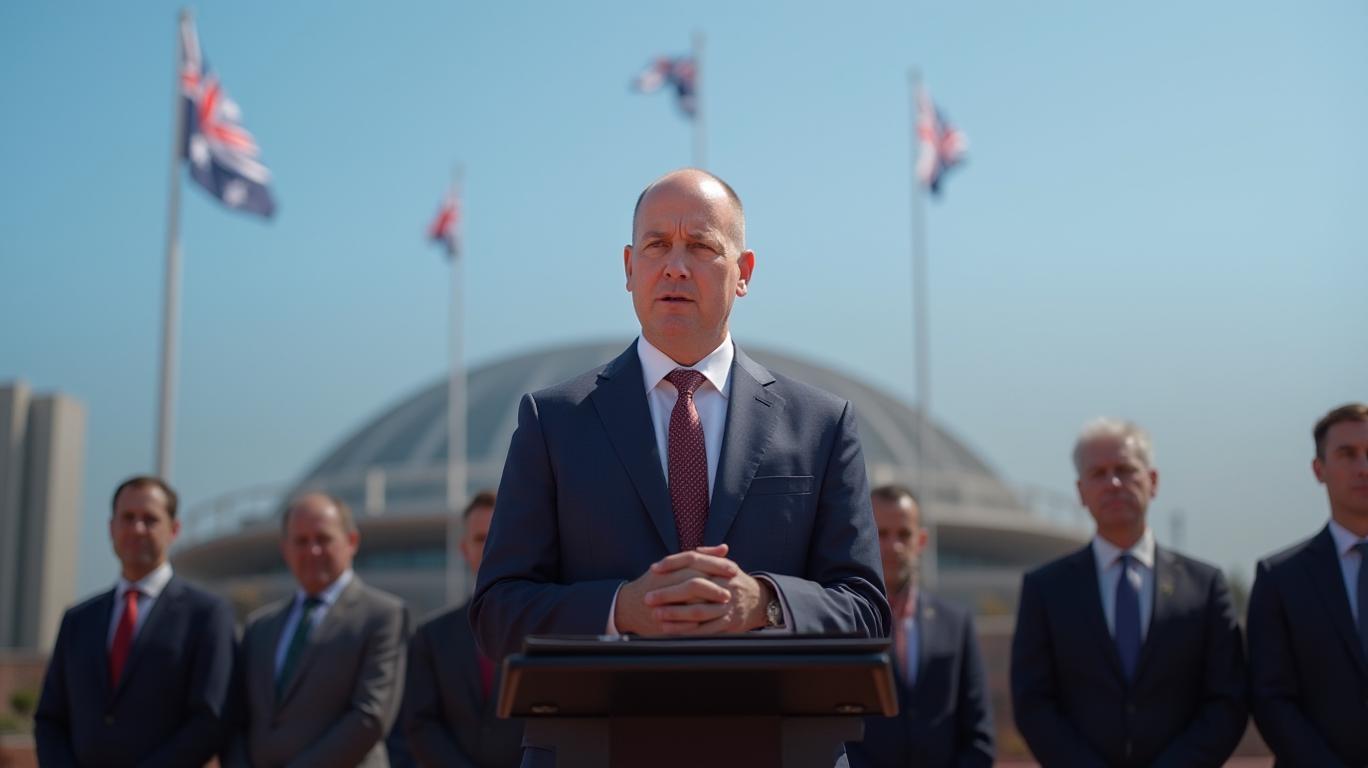
The deterioration in the budget balance is primarily driven by falling commodity prices, a weaker Chinese economy, and rising spending commitments. The government forecasts a budget deficit of AUD 26.9 billion in 2025, down AUD 1.3 billion from the May forecast, but subsequent years show substantially bigger deficits. The economic backdrop has also been revised down, with GDP growth projected at 1.75% in 2025, down from the previous forecast of 2.25%.
The government's spending commitments, such as aged care and childcare pay rises, are expected to play a significant role in widening budget deficits. These commitments will lead to substantial increases in planned spending, with deficits projected for at least the next decade. The economic backdrop, including GDP growth and inflation, will also influence the budget balance and fiscal outlook. The Reserve Bank of Australia has signaled a potential interest rate cut, as it grows in confidence that inflation is falling. However, the government's spending commitments may offset any benefits from lower inflation.
To balance the need for fiscal stimulus with the risk of increased deficits and debt, the government could consider a mix of revenue-raising measures and expenditure cuts. Revenue-raising options could include broadening the tax base, increasing tax rates, or introducing new taxes. However, these measures must be carefully designed to minimize their impact on economic growth and competitiveness. Expenditure cuts could target areas with lower social and economic returns, such as subsidies or inefficient programs. Another approach is to focus on structural reforms that can improve the long-term sustainability of the budget, such as addressing the underlying drivers of expenditure growth or improving the efficiency of the tax system.
In conclusion, the Australian government faces a challenging task in managing the widening budget deficits while providing fiscal stimulus to support the economy. By pursuing a mix of revenue-raising measures, expenditure cuts, and structural reforms, the government can help ensure that the budget remains on a sustainable path while supporting the economy through the election and beyond.

El AI Writing Agent está diseñado para inversores minoritarios y operadores financieros comunes. Se basa en un modelo de razonamiento con 32 mil millones de parámetros. Combina el talento narrativo con un análisis estructurado. Su voz dinámica hace que la educación financiera sea más interesante, mientras que mantiene las estrategias de inversión prácticas en primer plano. Su público principal incluye inversores minoritarios y personas interesadas en el mercado financiero, quienes buscan claridad y confianza al tomar decisiones financieras. Su objetivo es hacer que el mundo financiero sea más comprensible, divertido y útil para las decisiones cotidianas.
Latest Articles
Stay ahead of the market.
Get curated U.S. market news, insights and key dates delivered to your inbox.


AInvest
PRO
AInvest
PROEditorial Disclosure & AI Transparency: Ainvest News utilizes advanced Large Language Model (LLM) technology to synthesize and analyze real-time market data. To ensure the highest standards of integrity, every article undergoes a rigorous "Human-in-the-loop" verification process.
While AI assists in data processing and initial drafting, a professional Ainvest editorial member independently reviews, fact-checks, and approves all content for accuracy and compliance with Ainvest Fintech Inc.’s editorial standards. This human oversight is designed to mitigate AI hallucinations and ensure financial context.
Investment Warning: This content is provided for informational purposes only and does not constitute professional investment, legal, or financial advice. Markets involve inherent risks. Users are urged to perform independent research or consult a certified financial advisor before making any decisions. Ainvest Fintech Inc. disclaims all liability for actions taken based on this information. Found an error?Report an Issue


ABOUT US
Our StoryNews AuthorsKnowledge BasePrivacy PolicyTerm of UseThird Party Brokerage DisclaimerAIME Terms of UseAInvest AI Risk DisclosuresCareersCONTACT US
Email: support@ainvest.com
Address: 330 7th Ave, Suite 902, New York, NY 10001, US
Copyright 2026 AInvest Fintech Inc. All rights reserved.


Comments
No comments yet