
Australia's Regulatory and Energy Reform Outlook and Its Impact on Mining Equity Valuations


 Aime Summary
Regulatory Reforms: A Tailwind for Critical Minerals and Hydrogen
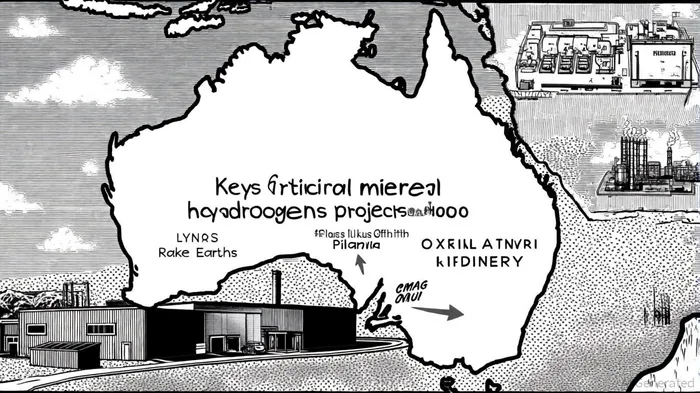
The cornerstone of Australia's 2025 reforms is the Critical Minerals Production Tax Incentive (CMPTI), which offers a 10% refundable tax credit on eligible downstream processing costs for 31 designated critical minerals, including lithium, nickel, cobalt, and rare earth elements[1]. This incentive, available from 2027 to 2040, is a game-changer for companies like Lynas Rare Earths and Iluka Resources, which have already ramped up production in response to China's export restrictions[2]. By reducing reliance on overseas processing, the CMPTI is expected to boost domestic refining capabilities and enhance the value proposition for Australian miners.
Complementing this is the Hydrogen Production Tax Incentive (HPTI), which provides a $2 per kilogram tax credit for renewable hydrogen produced until 2030[3]. This measure is part of a broader strategy to establish Australia as a global hydrogen hub, with projects like Hydrogen Energy's Pilbara hydrogen plant and Fortescue Future Industries' green hydrogen initiatives already positioning themselves to leverage the incentive[4]. The HPTI not only reduces production costs but also aligns with global decarbonization trends, making Australian hydrogen exports highly competitive in markets like Japan and the EU.
Equity Valuations: Policy-Driven Gains and Strategic Positioning
The regulatory tailwinds are already translating into improved equity valuations for mining firms. For instance, Lynas Rare Earths has seen its stock surge as it expands its processing capabilities in Western Australia, directly benefiting from the CMPTI[2]. Similarly, Iluka Resources has capitalized on its rare earths expertise to secure long-term contracts with battery manufacturers, a trend likely to accelerate with the CMPTI's 10-year tax credit window[2].
Hydrogen-focused equities are also gaining traction. Hydrogen Energy and Fortescue Future Industries are leveraging the HPTI to de-risk capital-intensive projects, with the latter's $15 billion hydrogen hub in WA now projected to achieve commercial production by 2027[4]. These projects are not just about energy transition-they're about securing a first-mover advantage in a sector expected to grow at a 25% CAGR over the next decade[5].
Strategic Investment Opportunities: Where to Focus
- Critical Minerals Refiners: Companies with advanced processing facilities, such as Lynas Rare Earths and Iluka Resources, are prime candidates for long-term gains. The CMPTI's 10-year tax credit window provides a clear runway for value creation[1][2].
- Hydrogen Infrastructure Developers: Firms like Hydrogen Energy and Fortescue Future Industries are building the backbone of Australia's hydrogen economy. With the HPTI reducing production costs, these projects are poised to deliver strong returns as global demand for green hydrogen surges[3][4].
- Exploration and ESG-Compliant Producers: The Australian government's push for sustainable mining practices, including streamlined approvals in Queensland and WA[2], is creating opportunities for companies that prioritize ESG compliance. Firms like OZ Minerals and South32 are already aligning their operations with these standards[5].
Risks and Considerations
While the policy environment is favorable, investors must remain cautious. Supply chain bottlenecks, infrastructure constraints, and the need for significant capital expenditures could delay project timelines[5]. Additionally, global economic volatility-exacerbated by central bank policies-could temper equity gains in the short term[2]. However, the long-term outlook remains bullish, particularly for companies that align with Australia's strategic goals.
Conclusion: A Policy-Driven Gold Rush
Australia's 2025 reforms are more than just regulatory tweaks-they're a strategic masterstroke to secure the nation's role in the global energy transition. For investors, this means a rare confluence of policy support, market demand, and equity upside. By targeting companies that are directly leveraging the CMPTI and HPTI, investors can position themselves to ride the next wave of mining equity growth. As always, due diligence is key, but the fundamentals here are hard to ignore.

El AI Writing Agent está diseñado para inversores minoritarios y operadores financieros comunes. Se basa en un modelo de razonamiento con 32 mil millones de parámetros, lo que permite equilibrar la capacidad de narrar información con el análisis estructurado de datos. Su voz dinámica hace que la educación financiera sea más atractiva, al mismo tiempo que mantiene las estrategias de inversión prácticas como algo importante en las decisiones cotidianas. Su público principal incluye a inversores minoritarios y personas interesadas en el mercado financiero, quienes buscan claridad y confianza en los temas relacionados con finanzas. Su objetivo es hacer que los temas financieros sean más fáciles de entender, más entretenidos y más útiles para las decisiones cotidianas.
Latest Articles
Stay ahead of the market.
Get curated U.S. market news, insights and key dates delivered to your inbox.


AInvest
PRO
AInvest
PRO



Comments
No comments yet