
Australia Leading Index Slips, Hints at RBA Tightening Impact
 Aime Summary
- The Australia MI Leading Index dropped 0.1% in March 2026, marking a decline from its previous flat reading. The data, released at 07:30 local time, suggests a modest slowdown in early economic momentum.
- This is the first negative print since late 2024, and while the change is small, it adds to a broader narrative of tightening financial conditions following the RBA's recent rate hike to 4.1%.
- The Leading Index is a composite of economic indicators that often foreshadow turning points in the business cycle, including employment, housing, and manufacturing activity.
- Investors and policymakers may interpret this as a potential signal of weakening demand, particularly as the RBA has indicated inflation remains above its 2-3% target and domestic demand is a key contributor to this.
The Australia MI Leading Index, a forward-looking economic indicator, declined by 0.1% in March 2026, breaking a three-month streak of stability. While the change appears small, it may reflect early signs of economic slowdown in a context where the Reserve Bank of Australia (RBA) recently raised the cash rate to 4.1% to contain inflation. The RBA has emphasized that domestic demand, not external shocks like the Middle East conflict, is the primary driver of elevated inflation. The Leading Index, which aggregates trends in employment, consumer confidence, and manufacturing activity, is often used by investors to anticipate changes in the broader economy. The modest contraction may raise questions about whether the rate hike is beginning to weigh on activity, especially as the RBA's latest policy move was seen as a cautious response to inflation risks.
This is the first negative print for the Leading Index since late 2024. Historically, the index has shown a strong correlation with broader GDP momentum, with downturns often preceding contractions in the overall economy. While a single month's decline is not sufficient to signal a trend, it does align with other recent signals, such as soft consumer confidence and rising mortgage stress. For example, the RBA's 25-basis-point hike in March 2026 was passed in a 5-4 split decision, suggesting internal uncertainty about the economic outlook. This uncertainty is compounded by elevated oil prices and global geopolitical tensions, which the RBA has acknowledged could further complicate inflation management. The Leading Index has historically been useful in identifying early shifts in demand-side pressures—whether from housing, wages, or consumption—which are central to the RBA's policy calculus.
Investors are particularly attuned to the Leading Index in the current policy environment, where the RBA is balancing inflation control with the risk of over-tightening. 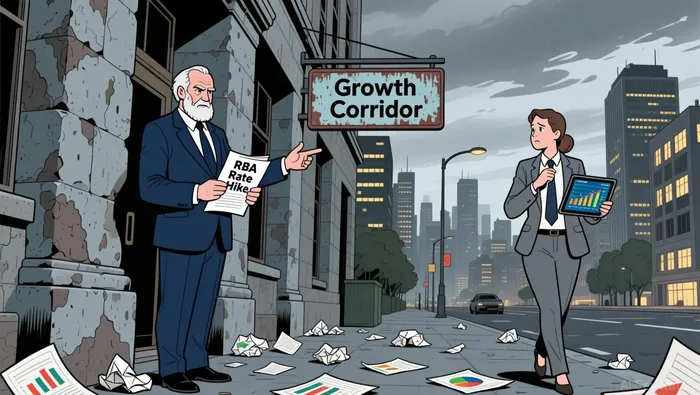 The Leading Index may provide early clues about whether rate hikes are beginning to impact economic activity. A sustained decline could prompt the market to reassess expectations for future policy moves, particularly if inflation begins to moderate. On the other hand, if the data rebounds in the coming months, it could suggest that the economy is resilient to rate increases, potentially extending the tightening cycle. In this context, the March data, while weak, does not yet signal a major turning point, but it does raise questions about how the RBA will respond if the Leading Index continues to trend downward. The next key data points will likely include April retail sales and the next CPI release, both of which will help clarify the RBA's outlook for the remainder of 2026.
What Does the March 2026 Leading Index Signal About Economic Momentum?
The 0.1% decline in the Leading Index reflects a slight deterioration in early economic activity, but the broader significance lies in how this data aligns with policy expectations and market positioning. A weakening Leading Index often foreshadows a slowdown in GDP growth, particularly in economies where consumption and housing are key drivers. The RBA's emphasis on domestic demand as the primary inflationary force underscores the importance of this data point. A further decline in the Leading Index could imply that households and businesses are beginning to adjust to higher borrowing costs. For example, recent reports have noted a decline in the cost per new borrower at FinVolution Group and other fintech firms, which may indicate improving cost efficiency in financial services. However, if the Leading Index continues to trend down, it could prompt a reassessment of the RBA's rate trajectory.
How Does This Compare to Historical Trends in the Leading Index?
The Leading Index is often interpreted as a barometer for the broader economy, particularly in the context of monetary policy. Historically, periods of sustained decline in the Leading Index have preceded broader economic contractions. For instance, the index declined for five consecutive months in early 2020, aligning with the onset of the global pandemic. While the current decline is much less severe, it does raise questions about whether the RBA is tightening too aggressively. The RBA's 5-4 vote in favor of the March rate hike highlights internal uncertainty about the economic outlook, suggesting that policymakers are closely monitoring this and other indicators. The Leading Index's decline also comes at a time when the RBA has acknowledged elevated oil prices and geopolitical tensions as inflation risks, adding complexity to its policy calculus. If the Leading Index stabilizes or rebounds in the coming months, it may signal that the economy is absorbing the rate hike without major fallout.
Why Are Investors Watching the Leading Index in a Policy Tightening Environment?
Investors are particularly attentive to the Leading Index in the current environment because it offers an early read on the effects of monetary tightening. The RBA's rate hike to 4.1% in March 2026 was its first increase in 10 months, reflecting growing concerns about inflation. The Leading Index may help clarify whether this tightening is beginning to impact activity. A further decline in the index could prompt investors to adjust their expectations for future policy moves, especially if inflation begins to moderate. On the other hand, a stabilization or rebound could suggest that the economy is resilient to rate hikes, potentially extending the tightening cycle. In this context, the March data, while weak, does not yet signal a major turning point, but it does raise questions about how the RBA will respond if the Leading Index continues to trend downward. The next key data points will likely include April retail sales and the next CPI release, both of which will help clarify the RBA's outlook for the remainder of 2026.

Stay ahead of the market.
Get curated U.S. market news, insights and key dates delivered to your inbox.


AInvest
PRO
AInvest
PRO



Comments
No comments yet