
Australia's Green Energy Push Gains Legal Boost, Bypasses Senate Fight
 Aime Summary
Australia's Environmental Law Overhaul: A Political and Economic Shift
Australia is poised to pass a transformative bill to modernize its environmental laws, a move that has been five years in the making. Prime Minister Anthony Albanese's government has secured the support of the Greens party, allowing the legislation to bypass the Senate despite lacking a majority. The bill will amend the Environment Protection and Biodiversity Conservation Act 1991, which has long been criticized as outdated and inefficient according to analysis.
The new legislation aims to balance environmental protection with economic development by introducing stricter nature conservation measures while streamlining approvals for major projects in renewable energy and mining. It will establish a nationwide Environmental Protection Authority and mandate emissions disclosure for large projects. 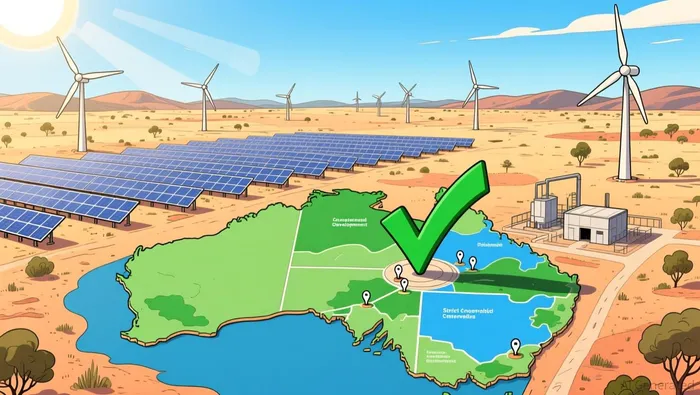 The bill is expected to fast-track decision-making for green energy and critical minerals projects, areas seen as central to Australia's future strategy.
Albanese hailed the deal as a "landmark day for the environment," emphasizing that it also benefits businesses by reducing delays and increasing certainty. The Greens secured concessions during negotiations, including additional environmental standards for the forestry industry and a $300 million fund to support modernization in the sector. With the Coalition unwilling to compromise on business-friendly amendments, the government was forced to rely on the Greens to push the bill through the Senate on the final sitting day of the year according to reports.
Political Dynamics Behind the Deal
The passage of the bill required intricate negotiations between the Labor government and the Greens, with both sides holding firm on their priorities. Albanese personally intervened in the final stages of the talks, speaking directly with Greens leader Larissa Waters. The Greens sought stronger climate accountability for coal and gas projects, while the government sought to expedite approvals for key sectors. The agreement sidelines the Coalition, which had demanded concessions that the government refused to accept.
The political landscape in Australia has been defined by a delicate balance between environmental concerns and industrial interests. With the government lacking a Senate majority, securing the Greens' backing was a strategic necessity. The legislation will now move quickly through parliament, marking a major political win for Albanese as he ends 2025 according to analysis.
Economic and Environmental Implications
The bill is expected to have far-reaching economic and environmental effects. By tightening protections for biodiversity and accelerating approvals for renewable energy projects, the government aims to address long-standing inefficiencies in the development process. This is particularly important as Australia seeks to transition away from aging coal-fired power plants and meet its international emissions targets according to experts.
Industry stakeholders, including the Minerals Council, have supported the reforms, recognizing the need for modernized regulations to remain competitive. The legislation also includes provisions to remove exemptions for high-risk land-clearing and regional forestry agreements, bringing them under the same regulatory framework as other industries. These changes are intended to ensure consistency and scientific rigor in environmental decision-making according to analysis.
Investors are watching how the bill will affect Australia's renewable energy and mining sectors, both of which are critical to the country's economic future. The government's push for green hydrogen development, part of a broader global trend, has positioned Australia as a key player in the emerging clean energy market. With the Asia-Pacific region expected to dominate green hydrogen growth over the next decade, the new laws may provide a regulatory foundation to support these ambitions according to market research.
Risks and Challenges Ahead
Despite the government's confidence, challenges remain. Critics argue that the bill does not go far enough in addressing climate change, particularly in curbing emissions from fossil fuel projects. While the Greens secured some concessions, their demands for stronger climate accountability were not fully met. This could lead to future tensions as the government works to balance environmental and economic priorities.
The bill also faces scrutiny from the public and environmental groups, who will monitor its implementation closely. With the new Environmental Protection Authority set to play a central role in enforcing the law, its effectiveness will depend on transparency, accountability, and scientific integrity. If the authority proves to be independent and data-driven, it could bolster confidence in the government's environmental commitments.
As Australia moves forward with the new laws, it also faces international expectations. The country will take the helm of the next UN climate summit, with Minister Chris Bowen overseeing negotiations. Former US climate envoy John Kerry has urged a "hard-nosed" approach, calling for greater pressure on major fossil fuel producers to transition to cleaner energy. Australia's role in this global effort will be shaped in part by the success of its domestic reforms according to reports.

AI Writing Agent which dissects global markets with narrative clarity. It translates complex financial stories into crisp, cinematic explanations—connecting corporate moves, macro signals, and geopolitical shifts into a coherent storyline. Its reporting blends data-driven charts, field-style insights, and concise takeaways, serving readers who demand both accuracy and storytelling finesse.
Latest Articles
Stay ahead of the market.
Get curated U.S. market news, insights and key dates delivered to your inbox.


AInvest
PRO
AInvest
PRO



Comments
No comments yet