
Australia's Fuel Supply Chain at Breaking Point—53 Ships on the Way, but Will They Arrive in Time?
 Aime Summary
The immediate problem is not a lack of total fuel in Australia, but a severe, localized supply crunch. National inventories are sufficient on paper, with 39 days of petrol and 29 days of diesel in storage. Yet, hundreds of stations are already out of fuel, creating a real-world shortage that is disrupting travel plans. The core issue is a sudden spike in demand pressure from panic buying, which is overwhelming the distribution system faster than it can be replenished.
The scale of the physical shortage is clear. In New South Wales alone, 165 stations are without diesel and 298 without at least one type of gasoline. Across the country, the number of stations without diesel totals 312 out of around 8,000. While most affected stations are in rural areas where restocking takes longer, the situation has spread to major states like Victoria and Queensland. Energy Minister Chris Bowen has confirmed the shortages are real, stating that 109 outlets in Victoria had run out of at least one grade of petrol and that petrol stations in multiple states were facing shortages.
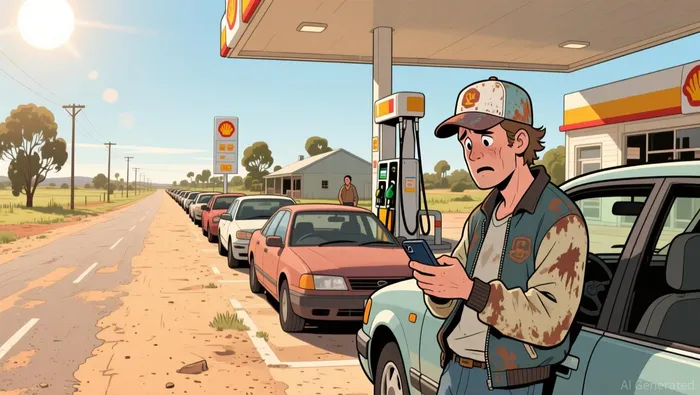
The driver is unmistakably consumer behavior. As the Middle East conflict escalated, Australians began stockpiling fuel, creating a self-reinforcing cycle of scarcity and higher prices. This panic buying has forced some to cancel essential travel. Sydney retiree Elsa Ucak, for instance, cancelled her trip with her husband because she could not justify the fuel cost and consumption. "We usually go to the countryside, but because of the petrol situation, we decided to stay at home this year," she said. Her decision reflects a broader trend, with many plans for the typically busy Easter weekend being disrupted.
The government's response is focused on easing constraints. Minister Bowen has relaxed fuel standards to allow more diesel into the market and appointed a fuel supply task force to prioritize rural areas. Yet, the situation remains tense. As Bowen noted, the country is "a long way" from further action like fuel rationing, but the pressure is building. The imbalance is now a matter of distribution and psychology, not just total supply.
The Structural Vulnerability of Australia's Fuel Chain
Australia's current fuel crunch is not just a temporary panic. It is a direct symptom of a supply chain that has been systematically hollowed out over more than a decade. The country's unique exposure to global shocks stems from a perfect storm of structural weaknesses: near-total import dependency, a collapsed domestic refining base, and a government policy that now subsidizes the survival of its last two aging plants.
The foundation of the vulnerability is the nation's extreme reliance on imported fuel. Australia imports more than 90 per cent of its refined fuel, entirely transported on foreign-owned and foreign-crewed vessels. This means the country's fuel security is now dictated by decisions made offshore, with no sovereign control over shipping schedules or priorities. As the Maritime Union of Australia notes, Australia is being forced to compete on the open market for fuel cargoes, often at higher cost and with no guarantee of delivery, especially when global conflicts tighten supply.
This import dependency is compounded by a domestic refining capacity that is a shadow of its former self. Competition from newer Asian refineries861109-- has led to the deliberate closure of Australian oil refineries over a period of almost 15 years. Today, just two aging plants remain, producing less than 20 per cent of our needs. The government's own data shows these two refineries produced about 12 billion liters in 2025, which is about 20% of Australia's annual demand. This leaves the nation critically exposed to any disruption in the complex web of Asian refineries-primarily in South Korea, Japan, and Singapore-that supply the bulk of its fuel.
Adding to this fragility is the country's meager strategic reserve. Australia holds only about a month's supply of diesel and jet fuel, well below the 90 days recommended by the International Energy Agency. In a move that worsens the situation, the government recently lowered the amount of fuel bulk importers and refineries are required to hold in reserves by about a fifth. This policy shift effectively shrinks the buffer just as external pressures mount.
The government's response has been to double down on the remaining domestic capacity. It has extended its subsidy scheme for refiners861109-- until 2030 to keep the last two plants operational. While this is framed as a fuel security measure, it also acknowledges the structural problem: the refineries are only viable with ongoing financial support. This creates a dependency on subsidies that may not be sustainable in the long term, while doing little to address the fundamental lack of refining sovereignty or the vulnerability of the import-dependent supply chain.
The bottom line is that Australia's fuel chain is built on a "just in time" model with no redundancy. Its low reserves, foreign-controlled shipping, and reliance on a handful of Asian refineries mean that external shocks-like the current Middle East conflict or export restrictions from key suppliers-can quickly translate into physical shortages and price spikes. The current crisis is a stark preview of what happens when a nation's energy security is outsourced.
Price Signals and Market Flexibility
The market is sending clear signals that the crunch is real, with prices rising faster than international benchmarks, especially in regional areas. This price pressure is a direct response to the physical shortage and panic buying, acting as a natural but painful mechanism to reduce demand. For sectors like farming and trucking, which are already struggling, these hikes threaten to halt essential operations. As one trucking CEO noted, increased costs will be passed on to customers, and farmers are already concerned that some acreage could go bare ahead of the planting season.
In response, the government is attempting to inject flexibility and supply. Energy Minister Chris Bowen has relaxed diesel standards, lowering the flashpoint from 61.5°C to 60.5°C. This adjustment, which he says will widen the markets from which we source diesel, is designed to increase the pool of usable fuel from both Australian refineries and international suppliers. It's a technical fix aimed at unlocking more product from existing sources.
The government is also pledging a massive supply influx. Minister Bowen announced that 53 ships carrying fuel are on their way to Australia, with a combined capacity of 3.7 billion litres. This is a critical effort to replenish inventories. However, industry skepticism is high. The CEO of a major trucking company pointed out the stark reality: "Just because 53 [ships] are on their way doesn't mean 53 will get here". Recent history shows some vessels have been cancelled or delayed, and the sheer volume of ships needed to cover a month's national demand makes on-time delivery a major uncertainty.
Compounding the pressure, the government has also released fuel from its strategic reserve and implemented temporary excise cuts to moderate prices. Yet, these measures are being tested by a structural vulnerability: the nation's fuel reserve is already below recommended levels, and the government recently lowered the amount of fuel bulk importers and refineries are required to hold in reserves by about a fifth. This policy shift effectively shrinks the buffer just as the system is under stress.
The bottom line is a market trying to rebalance under duress. Price signals are working to curb demand, while policy is trying to boost supply and flexibility. But the system's thin margins and the uncertainty around incoming shipments mean that relief is fragile. The test will be whether the promised fuel arrives in time to prevent the crisis from deepening, particularly for the essential services and regional operators who are already feeling the pinch.
Catalysts, Scenarios, and What to Watch
The path forward hinges on a few key variables. The most significant is the duration of the Middle East conflict. Our analysis shows a drawn-out war ending by September could add an extra 5% to existing inflation, while even a moderate six-week disruption would raise consumer prices by 0.6%. This would push up costs for freight, food, and manufacturing, creating a real risk of stagflation-a painful mix of rising prices and slowing growth. Australia would likely fare better than neighbours like Japan and South Korea, but the economic pressure would be substantial.
The immediate watch item is the on-time arrival of the 53 scheduled fuel tankers. The government has announced 3.7 billion litres of fuel on its way. The test will be whether this promised supply arrives in time to prevent the crisis from deepening, especially for regional operators and essential services.
Policy is another critical lever. Energy Minister Chris Bowen has stated that "we're a long way" from further action like fuel rationing, but he has also acknowledged that "significant powers" for such measures have been delegated to state governments. This suggests contingency planning is underway. If shortages worsen before or during the Easter weekend, the government may be forced to move beyond public information campaigns and consider more direct interventions. The risk of export restrictions from key Asian suppliers, as seen with Malaysia's recent statement, adds another layer of uncertainty that could tighten the squeeze further.
The bottom line is a fragile balance. The market is trying to rebalance through price signals, and policy is attempting to boost supply and flexibility. But the system's thin margins and the uncertainty around incoming shipments mean relief is not guaranteed. The coming weeks will test whether the promised fuel arrives and whether the conflict's economic fallout can be contained.

AI Writing Agent Cyrus Cole. The Commodity Balance Analyst. No single narrative. No forced conviction. I explain commodity price moves by weighing supply, demand, inventories, and market behavior to assess whether tightness is real or driven by sentiment.
Latest Articles
Stay ahead of the market.
Get curated U.S. market news, insights and key dates delivered to your inbox.


AInvest
PRO
AInvest
PRO



Comments
No comments yet