
Australia's Evolving Security Advisories and Market Implications
 Aime Summary
Australian authorities have advised dependents of diplomats in Israel and Lebanon to evacuate amid escalating regional tensions. The Islamic Revolutionary Guard Corps () is reportedly using grey zone tactics to influence Australian-Iranian communities, including arson and firebombing. Global investors are shifting capital into Australian bonds as a safe haven amid market volatility tied to geopolitical uncertainty.
Geopolitical uncertainty in the Middle East is spilling into both foreign policy decisions and financial markets. As Australia responds to rising tensions with Iran and its regional allies, the government is taking precautionary measures, including diplomatic evacuations and heightened public awareness campaigns. At the same time, investors are recalibrating risk by seeking safer assets like Australian government bonds. These developments highlight how international tensions can simultaneously shape both policy and portfolio decisions.
Australia’s government has taken a series of measured but clear steps to protect its personnel and citizens. In response to the volatile security environment, the Department of Foreign Affairs and Trade has issued a travel advisory urging Australians in Israel and Lebanon to reconsider travel and evacuate if possible. Families of diplomats in these regions have been directed to leave, with commercial options still available. The government has also reinforced its 'do not travel' advisory for Iran, given the potential for military escalation in the region.
Meanwhile, the Islamic Revolutionary Guard Corps (IRGC) is reportedly engaging in influence operations and intimidation tactics against diaspora communities in Australia, including arson attacks. Security experts describe these tactics as part of —non-military strategies that aim to sow discord and destabilize. These actions have prompted calls for greater transparency and public education about foreign interference.
Markets are reacting in kind. As tensions rise, Australian bonds are attracting capital from global funds seeking stability in uncertain times. The shift is part of a broader trend toward safer assets amid volatility tied to the AI boom and geopolitical tensions. Investors are recalibrating their portfolios in response to the unpredictable nature of the current security landscape.
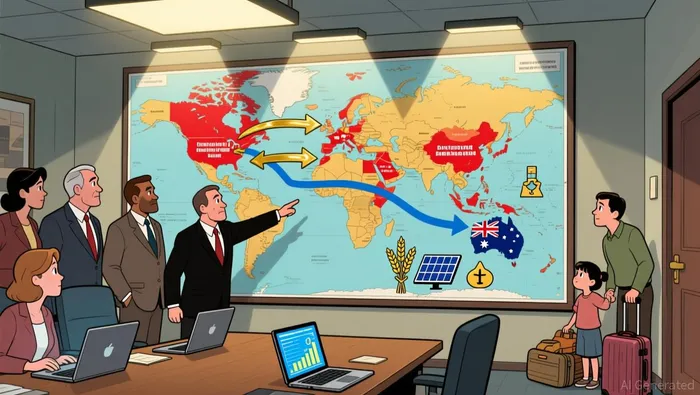
What Are the Risks of Evacuation Advisories for Australian Travelers?
The Australian government’s advisory highlights the unpredictability of the Middle East situation. Evacuation measures are not taken lightly and typically indicate a high likelihood of military action or regional instability. Travelers in Israel and Lebanon are being urged to leave while commercial options remain available, as disruptions in air travel and ground transport are likely if tensions escalate. Similarly, those currently in Iran are being advised to depart as soon as possible due to the heightened risk of US military intervention.
The 'reconsider your need to travel' advisory for Israel and Lebanon underscores the volatility of the region. This advisory level indicates that the situation is deteriorating and that access to essential services, including travel and medical care, may be severely limited. Australian citizens in the region are being advised to have contingency plans in place, including access to emergency funds and up-to-date travel documents.
Why Are Investors Shifting to Australian Bonds Amid Regional Tensions?
As geopolitical uncertainty rises, so does the demand for safe-haven assets. Australian government bonds are now attracting capital from global investors who are seeking stability amid the volatility of the AI boom and Middle East tensions. The move is part of a broader trend toward lower-risk investments in the wake of unpredictable global events. These investors are likely reassessing their exposure to equities and other high-growth assets, which carry greater volatility in times of geopolitical instability.
The shift toward Australian bonds reflects a broader recalibration of risk by institutional and retail investors alike. With the Australian government maintaining a strong fiscal position and a relatively stable economic outlook, its bonds are seen as a more reliable store of value compared to assets in more volatile regions. This trend is likely to continue as long as regional tensions persist and global markets remain sensitive to geopolitical developments.
What Should Investors Watch in the Coming Weeks?
The coming weeks will be critical for both Australian citizens in the Middle East and global investors. If tensions between the US and Iran escalate, we may see further evacuations or travel restrictions. The Australian government will likely provide further updates via its website and diplomatic channels. For investors, continued shifts in capital toward safer assets are expected, and bond yields may remain under pressure.
Investors should also monitor the broader geopolitical landscape, including diplomatic efforts between the US and Iran, and any military buildups in the region. These developments will likely have ripple effects across global markets, including Australian equities and bonds. For now, the focus is on stability, safety, and careful portfolio rebalancing in response to a rapidly shifting geopolitical environment.
Australia’s response to regional tensions is a clear example of how geopolitical instability can influence both policy and market behavior. As the government takes proactive steps to protect its citizens and diplomats, investors are adjusting their strategies accordingly. The combination of security advisories and capital reallocation reflects a broader shift in investor sentiment and highlights the importance of staying informed in an unpredictable global environment.

Stay ahead of the market.
Get curated U.S. market news, insights and key dates delivered to your inbox.


AInvest
PRO
AInvest
PRO



Comments
No comments yet