
Australia's Data Center Market Sees Surge in Demand for Cloud, AI, and IoT Infrastructure
ByAinvest
Tuesday, Sep 2, 2025 6:37 am ET3min read
EQIX--
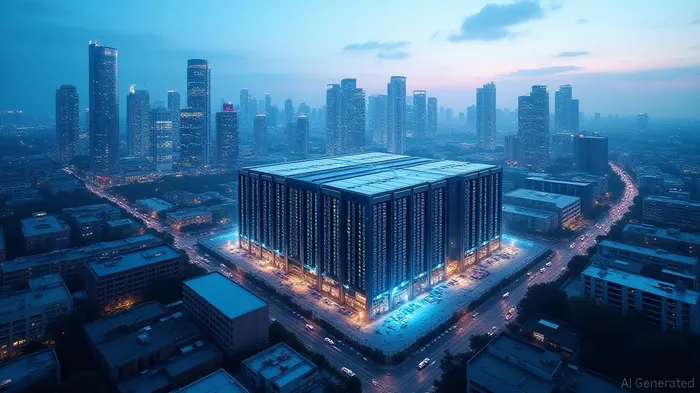
Key factors contributing to this growth include Australia's role as a data hub for the Asia-Pacific region, technological advancements, and government support. The country's geographic location, political stability, and strong telecommunications infrastructure make it an attractive destination for both local and international companies looking to expand their digital operations.
The accelerating adoption of cloud-based services is a primary driver of this growth. Companies across various sectors are shifting their operations to the cloud to improve efficiency, reduce costs, and enhance scalability. This shift has led to a need for high-performance data centers capable of supporting the infrastructure required for cloud services.
Australia's growing role as a data hub for the Asia-Pacific region further propels the demand for data center facilities. The country's strategic location, combined with its political stability and robust telecommunications infrastructure, makes it an ideal location for both local and international companies expanding their digital operations.
The rise of big data and IoT is another critical factor driving the market's expansion. As more devices become interconnected, the amount of data generated and stored continues to grow exponentially. This necessitates the construction of new, larger, and more energy-efficient data centers to handle this surge in data traffic. Industries such as automotive, healthcare, retail, and manufacturing are leveraging big data analytics to gain insights and improve decision-making processes, further fueling the demand for state-of-the-art data storage and processing facilities.
Energy efficiency and sustainability are increasingly important considerations in the construction of new data centers. The global push for sustainability is leading data center developers to adopt innovative technologies that focus on reducing energy consumption and minimizing environmental impact. The use of renewable energy sources, such as wind and solar power, in the operation of data centers is gaining traction in Australia. Additionally, green building technologies and cooling efficiency designs are being incorporated to maintain the proper operating conditions of high-performance servers.
Major players like Equinix and Fujitsu are enhancing competition in the market. Their presence encourages local players to upgrade their offerings and improve service delivery, further fueling market growth. The rise of edge computing is also pushing the need for smaller, localized data centers that can provide faster processing times for applications and services requiring real-time data access.
The regional government has played an important role in driving the market's development. The government has recognized the importance of digital infrastructure to the country's economic future and has introduced several initiatives to support the industry's development. This includes streamlining regulatory processes for the construction of data centers, investing in telecommunications infrastructure, and promoting innovation in the tech sector.
While the market outlook is promising, challenges remain. The availability of suitable land for new data center facilities is a significant hurdle. As demand grows, the competition for prime real estate near major cities and connectivity hubs intensifies, leading to increased land prices and potential project cost impacts. Additionally, labor shortages in the construction sector and the need for highly specialized skills in data center operations can pose challenges for companies looking to expand their networks.
Despite these challenges, the overall trajectory for the Australian data center construction market remains positive. As demand for digital services continues to rise, both from businesses and consumers, the need for new, innovative, and efficient data center infrastructure will remain high. Market players are likely to invest in the latest technologies, such as AI and automation, to improve the efficiency and scalability of their facilities, further supporting the growth of the industry.
Looking ahead, the Australia data center construction market is expected to continue expanding, driven by ongoing technological advancements, the increasing reliance on digital infrastructure, and the growing demand for cloud services. With strong government support and a dynamic, competitive market, the Australian data center industry is poised for a period of sustained growth and development, making it an essential component of the country's digital transformation.
References:
[1] https://finance.yahoo.com/news/australia-data-center-construction-market-103100763.html
The Australian data center construction market is expected to grow through 2034, driven by rising demand for cloud computing, AI, and IoT. The accelerating adoption of cloud-based services, Australia's role as a data hub for the Asia-Pacific region, and the surge in big data and IoT usage are key factors contributing to this growth. Energy efficiency and sustainability are also becoming increasingly important considerations in the construction of new data centers. Major players like Equinix and Fujitsu are enhancing competition in the market.
The Australian data center construction market is poised for significant growth, with a projected Compound Annual Growth Rate (CAGR) of 7% from 2025 to 2034 [1]. This expansion is primarily driven by the increasing demand for cloud computing, artificial intelligence (AI), and the Internet of Things (IoT).Key factors contributing to this growth include Australia's role as a data hub for the Asia-Pacific region, technological advancements, and government support. The country's geographic location, political stability, and strong telecommunications infrastructure make it an attractive destination for both local and international companies looking to expand their digital operations.
The accelerating adoption of cloud-based services is a primary driver of this growth. Companies across various sectors are shifting their operations to the cloud to improve efficiency, reduce costs, and enhance scalability. This shift has led to a need for high-performance data centers capable of supporting the infrastructure required for cloud services.
Australia's growing role as a data hub for the Asia-Pacific region further propels the demand for data center facilities. The country's strategic location, combined with its political stability and robust telecommunications infrastructure, makes it an ideal location for both local and international companies expanding their digital operations.
The rise of big data and IoT is another critical factor driving the market's expansion. As more devices become interconnected, the amount of data generated and stored continues to grow exponentially. This necessitates the construction of new, larger, and more energy-efficient data centers to handle this surge in data traffic. Industries such as automotive, healthcare, retail, and manufacturing are leveraging big data analytics to gain insights and improve decision-making processes, further fueling the demand for state-of-the-art data storage and processing facilities.
Energy efficiency and sustainability are increasingly important considerations in the construction of new data centers. The global push for sustainability is leading data center developers to adopt innovative technologies that focus on reducing energy consumption and minimizing environmental impact. The use of renewable energy sources, such as wind and solar power, in the operation of data centers is gaining traction in Australia. Additionally, green building technologies and cooling efficiency designs are being incorporated to maintain the proper operating conditions of high-performance servers.
Major players like Equinix and Fujitsu are enhancing competition in the market. Their presence encourages local players to upgrade their offerings and improve service delivery, further fueling market growth. The rise of edge computing is also pushing the need for smaller, localized data centers that can provide faster processing times for applications and services requiring real-time data access.
The regional government has played an important role in driving the market's development. The government has recognized the importance of digital infrastructure to the country's economic future and has introduced several initiatives to support the industry's development. This includes streamlining regulatory processes for the construction of data centers, investing in telecommunications infrastructure, and promoting innovation in the tech sector.
While the market outlook is promising, challenges remain. The availability of suitable land for new data center facilities is a significant hurdle. As demand grows, the competition for prime real estate near major cities and connectivity hubs intensifies, leading to increased land prices and potential project cost impacts. Additionally, labor shortages in the construction sector and the need for highly specialized skills in data center operations can pose challenges for companies looking to expand their networks.
Despite these challenges, the overall trajectory for the Australian data center construction market remains positive. As demand for digital services continues to rise, both from businesses and consumers, the need for new, innovative, and efficient data center infrastructure will remain high. Market players are likely to invest in the latest technologies, such as AI and automation, to improve the efficiency and scalability of their facilities, further supporting the growth of the industry.
Looking ahead, the Australia data center construction market is expected to continue expanding, driven by ongoing technological advancements, the increasing reliance on digital infrastructure, and the growing demand for cloud services. With strong government support and a dynamic, competitive market, the Australian data center industry is poised for a period of sustained growth and development, making it an essential component of the country's digital transformation.
References:
[1] https://finance.yahoo.com/news/australia-data-center-construction-market-103100763.html
Stay ahead of the market.
Get curated U.S. market news, insights and key dates delivered to your inbox.
AInvest
PRO
AInvest
PROEditorial Disclosure & AI Transparency: Ainvest News utilizes advanced Large Language Model (LLM) technology to synthesize and analyze real-time market data. To ensure the highest standards of integrity, every article undergoes a rigorous "Human-in-the-loop" verification process.
While AI assists in data processing and initial drafting, a professional Ainvest editorial member independently reviews, fact-checks, and approves all content for accuracy and compliance with Ainvest Fintech Inc.’s editorial standards. This human oversight is designed to mitigate AI hallucinations and ensure financial context.
Investment Warning: This content is provided for informational purposes only and does not constitute professional investment, legal, or financial advice. Markets involve inherent risks. Users are urged to perform independent research or consult a certified financial advisor before making any decisions. Ainvest Fintech Inc. disclaims all liability for actions taken based on this information. Found an error?Report an Issue


ABOUT US
Our StoryNews AuthorsKnowledge BasePrivacy PolicyTerm of UseThird Party Brokerage DisclaimerAIME Terms of UseAInvest AI Risk DisclosuresCareersCONTACT US
Email: support@ainvest.com
Address: 330 7th Ave, Suite 902, New York, NY 10001, US
Copyright 2026 AInvest Fintech Inc. All rights reserved.


Comments
No comments yet