
Australia-China Ties: A Goldmine for Resource-Driven Investments
The recent thaw in Australia-China relations, spearheaded by Prime Minister Anthony Albanese's 2025 diplomatic overtures, has reignited optimism for strategic investment opportunities in commodities and infrastructure. With bilateral trade nearing $327 billion in 2023—a 9.2% annual increase—Australia's resource-rich economy stands at the crossroads of geopolitical realignment and economic pragmatism. This article dissects how improved ties could unlock value in iron ore, energy, and infrastructure sectors, supported by historical trade data and expert insights.
Commodities: The Bedrock of Renewed Collaboration
Australia's commodities sector has long been the backbone of its trade with China. In 2023, iron ore exports to China hit $55.3 billion, while coal followed with $30.5 billion. These figures underscore China's insatiable demand for raw materials to fuel its industrial growth and energy needs.
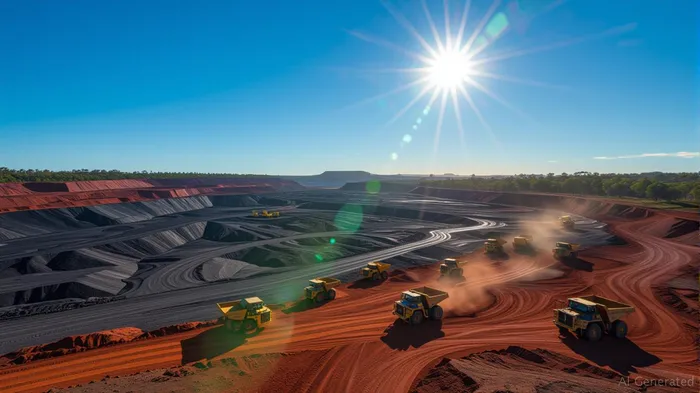
The removal of trade barriers in recent quarters has been pivotal. By June 2024, five major beef processing plants regained access to China's market, and anti-dumping tariffs on wine were lifted—a symbolic gesture of warming relations. “The normalization of trade flows is a clear win for Australian miners and farmers,” notes Professor James Laurenceson of the Australian Centre on China in the World.
Infrastructure: The Next Frontier of Investment
While commodities dominate headlines, infrastructure projects—ports, energy corridors, and logistics networks—are the silent engines of bilateral growth. Chinese investments in Australian infrastructure (ports, railways, and utilities) totaled $11.25 billion between 2006–2023, though this figure dipped post-2018 due to geopolitical tensions. Improved diplomacy could reverse this trend.
Consider the Port of Melbourne, where Chinese entities have held leasing rights. With China's unilateral visa liberalization in June 2024 and Albanese's emphasis on “pragmatic cooperation,” such assets may see renewed interest. Infrastructure projects tied to renewable energy—like wind farms and battery storage—could also benefit from China's push for green technologies.
Strategic Investment Opportunities
Resource-Exposed ETFs:
The BetaShares Australian Resources Sector ETF (QRE) offers a concentrated play on miners like BHP (ASX:BHP) and Rio Tinto (ASX:RIO). With China's iron ore imports accounting for 90% of Australia's total iron ore exports, QRE stands to gain as trade flows rebound.Infrastructure Plays:
While data is sparse, port operators (e.g., Patrick Corporation) and renewable energy firms (e.g., Neoen, AGL Energy) could thrive. The VanEck Australian Property ETF (MVA), which includes logistics and industrial assets, offers diversification.Geopolitical Risk Mitigation:
Analysts caution that U.S.-Australia security alliances (e.g., AUKUS) and Taiwan tensions remain risks. However, as Professor Hans Hendrischke argues, “direct dialogue between leaders reduces uncertainty, making long-term investments feasible.”
Why Act Now?
- Trade Data Momentum: China's 2023 imports of Australian goods grew by 18.2%, signaling pent-up demand post-tariff removal.
- Strategic Agreements: The Regional Comprehensive Economic Partnership (RCEP) and ChAFTA's 10th anniversary in 2025 provide legal frameworks for sustained growth.
- Valuation: Resource stocks remain undervalued relative to their commodity price exposure. For instance, BHP's EV/EBITDA ratio is below its five-year average, despite iron ore prices hovering around $140/tonne.
Investment Thesis
The convergence of improved diplomacy, robust trade data, and China's industrial needs creates a compelling case for overweighting resource-exposed equities and ETFs. A 5–10% allocation to QRE within a diversified portfolio could capitalize on iron ore and coal demand. For risk-tolerant investors, infrastructure equities tied to renewable energy or logistics—while less liquid—offer long-term growth.
Final Call
Australia's commodities and infrastructure sectors are not just beneficiaries of improved China ties—they are the economic lifelines of this strategic realignment. As diplomatic frost gives way to pragmatic cooperation, investors ignoring these opportunities may miss a once-in-a-decade cycle of value creation.
Invest wisely, but act decisively.

Stay ahead of the market.
Get curated U.S. market news, insights and key dates delivered to your inbox.
AInvest
PRO
AInvest
PRO



Comments
No comments yet