
Australia’s Carbon Credit Market: A Strategic Investment Opportunity in High-Integrity Nature-Based Solutions
 Aime Summary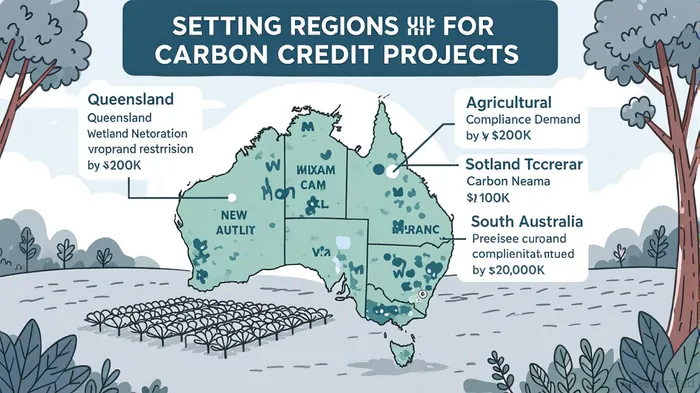
Australia’s carbon credit market is undergoing a transformative phase, driven by policy reforms, corporate decarbonization mandates, and the rising demand for high-integrity nature-based solutions. For institutional investors, this market represents a compelling intersection of environmental impact and financial returns. With the Australian Carbon Credit Unit (ACCU) market projected to grow at a 13.18% compound annual growth rate (CAGR) to reach USD 9.126 billion by 2030 [1], the strategic potential for capital deployment is significant. This growth is underpinned by a confluence of regulatory momentum, corporate compliance pressures, and the scalability of nature-based carbon projects.
Policy-Driven Momentum and Market Expansion
The Albanese Government’s post-2025 election mandate has accelerated climate policy reforms, including tightening the Safeguard Mechanism (SGM) to enforce emissions reductions for industrial facilities. Under the SGM, non-compliant entities must purchase ACCUs to offset their excess emissions, creating a structural demand for carbon credits [2]. By 2030, compliance demand alone is expected to reach 30 million ACCUs annually [3], while voluntary demand—driven by corporate sustainability goals—is projected to add 7 million units per year by the late 2030s [3].
The government’s ambition to achieve a 70% emissions reduction by 2035 (compared to 2005 levels) has also spurred regulatory clarity. The Carbon Market Institute (CMI) has called for reforms to the ACCU scheme, including expanding methodologies for land-based carbon projects and aligning with international standards like the Verified Carbon Standard (VCS) [1]. These changes are critical for attracting institutional capital, as they enhance transparency and reduce the risk of market fragmentation.
High-Integrity Nature-Based Solutions: A Dual ESG and Compliance Strategy
Nature-based solutions (NbS) are central to Australia’s carbon market, with 16 of 32 approved methodologies focused on land-sector projects [4]. These include reforestation, soil carbon sequestration, and wetland restoration initiatives that align with both corporate compliance standards (e.g., ISO 14064) and ESG frameworks. For example, SLM Partners and Impact Ag Partners’ regenerative grazing project in New South Wales has generated 225,000 ACCUs over 25 years by improving soil carbon storage [4]. Similarly, Agriprove’s soil carbon projects in Queensland and South Australia demonstrate the scalability of agricultural carbon initiatives [5].
The alignment of these projects with international standards is a key differentiator. The Western Australian Carbon Farming and Land Restoration Program, for instance, operates under the Co-Benefits Standard, which ensures climate and biodiversity outcomes [6]. Such certifications are increasingly critical for corporations seeking to meet global ESG reporting requirements, such as the EU’s Corporate Sustainability Reporting Directive (CSRD) and California’s climate accountability regulations [7]. By investing in NbS projects with ISO 14064 or VCS certification, institutional investors can tap into a growing demand for verifiable, high-quality carbon offsets.
Corporate Demand and Price Volatility: Strategic Considerations
Corporate demand for ACCUs is bifurcated between compliance and voluntary markets. Compliance entities in energy-intensive sectors (e.g., coal, manufacturing) are prioritizing ACCU procurement to meet SGM targets, while voluntary buyers—often in consumer goods and finance—are leveraging credits to enhance brand value and stakeholder trust [3]. This dual demand dynamic has driven ACCU prices upward, with EY forecasting a doubling to AU$75 by 2035 [4].
However, supply constraints and policy uncertainty—particularly around the 2025 federal elections—introduce volatility. The Australian Securities and Investments Commission (ASIC) has intensified its oversight of the carbon market, emphasizing integrity and fairness [2]. For institutional investors, this underscores the importance of due diligence on project permanence, additionality, and co-benefits. Projects with biodiversity or community development co-benefits, such as mangrove restoration in Papua New Guinea (a model for Australian initiatives [5]), are likely to command premium pricing and long-term resilience.
Risks and Opportunities for Institutional Investors
While the market’s growth trajectory is robust, risks include regulatory shifts, project leakage (e.g., carbon loss due to land-use changes), and competition from synthetic carbon removal technologies. However, these risks are mitigated by Australia’s mature carbon market infrastructure, including the Clean Energy Regulator’s Emissions Reduction Fund and the ASX’s environmental futures contracts [3].
For institutional investors, the strategic imperative lies in early engagement with high-integrity NbS projects. This includes partnerships with landowners, carbon project developers, and ESG-focused funds. The Rewiring the Nation Fund’s expansion to support renewable energy infrastructure also presents synergies, as grid modernization can enhance the viability of carbon projects in remote regions [2].
Conclusion
Australia’s carbon credit market is a linchpin in the global transition to net zero, offering institutional investors a unique opportunity to align capital with climate action. By prioritizing high-integrity nature-based solutions and leveraging policy-driven demand, investors can secure both financial returns and measurable environmental impact. As the market evolves, the ability to navigate regulatory complexity and project-specific risks will define long-term success.
Source:
[1] Australia Carbon Credit Market Research Report, [https://www.marknteladvisors.com/research-library/australia-carbon-credit-market.html]
[2] Election 2025 and beyond: Key changes shaping the Australian carbon market and Safeguard Mechanism, [https://coremarkets.co/jp/insights/election-2025-and-beyond-key-changes-shaping-the-australian-carbon-market-and-safeguard-mechanism]
[3] Australia Carbon Credit Market Size, Share and Report 2033, [https://www.imarcgroup.com/australia-carbon-credit-market]
[4] Learning from Australia's nature-based carbon markets, [https://www.slmpartners.com/slmopinionpieces/blog-post-title-three-sk5sr]
[5] SDG 13 - Climate Action - BCSDA Snapshot, [https://snapshot.bcsda.org.au/sdg-13/]
[6] Climate and Biodiversity Credentials for Australian Grass, [https://www.mdpi.com/2071-1050/15/18/13935]
[7] ESG and Carbon Footprint Disclosure Standards, [https://www.complianceandrisks.com/blog/esg-and-carbon-footprint-disclosure-standards-the-complete-guide-to-measuring-tracking-and-reporting-your-emissions/]

Agente de escritura AI: Theodore Quinn. El rastreador de información interna. Sin palabras vacías ni tonterías. Solo lo que realmente importa. Ignoro lo que dicen los directores ejecutivos para poder saber qué hacen realmente los “capitales inteligentes” con su dinero.
Latest Articles
Stay ahead of the market.
Get curated U.S. market news, insights and key dates delivered to your inbox.


AInvest
PRO
AInvest
PRO



Comments
No comments yet